

West Asia war impact: Why this is the largest energy supply disruption the world has ever seen
The IEA was established in 1974 specifically to handle such crises, following the 1973 embargo where Arab states — led by Saudi Arabia — slashed oil output to protest US support for Israel in war against Egypt and Syria.
The war raging in the Middle East has plunged the world into a severe energy crisis. According to the International Energy Agency (IEA), this is the biggest oil disruption in history — worse than the 1970s oil crisis and Ukraine war combined.
The IEA was established in 1974 specifically to handle such crises, following the 1973 embargo where Arab states — led by Saudi Arabia — slashed oil output to protest US support for Israel in war against Egypt and Syria.
But, why is this energy supply disruption touted as the biggest that the world has ever seen?
In 1973, embargoed countries faced a total shortage of 4.5 million barrels of oil per day, which amounted to about 7% of the global supply at the time.
In 1979, Iranian Revolution caused Iranian oil output to plummet by about 4.8 million barrels per day, creating a 7% deficit in global production, according to Federal Reserve History.
Today, with transit of ships through the Strait of Hormuz choked, Iran has halted the transport of more than 20 million barrels of oil per day– which can be calculated to approximately 20% of the global petroleum consumption — which is clearly more than the shortage in the oil supply during two crises in 1970s combined
Whereas, the liquefied natural gas (LNG) supplies has been cut by about 140 billion cubic metres (bcm), as against a shortfall of 75bcm after Russian invasion of Ukraine in 2022.
Hence the total energy crisis the world is witnessing now exceeds 1973 (Arab blockade) and 1979 (Iranian revolution) oil shocks and gas shortage from Ukraine-Russia war.
Tracking crude price since the West Asia war broke out
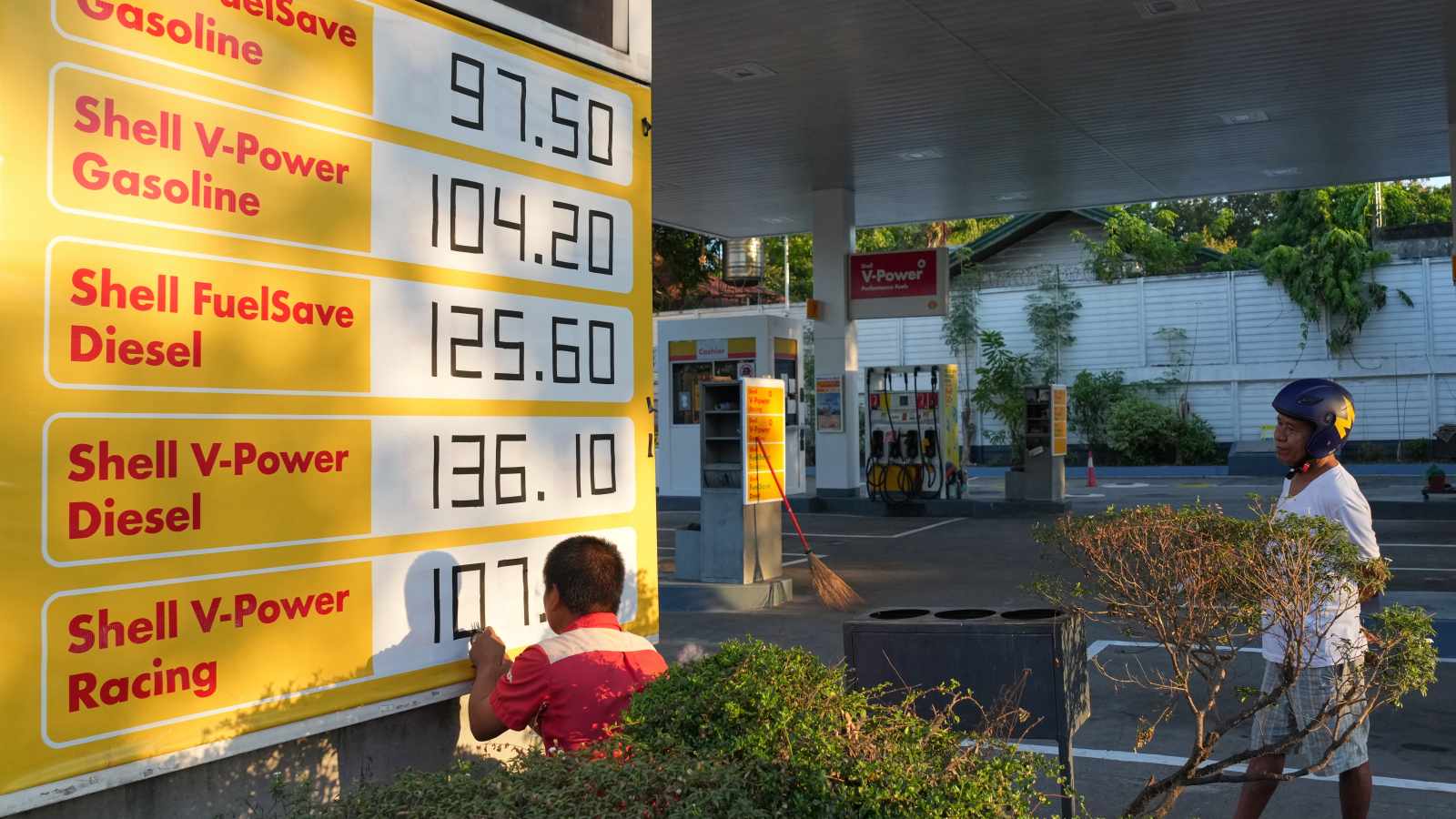
Before the combined strikes the US and Israel on Iran on February 28, Brent crude oil price stood at $66 a barrel. The first week of the war saw the oil prices skyrocketing, recording a sharp rise in Brent crude price to above $100 a barrel – a 60% increase.
Ten days into the war, the reports of output cuts made the prices peak twice with the Brent crude nearing $120 per barrel.
On Monday (March 23), prices for Brent futures however dropped more than 10% to stand at $100 a barrel after US President Donald Trump announced a five-day delay in strikes on Tehran’s Iranian energy facilities.
After a brief rise on Tuesday, Brent crude futures again sank $4.17, or 4%, to $100.32 a barrel by 0708 GMT on Wednesday, after declining to as low as $97.57.
Stay updated with the latest - Click here to follow us on Instagram
The war raging in the Middle East has plunged the world into a severe energy crisis. According to the International Energy Agency (IEA), this is the biggest oil disruption in history — worse than the 1970s oil crisis and Ukraine war combined.
The IEA was established in 1974 specifically to handle such crises, following the 1973 embargo where Arab states — led by Saudi Arabia — slashed oil output to protest US support for Israel in war against Egypt and Syria.
But, why is this energy supply disruption touted as the biggest that the world has ever seen?
In 1973, embargoed countries faced a total shortage of 4.5 million barrels of oil per day, which amounted to about 7% of the global supply at the time.
In 1979, Iranian Revolution caused Iranian oil output to plummet by about 4.8 million barrels per day, creating a 7% deficit in global production, according to Federal Reserve History.
Today, with transit of ships through the Strait of Hormuz choked, Iran has halted the transport of more than 20 million barrels of oil per day– which can be calculated to approximately 20% of the global petroleum consumption — which is clearly more than the shortage in the oil supply during two crises in 1970s combined
Whereas, the liquefied natural gas (LNG) supplies has been cut by about 140 billion cubic metres (bcm), as against a shortfall of 75bcm after Russian invasion of Ukraine in 2022.
Hence the total energy crisis the world is witnessing now exceeds 1973 (Arab blockade) and 1979 (Iranian revolution) oil shocks and gas shortage from Ukraine-Russia war.
Tracking crude price since the West Asia war broke out
Before the combined strikes the US and Israel on Iran on February 28, Brent crude oil price stood at $66 a barrel. The first week of the war saw the oil prices skyrocketing, recording a sharp rise in Brent crude price to above $100 a barrel – a 60% increase.
Ten days into the war, the reports of output cuts made the prices peak twice with the Brent crude nearing $120 per barrel.
On Monday (March 23), prices for Brent futures however dropped more than 10% to stand at $100 a barrel after US President Donald Trump announced a five-day delay in strikes on Tehran’s Iranian energy facilities.
After a brief rise on Tuesday, Brent crude futures again sank $4.17, or 4%, to $100.32 a barrel by 0708 GMT on Wednesday, after declining to as low as $97.57.