

Trump says Iran war deal on; Tehran jabs ‘US negotiating with itself’. But who is actually at the table?
Iran's military has fired back at Trump's deal claims, calling the US a nation "negotiating with itself". But behind the rhetorics, the real question is: who in Tehran actually has the power to end this war?
US President Donald Trump is saying a deal on the Iran war is close. Iran’s military says there is no deal and never will be. As airstrikes continue to light up the skies over Tehran and Tel Aviv, the gap between Washington’s narrative and Tehran’s reality has never looked wider.
The worst military faceoff in recent times has also turned into the most confusing diplomatic hodge-podge of the century — the Trump Iran war negotiations that may or may not be happening.
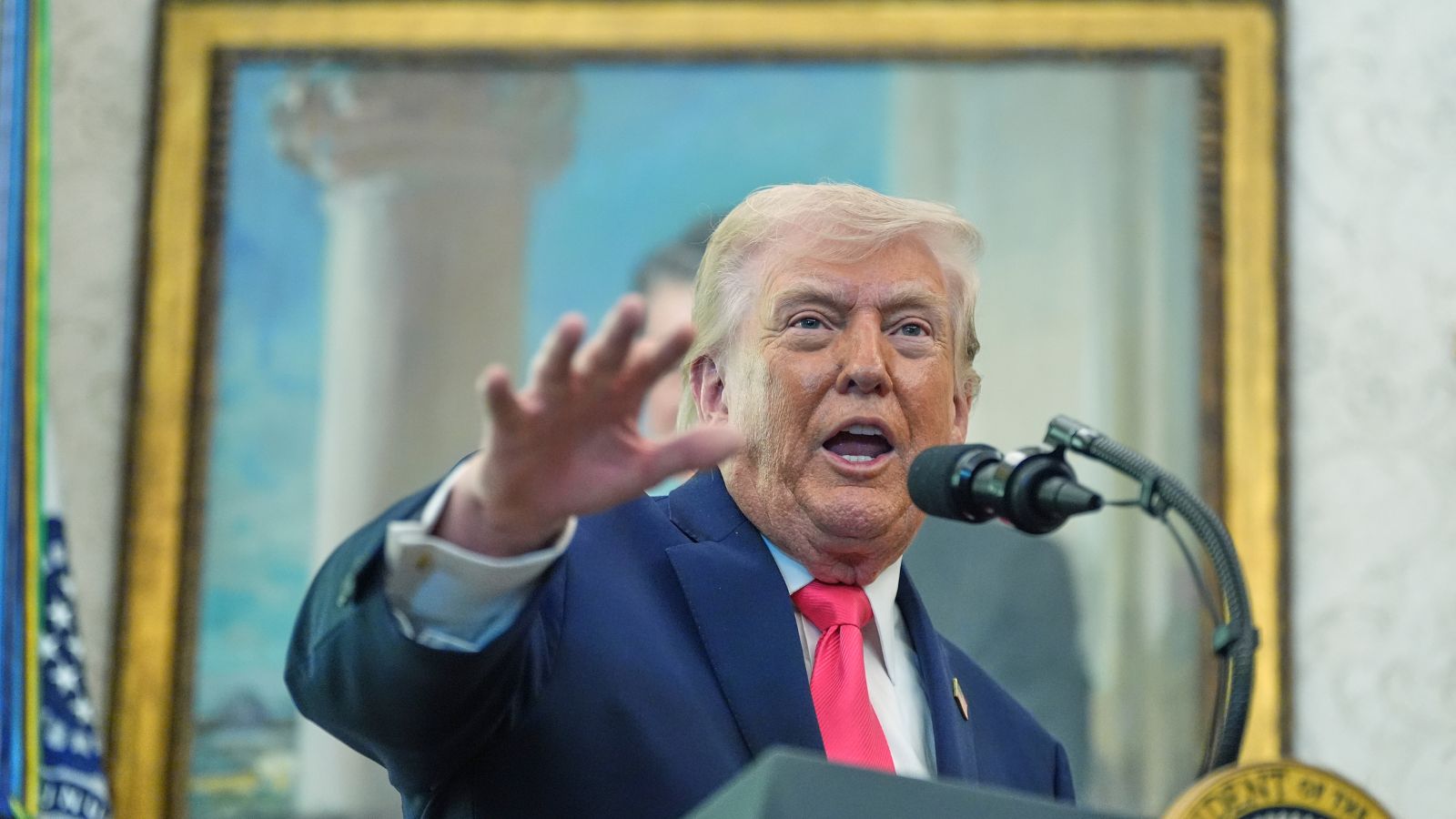
On Tuesday, Trump told reporters at the White House that talks were actively underway. “We’re in negotiations right now,” he said, insisting Iran’s navy, air force, and communications had been destroyed, and that the country was “totally defeated”.
He named his inner circle — Vice-President JD Vance, Secretary of State Marco Rubio, and envoys Steve Witkoff and Jared Kushner — as involved in the talks. He further said: “I’m involved in the Iran negotiations. You’re talking about saving millions of lives.”
PRESIDENT TRUMP: I’m involved in the Iran negotiations. You’re talking about saving millions of lives. pic.twitter.com/o324b1UIVZ
— Department of State (@StateDept) March 24, 2026
ALSO READ | Explained: Trump’s 15-point Iran peace plan, and the questions it raises
“Don’t call your defeat an agreement”: This was the response that Iran had for Trump after his claim
Lt Col Ebrahim Zolfaghari, spokesperson for Iran’s Khatam Al-Anbiya Central Headquarters — the command that jointly oversees Iran’s regular military and the elite Revolutionary Guard — aired a recorded statement on state television, saying that there were no talks at all.
ALSO READ | Who is Ebrahim Zolfaghari, the Iranian Brigadier General who ‘fired Trump’?
“The strategic power you used to talk about has turned into a strategic failure,” Zolfaghari said. “The one claiming to be a global superpower would have already gotten out of this mess if it could. Don’t dress up your defeat as an agreement. Your era of empty promises has come to an end.”
سخنگوی قرارگاه مرکزی خاتمالانبیا خطاب به آمریکا: اسم شکستتان را توافق نگذارید. نه خبری از سرمایهگذاریهایتان در منطقه خواهد بود و نه قیمت سابق انرژی و نفت را خواهید دید.
تا موعدی که اراده ما نباشد، هیچ وضعیتی به روال سابق برنمیگردد، pic.twitter.com/kQAoFXwbLW
— Embassy of the I.R. Iran in Kabul, Afghanistan (@IRANinKabul) March 25, 2026
The mockery was pointed and deliberate. “Are your internal conflicts now reduced to negotiating with yourselves,” Zolfaghari taunted.
This is not a minor spokesperson going rogue. The Khatam al-Anbiya Central Headquarters, dominated by the hardline Revolutionary Guards, represents the unified combatant command of Iran’s armed forces. The Kathmandu Post When it speaks, it speaks for the military establishment – and right now, that establishment is saying: no deal, no surrender.
ALSO READ | Expert Explains: Regime change needs air power with ground troops, says former Air Chief Dhanoa
This is where things get murky. Iran’s new Supreme Leader is Mojtaba Khamenei, son of Ali Khamenei, who was killed in the opening US-Israeli strikes on February 28. Mojtaba officially succeeded his father but has remained largely in the shadows.
When a CBS News reporter asked Trump which Iranians the US was negotiating with, the president offered a startling answer: “We killed all their leadership. And then they met to choose new leaders and we killed all of them. And now we have a new group.”
ALSO READ | Trump says Iran wants a deal: ‘Gave us a very big present, worth tremendous amount of money’
Mojtaba’s physical condition, whereabouts, and actual role in the war remain a mystery. The CIA, Mossad, and other intelligence agencies are monitoring for any signs of movement and have not yet seen evidence that he is actively directing Iran’s war efforts.
Al Arabiya, citing Israeli Hebrew language newspaper Yedioth Ahronoth, reported that foreign minister Abbas Araghchi secretly informed US envoy Steve Witkoff that Mojtaba Khamenei had approved talks toward a potential deal. However, an informed source inside Iran subsequently denied these reports, further complicating the war information flow.
Araghchi himself, who led Iran’s nuclear negotiations before the war, is not seen by Washington as a key decision-maker. And among those killed early in the conflict was Ali Larijani, who had been considered the de facto civilian leader following Ali Khamenei’s death.
One figure who has emerged with unusual visibility is Parliament Speaker Mohammad Bagher Ghalibaf, a former Revolutionary Guard commander. He has been pairing public mockery of Trump on social media with a reported behind-the-scenes role in indirect negotiations. “He has claimed he ‘defeated’ us nine times in the last two weeks. Hilarious!” Ghalibaf wrote on X. He wrote in another post: “No negotiations have been held with the US, and fakenews is used to manipulate the financial and oil markets and escape the quagmire in which the US and Israel are trapped.”
2/ No negotiations have been held with the US, and fakenews is used to manipulate the financial and oil markets and escape the quagmire in which the US and Israel are trapped.
— محمدباقر قالیباف | MB Ghalibaf (@mb_ghalibaf) March 23, 2026
In a recent interview with Al Araby Al-Jadeed news outlet, Ghalibaf rejected the idea of a ceasefire, saying Iran would continue fighting until conditions ensure the conflict does not resume.
But are negotiations on is the million-dollar question… or billions of dollars, in this case.
Behind all the rhetoric, there is at least a document on the table — The 15-point ceasefire plan. The development was first reported by New York Times, quoting US officials. Later, two Pakistani officials confirmed to news agency AP that Trump’s peace proposal was indeed sent to Iran. Pakistan earlier offered to host mediations between Washington and Tehran.
There is no clarity on a time frame for direct US-Iran discussions on the table, although a few reports have floated the possibility of one being held within a week.
Iran has acknowledged that messages are being passed through friendly nations – just not that it constitutes “negotiations” in any formal sense.
Meanwhile, Iran has effectively closed the Strait of Hormuz, cutting off roughly 20% of the world’s oil and gas supply, creating what the International Energy Agency has called a “major, major threat” to the global economy.
CHECK THE LATEST UPDATES ON THE WEST ASIA CRISIS HERE.
With oil prices rising and consumers feeling the pinch at the pump, Trump faces mounting domestic pressure to bring the war to an end. Till now, he has faced three votes in the Senate, seeking to end the war. Although, Democrats lost the votes on all occasions, the pressure on Trump to bring the war to an end is now visible.
His own statements are contradictory. He has been claiming for long that the US has “won the war”. But there is no clarity on the negotiations to “end the war”.
The Trump Iran war negotiations are not simply a diplomatic dispute; they are the difference between a war that ends and one that expands.
Iran’s public position and its backroom signalling remain at odds, and no one yet knows whether the new leadership in Tehran has the legitimacy, the willingness, or frankly the physical capacity to close a deal.
Until that clarity emerges, the world’s energy markets and millions of lives hang in the balance.
Stay updated with the latest - Click here to follow us on Instagram
US President Donald Trump is saying a deal on the Iran war is close. Iran’s military says there is no deal and never will be. As airstrikes continue to light up the skies over Tehran and Tel Aviv, the gap between Washington’s narrative and Tehran’s reality has never looked wider.
The worst military faceoff in recent times has also turned into the most confusing diplomatic hodge-podge of the century — the Trump Iran war negotiations that may or may not be happening.
On Tuesday, Trump told reporters at the White House that talks were actively underway. “We’re in negotiations right now,” he said, insisting Iran’s navy, air force, and communications had been destroyed, and that the country was “totally defeated”.
He named his inner circle — Vice-President JD Vance, Secretary of State Marco Rubio, and envoys Steve Witkoff and Jared Kushner — as involved in the talks. He further said: “I’m involved in the Iran negotiations. You’re talking about saving millions of lives.”
PRESIDENT TRUMP: I’m involved in the Iran negotiations. You’re talking about saving millions of lives. pic.twitter.com/o324b1UIVZ
— Department of State (@StateDept) March 24, 2026
ALSO READ | Explained: Trump’s 15-point Iran peace plan, and the questions it raises
“Don’t call your defeat an agreement”: This was the response that Iran had for Trump after his claim
Lt Col Ebrahim Zolfaghari, spokesperson for Iran’s Khatam Al-Anbiya Central Headquarters — the command that jointly oversees Iran’s regular military and the elite Revolutionary Guard — aired a recorded statement on state television, saying that there were no talks at all.
ALSO READ | Who is Ebrahim Zolfaghari, the Iranian Brigadier General who ‘fired Trump’?
“The strategic power you used to talk about has turned into a strategic failure,” Zolfaghari said. “The one claiming to be a global superpower would have already gotten out of this mess if it could. Don’t dress up your defeat as an agreement. Your era of empty promises has come to an end.”
سخنگوی قرارگاه مرکزی خاتمالانبیا خطاب به آمریکا: اسم شکستتان را توافق نگذارید. نه خبری از سرمایهگذاریهایتان در منطقه خواهد بود و نه قیمت سابق انرژی و نفت را خواهید دید.
تا موعدی که اراده ما نباشد، هیچ وضعیتی به روال سابق برنمیگردد، pic.twitter.com/kQAoFXwbLW
— Embassy of the I.R. Iran in Kabul, Afghanistan (@IRANinKabul) March 25, 2026
The mockery was pointed and deliberate. “Are your internal conflicts now reduced to negotiating with yourselves,” Zolfaghari taunted.
This is not a minor spokesperson going rogue. The Khatam al-Anbiya Central Headquarters, dominated by the hardline Revolutionary Guards, represents the unified combatant command of Iran’s armed forces. The Kathmandu Post When it speaks, it speaks for the military establishment – and right now, that establishment is saying: no deal, no surrender.
ALSO READ | Expert Explains: Regime change needs air power with ground troops, says former Air Chief Dhanoa
This is where things get murky. Iran’s new Supreme Leader is Mojtaba Khamenei, son of Ali Khamenei, who was killed in the opening US-Israeli strikes on February 28. Mojtaba officially succeeded his father but has remained largely in the shadows.
When a CBS News reporter asked Trump which Iranians the US was negotiating with, the president offered a startling answer: “We killed all their leadership. And then they met to choose new leaders and we killed all of them. And now we have a new group.”
ALSO READ | Trump says Iran wants a deal: ‘Gave us a very big present, worth tremendous amount of money’
Mojtaba’s physical condition, whereabouts, and actual role in the war remain a mystery. The CIA, Mossad, and other intelligence agencies are monitoring for any signs of movement and have not yet seen evidence that he is actively directing Iran’s war efforts.
Al Arabiya, citing Israeli Hebrew language newspaper Yedioth Ahronoth, reported that foreign minister Abbas Araghchi secretly informed US envoy Steve Witkoff that Mojtaba Khamenei had approved talks toward a potential deal. However, an informed source inside Iran subsequently denied these reports, further complicating the war information flow.
Araghchi himself, who led Iran’s nuclear negotiations before the war, is not seen by Washington as a key decision-maker. And among those killed early in the conflict was Ali Larijani, who had been considered the de facto civilian leader following Ali Khamenei’s death.
One figure who has emerged with unusual visibility is Parliament Speaker Mohammad Bagher Ghalibaf, a former Revolutionary Guard commander. He has been pairing public mockery of Trump on social media with a reported behind-the-scenes role in indirect negotiations. “He has claimed he ‘defeated’ us nine times in the last two weeks. Hilarious!” Ghalibaf wrote on X. He wrote in another post: “No negotiations have been held with the US, and fakenews is used to manipulate the financial and oil markets and escape the quagmire in which the US and Israel are trapped.”
2/ No negotiations have been held with the US, and fakenews is used to manipulate the financial and oil markets and escape the quagmire in which the US and Israel are trapped.
— محمدباقر قالیباف | MB Ghalibaf (@mb_ghalibaf) March 23, 2026
In a recent interview with Al Araby Al-Jadeed news outlet, Ghalibaf rejected the idea of a ceasefire, saying Iran would continue fighting until conditions ensure the conflict does not resume.
But are negotiations on is the million-dollar question… or billions of dollars, in this case.
Behind all the rhetoric, there is at least a document on the table — The 15-point ceasefire plan. The development was first reported by New York Times, quoting US officials. Later, two Pakistani officials confirmed to news agency AP that Trump’s peace proposal was indeed sent to Iran. Pakistan earlier offered to host mediations between Washington and Tehran.
There is no clarity on a time frame for direct US-Iran discussions on the table, although a few reports have floated the possibility of one being held within a week.
Iran has acknowledged that messages are being passed through friendly nations – just not that it constitutes “negotiations” in any formal sense.
Meanwhile, Iran has effectively closed the Strait of Hormuz, cutting off roughly 20% of the world’s oil and gas supply, creating what the International Energy Agency has called a “major, major threat” to the global economy.
CHECK THE LATEST UPDATES ON THE WEST ASIA CRISIS HERE.
With oil prices rising and consumers feeling the pinch at the pump, Trump faces mounting domestic pressure to bring the war to an end. Till now, he has faced three votes in the Senate, seeking to end the war. Although, Democrats lost the votes on all occasions, the pressure on Trump to bring the war to an end is now visible.
His own statements are contradictory. He has been claiming for long that the US has “won the war”. But there is no clarity on the negotiations to “end the war”.
The Trump Iran war negotiations are not simply a diplomatic dispute; they are the difference between a war that ends and one that expands.
Iran’s public position and its backroom signalling remain at odds, and no one yet knows whether the new leadership in Tehran has the legitimacy, the willingness, or frankly the physical capacity to close a deal.
Until that clarity emerges, the world’s energy markets and millions of lives hang in the balance.