

Why Donald Trump’s team threw every single object handed by Chinese officials into trash bin before boarding Air Force One
Reports from foreign media outlets indicated that members of Trump’s delegation operated under unusually tight cybersecurity protocols throughout the Beijing visit.
US staff travelling with President Donald Trump’s delegation in Beijing reportedly collected and discarded all materials handed out by Chinese officials before boarding Air Force One on Friday, highlighting the intense cybersecurity precautions surrounding the high-level visit to China.
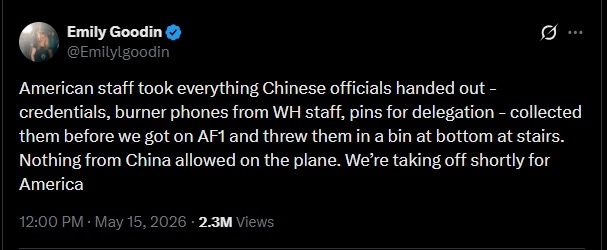
The episode came to light after White House correspondent Emily Goodin posted on X that American staff removed “everything Chinese officials handed out,” including delegation pins, credentials and burner phones issued to White House staff, before departure from Beijing.
According to Goodin’s post, the materials were thrown into a bin at the bottom of the aircraft stairs before members of the delegation boarded Air Force One.
The White House press pool later confirmed the account, saying the discarded items included press credentials, temporary phones and official delegation pins issued during the visit.
The development unfolded against the backdrop of heightened security measures that reportedly governed Trump’s trip to China, where US officials have long expressed concerns over surveillance and cyber espionage risks.
Reports from foreign media outlets indicated that members of Trump’s delegation operated under unusually tight cybersecurity protocols throughout the Beijing visit.
According to Business Times, citing reporting carried by Fox News, senior US officials and advisers were instructed to avoid using their personal smartphones while travelling in China. Instead, they reportedly relied on temporary “clean” devices designed with limited functionality to reduce exposure to hacking, monitoring and data collection.
The report said delegation members also restricted laptop usage, avoided commercial messaging applications and relied on government-managed communication systems during the trip.
Former US Secret Service special agent Bill Gage earlier told Fox News that such precautions are standard for high-level American visits to China because officials assume electronic activity may be monitored.
“China is a mass surveillance state,” Gage was quoted as saying, adding that US officials are briefed extensively before presidential visits.
Cybersecurity expert Theresa Payton also told Fox News that American personnel are generally trained to operate under the assumption that both digital and in-person communications could be observed while in China.
The strict communication protocols reportedly altered routine operations for staff accompanying the president, with greater reliance on face-to-face coordination, paper briefings and secured communication hubs.
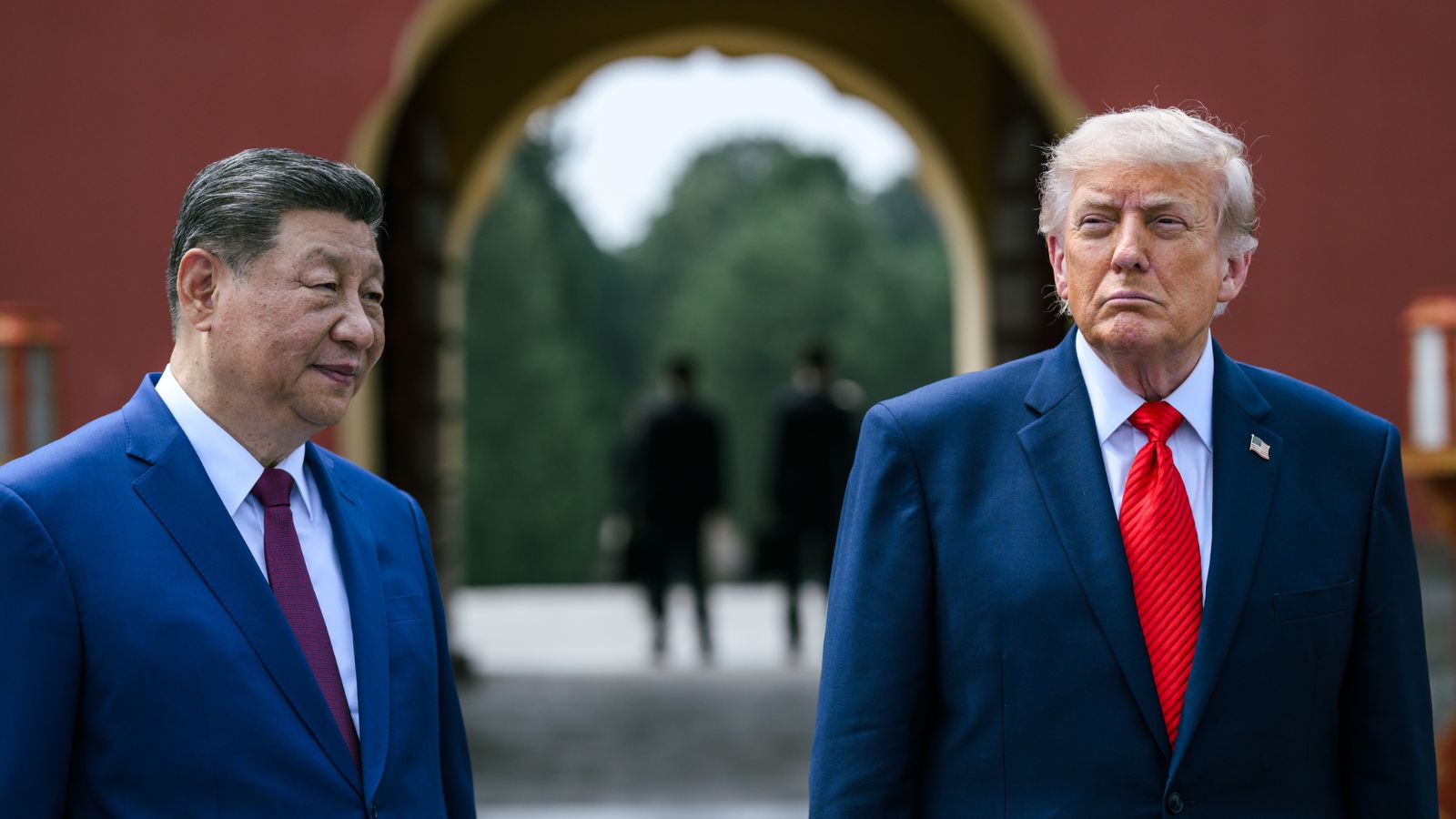
Although Trump and Chinese President Xi Jinping maintained a cordial public appearance during the summit, reports suggested there were moments of tension behind the scenes involving press access and security arrangements.
Several media reports said a US Secret Service agent accompanying the travelling press pool was prevented from entering Beijing’s Temple of Heaven during one engagement because he was carrying a firearm, which is standard under American presidential security procedures.
Separately, reporters travelling with the US delegation reportedly faced difficulties joining the presidential motorcade during the departure sequence. The Hill reported that US aides accompanying the press pool intervened after Chinese officials initially blocked reporters from entering the convoy area.
The reported friction echoed similar incidents from previous US presidential visits to China. During former President Barack Obama’s visit to Hangzhou for the 2016 G20 Summit, American and Chinese officials publicly argued over access arrangements and security protocols, according to earlier reporting by The New York Times.
The precautions surrounding Trump’s Beijing trip reflect broader tensions between Washington and Beijing over cyber espionage, surveillance and data security.
US intelligence agencies have repeatedly accused China-linked actors of targeting government systems, infrastructure networks and American companies through cyber operations. Beijing has consistently denied such allegations.
Security analysts say these concerns increasingly influence the logistics of high-level diplomacy, with cybersecurity now playing a central role in planning presidential travel and international summits.
Stay updated with the latest - Click here to follow us on Instagram
US staff travelling with President Donald Trump’s delegation in Beijing reportedly collected and discarded all materials handed out by Chinese officials before boarding Air Force One on Friday, highlighting the intense cybersecurity precautions surrounding the high-level visit to China.
The episode came to light after White House correspondent Emily Goodin posted on X that American staff removed “everything Chinese officials handed out,” including delegation pins, credentials and burner phones issued to White House staff, before departure from Beijing.
According to Goodin’s post, the materials were thrown into a bin at the bottom of the aircraft stairs before members of the delegation boarded Air Force One.
The White House press pool later confirmed the account, saying the discarded items included press credentials, temporary phones and official delegation pins issued during the visit.
The development unfolded against the backdrop of heightened security measures that reportedly governed Trump’s trip to China, where US officials have long expressed concerns over surveillance and cyber espionage risks.
Reports from foreign media outlets indicated that members of Trump’s delegation operated under unusually tight cybersecurity protocols throughout the Beijing visit.
According to Business Times, citing reporting carried by Fox News, senior US officials and advisers were instructed to avoid using their personal smartphones while travelling in China. Instead, they reportedly relied on temporary “clean” devices designed with limited functionality to reduce exposure to hacking, monitoring and data collection.
The report said delegation members also restricted laptop usage, avoided commercial messaging applications and relied on government-managed communication systems during the trip.
Former US Secret Service special agent Bill Gage earlier told Fox News that such precautions are standard for high-level American visits to China because officials assume electronic activity may be monitored.
“China is a mass surveillance state,” Gage was quoted as saying, adding that US officials are briefed extensively before presidential visits.
Cybersecurity expert Theresa Payton also told Fox News that American personnel are generally trained to operate under the assumption that both digital and in-person communications could be observed while in China.
The strict communication protocols reportedly altered routine operations for staff accompanying the president, with greater reliance on face-to-face coordination, paper briefings and secured communication hubs.
Although Trump and Chinese President Xi Jinping maintained a cordial public appearance during the summit, reports suggested there were moments of tension behind the scenes involving press access and security arrangements.
Several media reports said a US Secret Service agent accompanying the travelling press pool was prevented from entering Beijing’s Temple of Heaven during one engagement because he was carrying a firearm, which is standard under American presidential security procedures.
Separately, reporters travelling with the US delegation reportedly faced difficulties joining the presidential motorcade during the departure sequence. The Hill reported that US aides accompanying the press pool intervened after Chinese officials initially blocked reporters from entering the convoy area.
The reported friction echoed similar incidents from previous US presidential visits to China. During former President Barack Obama’s visit to Hangzhou for the 2016 G20 Summit, American and Chinese officials publicly argued over access arrangements and security protocols, according to earlier reporting by The New York Times.
The precautions surrounding Trump’s Beijing trip reflect broader tensions between Washington and Beijing over cyber espionage, surveillance and data security.
US intelligence agencies have repeatedly accused China-linked actors of targeting government systems, infrastructure networks and American companies through cyber operations. Beijing has consistently denied such allegations.
Security analysts say these concerns increasingly influence the logistics of high-level diplomacy, with cybersecurity now playing a central role in planning presidential travel and international summits.