

US-Iran set up Lebanon ‘deconfliction cell’. Can it deliver peace
US-Iran talks in Switzerland advanced with agreement on a Lebanon deconfliction cell to support ceasefire implementation and reduce regional military tensions.
After the first full day of talks between the US and Iran in Switzerland, negotiators agreed on Sunday to establish a new “deconfliction cell” for Lebanon in order to ensure a ceasefire on all fronts in the region and uphold the requirements in the memorandum of understanding (MoU) signed last week.
The negotiations in the Bürgenstock resort in Obbürgen, which is being led by Pakistan and Qatar, acknowledged that the US and Iran have agreed on “a roadmap towards reaching a final deal within 60 days” and described the ongoing process as “encouraging progress”.
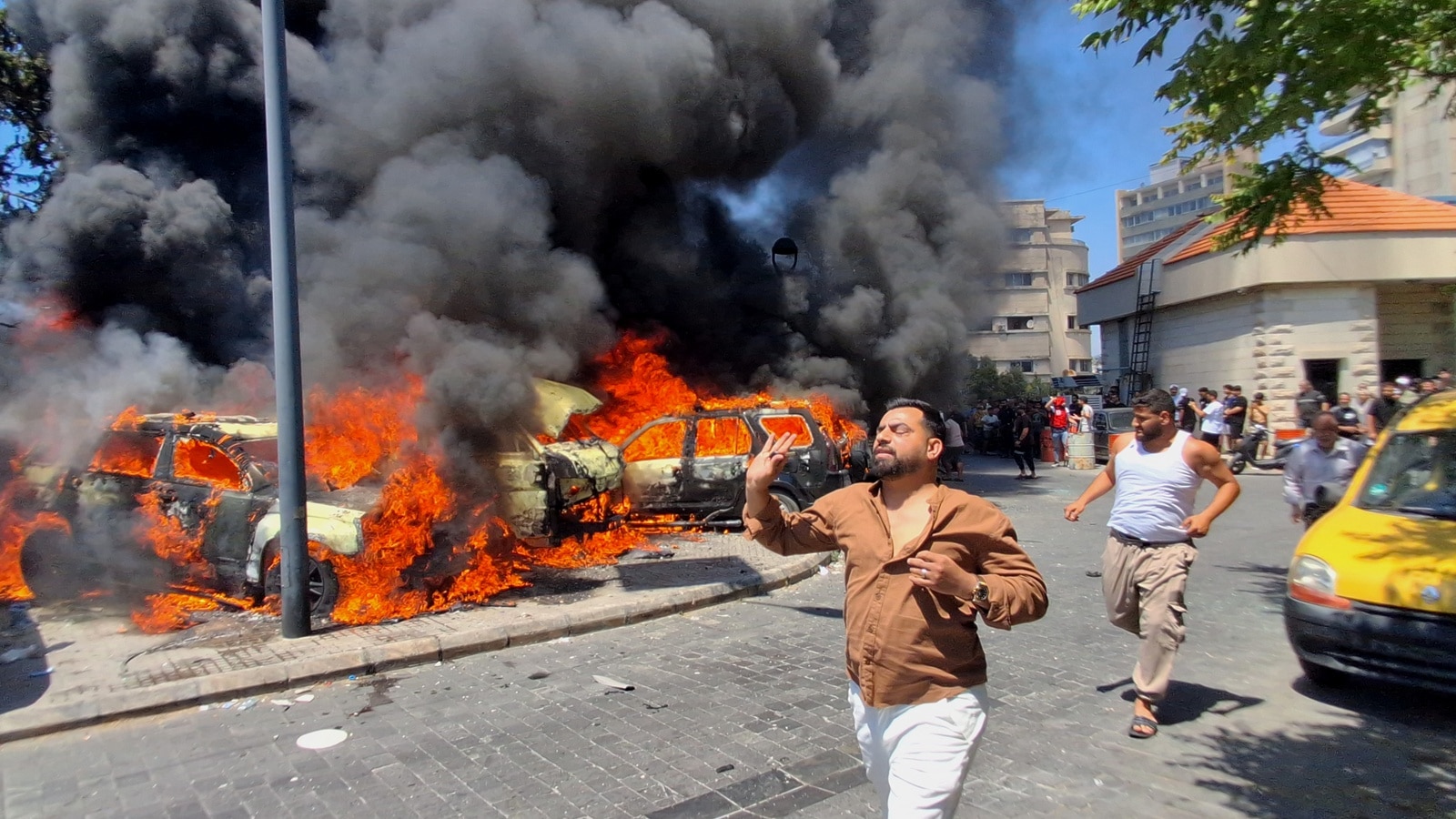
The move to create a “deconfliction cell” for Lebanon comes days after contradictory statements and confusion regarding ceasefire terms in Beirut as Israeli military continued its offensive in southern Lebanon.
After the first day of talks in Switzerland, Tehran and Washington consented to create the “deconfliction cell” involving Iran, the United States, and Lebanon to “ensure adherence to the termination of military operations in Lebanon,” the New York Post reported, citing the joint statement released by Qatar and Pakistan.
Iran’s Foreign Minister Abbas Aragchi said it would be the “first real test” of the negotiations to ensure a ceasefire is followed in Lebanon, as the Israeli military continued its strikes in Beirut, CBS News reported.
.@VP: I would describe the progress on Lebanon as “very good progress.”
“We want a regional ceasefire… we’ve been, I think, very good at setting up what we’re calling a deconfliction mechanism… when things happen, the sides are actually talking to one another.” pic.twitter.com/kXqavkyJkl
— Rapid Response 47 (@RapidResponse47) June 22, 2026
Notably, Israel is not a part of the joint statement mechanism where the “deconfliction cell” is being established for Lebanon, and it remains unclear if Prime Minister Benjamin Netanyahu has agreed to the idea.
A spokesperson for Israeli PM Netanyahu’s office, David Mencer, said, “Israel is not a party to this (memorandum of understanding) or of the negotiations with Iran,” CNN reported.
The aim to establish a “deconfliction cell” for Lebanon is to reportedly prevent the Israeli military from inadvertently clashing with the Lebanese military.
The Israeli Defense Forces (IDF) had said earlier this month that movement in the Lebanese region “requires coordination” after a general and several officers of Lebanon’s military were killed in Israeli military’s strikes.
Stay updated with the latest - Click here to follow us on Instagram
After the first full day of talks between the US and Iran in Switzerland, negotiators agreed on Sunday to establish a new “deconfliction cell” for Lebanon in order to ensure a ceasefire on all fronts in the region and uphold the requirements in the memorandum of understanding (MoU) signed last week.
The negotiations in the Bürgenstock resort in Obbürgen, which is being led by Pakistan and Qatar, acknowledged that the US and Iran have agreed on “a roadmap towards reaching a final deal within 60 days” and described the ongoing process as “encouraging progress”.
The move to create a “deconfliction cell” for Lebanon comes days after contradictory statements and confusion regarding ceasefire terms in Beirut as Israeli military continued its offensive in southern Lebanon.
After the first day of talks in Switzerland, Tehran and Washington consented to create the “deconfliction cell” involving Iran, the United States, and Lebanon to “ensure adherence to the termination of military operations in Lebanon,” the New York Post reported, citing the joint statement released by Qatar and Pakistan.
Iran’s Foreign Minister Abbas Aragchi said it would be the “first real test” of the negotiations to ensure a ceasefire is followed in Lebanon, as the Israeli military continued its strikes in Beirut, CBS News reported.
.@VP: I would describe the progress on Lebanon as “very good progress.”
“We want a regional ceasefire… we’ve been, I think, very good at setting up what we’re calling a deconfliction mechanism… when things happen, the sides are actually talking to one another.” pic.twitter.com/kXqavkyJkl
— Rapid Response 47 (@RapidResponse47) June 22, 2026
Notably, Israel is not a part of the joint statement mechanism where the “deconfliction cell” is being established for Lebanon, and it remains unclear if Prime Minister Benjamin Netanyahu has agreed to the idea.
A spokesperson for Israeli PM Netanyahu’s office, David Mencer, said, “Israel is not a party to this (memorandum of understanding) or of the negotiations with Iran,” CNN reported.
The aim to establish a “deconfliction cell” for Lebanon is to reportedly prevent the Israeli military from inadvertently clashing with the Lebanese military.
The Israeli Defense Forces (IDF) had said earlier this month that movement in the Lebanese region “requires coordination” after a general and several officers of Lebanon’s military were killed in Israeli military’s strikes.