

When energy becomes a weapon: Iran’s South Pars, Qatar’s Ras Laffan, and the fires burning across the Gulf
Gas and oil fields destroyed across the Middle East — South Pars struck, Ras Laffan damaged. Here's what's happened, who hit what, and the long-term global fallout.
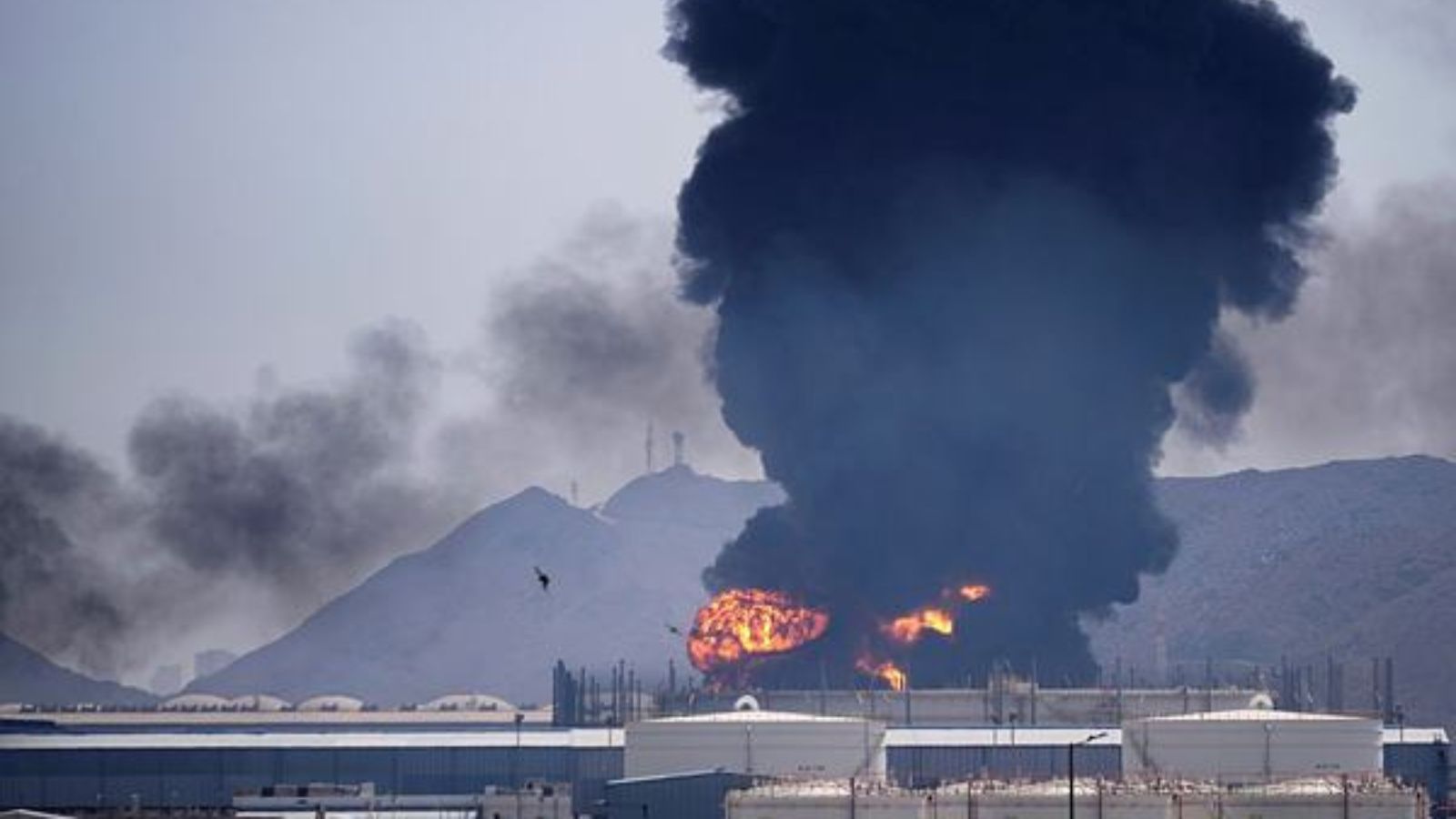
West Asia is no longer just a military battleground; it has become an energy war — and the world is already paying for it at the pump. On Wednesday, March 18, Israel struck the South Pars gas field off Iran’s southern coast, the largest natural gas reservoir on the planet. Within hours, Iran retaliated by firing missiles at Qatar’s Ras Laffan Industrial City, home to the world’s largest LNG export plant.
With gas and oil fields destroyed across the region, energy markets are in shock — and the long-term fallout could reshape global supply chains for years.
The South Pars strike was a turning point. Israeli forces targeted facilities linked to South Pars and the onshore hub at Asaluyeh in Bushehr Province — the first direct attack on Iran’s upstream production since the conflict began.
The field’s scale makes this a big deal: together with Qatar’s North Dome, it forms the world’s largest natural gas field, holding an estimated 1,800 trillion cubic feet of gas and 50 billion barrels of condensate.
Iran’s share alone accounts for roughly 36 per cent of its proven gas reserves.
A US defence official was quoted by Axios as saying that the South Pars strike was coordinated with and approved by the Trump administration. However, US President Donald Trump quickly dismissed the assertion and said the US had no clue about Israel’s plan to attack the gas field.
But South Pars wasn’t the first Iranian energy target. Prior attacks had targeted oil storage depots in Karaj, Shahran, Aghdasieh, and Shahr-e Rey — all areas in or around the capital Tehran. The 2,25,000-barrels-per-day Tehran refinery was also damaged.
ALSO READ | Oil well explosion impact: What the 1991 Gulf War can teach us about today’s Iran crisis
The Israeli military said it had targeted “several fuel storage complexes belonging to the IRGC in Tehran” that it claimed were used to distribute fuel to military entities.
The aftermath was grim: Tehran was shrouded in toxic smoke, which left residents reporting black rain, with Iranian authorities urging people to stay indoors.
The United States also targeted military infrastructure on Iran’s Kharg Island on March 13.
Prominent sites in Iran hit by the US and Israel include South Pars, Iranian Fuel Storage & Processing Sites near Asaluyeh, Kharg Island, and the Tehran refineries.
Iran’s response came fast. Tehran announced that five facilities across Saudi Arabia, the UAE, and Qatar “will be targeted in the coming hours” — naming Saudi Arabia’s SAMREF refinery and Jubail petrochemical complex, the UAE’s Al Hosn gas field, and Qatar’s Ras Laffan refinery and Mesaieed petrochemical complex.
Then missiles flew: Qatar’s Ministry of Foreign Affairs confirmed that Iranian attacks on Ras Laffan Industrial City “caused fires resulting in significant damage to the facility”. This was the second time Ras Laffan was struck — Qatar had already suspended LNG production on March 2 following earlier Iranian drone attacks on Ras Laffan and Mesaieed Industrial City.
When that first attack hit, benchmark Dutch and British wholesale gas prices soared by almost 50 per cent, while benchmark Asian LNG prices jumped nearly 39 per cent, Al Jazeera reported.
Following the Ras Laffan attack, Reuters reported that Saudi Aramco’s SAMREF facility had also been targeted.
Earlier, Iran had hit an oil facility in Fujairah, United Arab Emirates.
Hours after Ras Laffan was struck by an Iranian missile (after four had been intercepted), Abu Dhabi shut its Habshan gas facilities as they were hit by falling debris from an intercepted strike.
In a later statement, QatarEnergy said several other LNG facilities had also been attacked, “causing sizeable fires and extensive further damage”.
Prominent facilities hit in the UAE are ADNOC’s Ruwais Refinery (Abu Dhabi), Habshan Gas Facility & Bab Oil Field (Abu Dhabi), UAE Gas Fields, Fujairah Oil Storage and Loading Terminals.
In a sharp diplomatic move, Qatar expelled Iran’s military and security attachés following the Ras Laffan strike.
Donald Trump set a new ultimatum, threatening to “blow up Iran”, to coax NATO allies into the war. Top US counterterrorism official in the Donald Trump government Joe Kent on Tuesday resigned over the war in Iran. In his resignation letter shared on X, he said that he could not support the conflict and argued that Iran did not pose an immediate threat to the United States.
ALSO READ | Iran war puts Donald Trump’s MAGA under strain as loyalists break ranks
Saudi Arabia also came under fire. The Saudi defence ministry said it intercepted four ballistic missiles launched toward Riyadh, with debris falling in various parts of the capital. Saudi Foreign Minister Faisal bin Farhan Al Saud slammed Iran for repeatedly targeting the Kingdom, calling the strikes a “blatant attempt at blackmail”.
Saudi Aramco’s mammoth Ras Tanura refinery and crude export terminal also shut ops due to attacks, reported Al Jazeera.
The financial fallout is staggering. Brent crude price rose more than 8% to surge past $112 per barrel after the Ras Laffan attack was confirmed.
The conflict already led to the suspension of about a fifth of global crude and natural gas supply, as Tehran targeted ships in the Strait of Hormuz.
Total oil output cuts in the Middle East are estimated at 7 to 10 million barrels per day — roughly 7 to 10 per cent of global demand.
For American drivers, it’s showing up at the pump. According to CNN, Gasoline prices in the United States hit their highest level in almost two and a half years, with regular gas averaging $3.84 a gallon and topping $5 in California, Hawaii, and Washington.
The possibilities are alarming; Israel’s offshore gas fields — Leviathan, Tamar, and Karish — remain exposed to potential Iranian retaliation, as per Iran International. Expanding the conflict to the Eastern Mediterranean would transform a regional confrontation into a multi-basin energy crisis.
The global markets are already volatile. If disruptions keep oil and gas prices elevated for an extended period, the global economy could experience a wave of inflation.
ALSO READ | ‘Finish off Iran’: Trump’s ultimatum to get ‘non-responsive allies’ to join Middle East war
Senior fellow at the Center for a New American Security Rachel Ziemba was quoted by Al Jazeera as saying that the attacks could “put further pressure on regional power supplies”, while smaller nations with weaker economies in the Global South face the most immediate pain as “LNG price increases lead to demand destruction”.
Dounder and CIO of Pickering Energy Partners Dan Pickering told CNBC: “We’re moving from a supply chain problem to potentially a supply problem. There’s a big difference. You fix supply chain problems quickly.”
And President Trump has issued a stark warning: if Qatar’s LNG facilities are attacked again, the US will “massively blow up the entirety of the South Pars Gas Field at an amount of strength and power that Iran has never seen”.
Stay updated with the latest - Click here to follow us on Instagram
West Asia is no longer just a military battleground; it has become an energy war — and the world is already paying for it at the pump. On Wednesday, March 18, Israel struck the South Pars gas field off Iran’s southern coast, the largest natural gas reservoir on the planet. Within hours, Iran retaliated by firing missiles at Qatar’s Ras Laffan Industrial City, home to the world’s largest LNG export plant.
With gas and oil fields destroyed across the region, energy markets are in shock — and the long-term fallout could reshape global supply chains for years.
The South Pars strike was a turning point. Israeli forces targeted facilities linked to South Pars and the onshore hub at Asaluyeh in Bushehr Province — the first direct attack on Iran’s upstream production since the conflict began.
The field’s scale makes this a big deal: together with Qatar’s North Dome, it forms the world’s largest natural gas field, holding an estimated 1,800 trillion cubic feet of gas and 50 billion barrels of condensate.
Iran’s share alone accounts for roughly 36 per cent of its proven gas reserves.
A US defence official was quoted by Axios as saying that the South Pars strike was coordinated with and approved by the Trump administration. However, US President Donald Trump quickly dismissed the assertion and said the US had no clue about Israel’s plan to attack the gas field.
But South Pars wasn’t the first Iranian energy target. Prior attacks had targeted oil storage depots in Karaj, Shahran, Aghdasieh, and Shahr-e Rey — all areas in or around the capital Tehran. The 2,25,000-barrels-per-day Tehran refinery was also damaged.
ALSO READ | Oil well explosion impact: What the 1991 Gulf War can teach us about today’s Iran crisis
The Israeli military said it had targeted “several fuel storage complexes belonging to the IRGC in Tehran” that it claimed were used to distribute fuel to military entities.
The aftermath was grim: Tehran was shrouded in toxic smoke, which left residents reporting black rain, with Iranian authorities urging people to stay indoors.
The United States also targeted military infrastructure on Iran’s Kharg Island on March 13.
Prominent sites in Iran hit by the US and Israel include South Pars, Iranian Fuel Storage & Processing Sites near Asaluyeh, Kharg Island, and the Tehran refineries.
Iran’s response came fast. Tehran announced that five facilities across Saudi Arabia, the UAE, and Qatar “will be targeted in the coming hours” — naming Saudi Arabia’s SAMREF refinery and Jubail petrochemical complex, the UAE’s Al Hosn gas field, and Qatar’s Ras Laffan refinery and Mesaieed petrochemical complex.
Then missiles flew: Qatar’s Ministry of Foreign Affairs confirmed that Iranian attacks on Ras Laffan Industrial City “caused fires resulting in significant damage to the facility”. This was the second time Ras Laffan was struck — Qatar had already suspended LNG production on March 2 following earlier Iranian drone attacks on Ras Laffan and Mesaieed Industrial City.
When that first attack hit, benchmark Dutch and British wholesale gas prices soared by almost 50 per cent, while benchmark Asian LNG prices jumped nearly 39 per cent, Al Jazeera reported.
Following the Ras Laffan attack, Reuters reported that Saudi Aramco’s SAMREF facility had also been targeted.
Earlier, Iran had hit an oil facility in Fujairah, United Arab Emirates.
Hours after Ras Laffan was struck by an Iranian missile (after four had been intercepted), Abu Dhabi shut its Habshan gas facilities as they were hit by falling debris from an intercepted strike.
In a later statement, QatarEnergy said several other LNG facilities had also been attacked, “causing sizeable fires and extensive further damage”.
Prominent facilities hit in the UAE are ADNOC’s Ruwais Refinery (Abu Dhabi), Habshan Gas Facility & Bab Oil Field (Abu Dhabi), UAE Gas Fields, Fujairah Oil Storage and Loading Terminals.
In a sharp diplomatic move, Qatar expelled Iran’s military and security attachés following the Ras Laffan strike.
Donald Trump set a new ultimatum, threatening to “blow up Iran”, to coax NATO allies into the war. Top US counterterrorism official in the Donald Trump government Joe Kent on Tuesday resigned over the war in Iran. In his resignation letter shared on X, he said that he could not support the conflict and argued that Iran did not pose an immediate threat to the United States.
ALSO READ | Iran war puts Donald Trump’s MAGA under strain as loyalists break ranks
Saudi Arabia also came under fire. The Saudi defence ministry said it intercepted four ballistic missiles launched toward Riyadh, with debris falling in various parts of the capital. Saudi Foreign Minister Faisal bin Farhan Al Saud slammed Iran for repeatedly targeting the Kingdom, calling the strikes a “blatant attempt at blackmail”.
Saudi Aramco’s mammoth Ras Tanura refinery and crude export terminal also shut ops due to attacks, reported Al Jazeera.
The financial fallout is staggering. Brent crude price rose more than 8% to surge past $112 per barrel after the Ras Laffan attack was confirmed.
The conflict already led to the suspension of about a fifth of global crude and natural gas supply, as Tehran targeted ships in the Strait of Hormuz.
Total oil output cuts in the Middle East are estimated at 7 to 10 million barrels per day — roughly 7 to 10 per cent of global demand.
For American drivers, it’s showing up at the pump. According to CNN, Gasoline prices in the United States hit their highest level in almost two and a half years, with regular gas averaging $3.84 a gallon and topping $5 in California, Hawaii, and Washington.
The possibilities are alarming; Israel’s offshore gas fields — Leviathan, Tamar, and Karish — remain exposed to potential Iranian retaliation, as per Iran International. Expanding the conflict to the Eastern Mediterranean would transform a regional confrontation into a multi-basin energy crisis.
The global markets are already volatile. If disruptions keep oil and gas prices elevated for an extended period, the global economy could experience a wave of inflation.
ALSO READ | ‘Finish off Iran’: Trump’s ultimatum to get ‘non-responsive allies’ to join Middle East war
Senior fellow at the Center for a New American Security Rachel Ziemba was quoted by Al Jazeera as saying that the attacks could “put further pressure on regional power supplies”, while smaller nations with weaker economies in the Global South face the most immediate pain as “LNG price increases lead to demand destruction”.
Dounder and CIO of Pickering Energy Partners Dan Pickering told CNBC: “We’re moving from a supply chain problem to potentially a supply problem. There’s a big difference. You fix supply chain problems quickly.”
And President Trump has issued a stark warning: if Qatar’s LNG facilities are attacked again, the US will “massively blow up the entirety of the South Pars Gas Field at an amount of strength and power that Iran has never seen”.