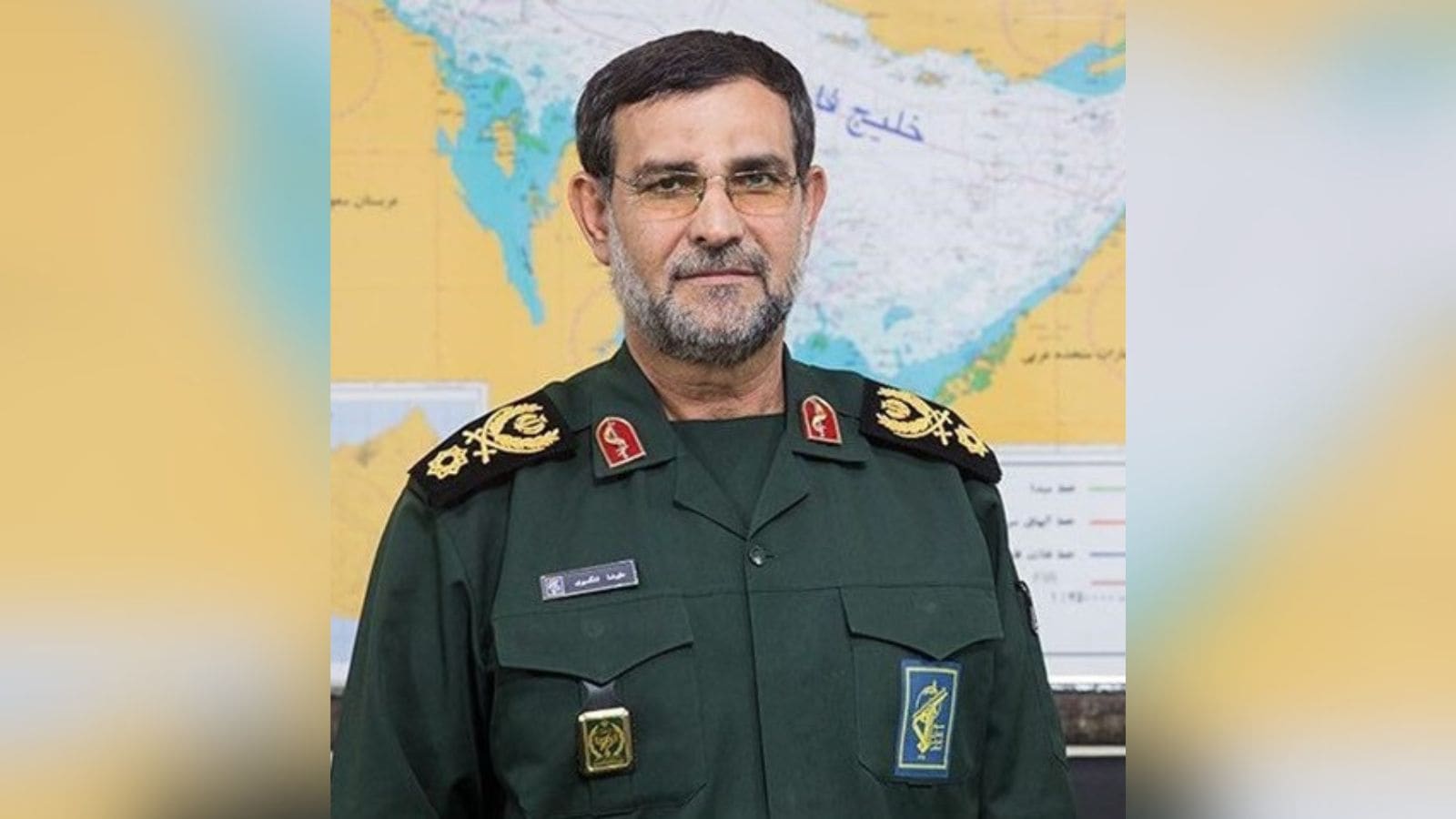


Iran navy chief Alireza Tangsiri, behind Hormuz strait chokehold, killed in airstrike: Israel
Tangsiri was responsible for the closure of the Strait of Hormuz, the media channel said quoting officials.
Islamic Revolutionary Guard Corps navy commander, Alireza Tangsiri, was killed in a strike in Bandar Abbas on Thursday, Times of Israel reported.
Tangsiri was responsible for the closure of the Strait of Hormuz, the news website said quoting officials.
There has been no confirmation or further statement by Israeli military or Iran.
Tap here for Live Updates on Iran-US-Israel war
Tangsiri, who had led the IRGC’s naval wing since August 2018, had grown increasingly assertive in the Strait of Hormuz since the conflict began. Last week, he threatened retaliation against US facilities in the region, warning civilians and workers to stay away, The Jerusalem Post reported.
As the war entered day 27 on Thursday, Iran and Israel continued to intensify their attacks. IDF said it launched extensive strikes targeting infrastructure in Iran. Meanwhile,there were reports of fragments and debris falling in the Israeli cities of Petah Tikva and Kfar Qassem.
US President Donald Trump proposed a 15-point plan to Iran, via Pakistan, aimed at ending the war in West Asia. Iran did not immediately accept the plan, instead offered a five point plan.
US’ proposal includes a rollback of Iran’s nuclear programme; a requirement that Iran hand over its enriched uranium stockpiles to the International Atomic Energy Agency (IAEA); and an agreement by Iran to limit its missile programme in both range and quantity.
Meanwhile, Iran has asked for a complete stop to what Iran calls “aggression and assassinations”, clear guarantees ensuring the war is not restarted, payment for war damages, recognition of Iran’s control over the Strait of Hormuz, and an end to fighting across all areas linked to Iranian allies, including Israel’s attacks on Lebanon targeting Hezbollah.
Iranian Foreign Minister said that change in Washington’s tone and stratergy shows weakness after earlier demanding “unconditional surrender”. He denied plans to hold any negotiations “with the enemy”, contrary to the claims from Washington about ongoing engagement.
Stay updated with the latest - Click here to follow us on Instagram
Islamic Revolutionary Guard Corps navy commander, Alireza Tangsiri, was killed in a strike in Bandar Abbas on Thursday, Times of Israel reported.
Tangsiri was responsible for the closure of the Strait of Hormuz, the news website said quoting officials.
There has been no confirmation or further statement by Israeli military or Iran.
Tap here for Live Updates on Iran-US-Israel war
Tangsiri, who had led the IRGC’s naval wing since August 2018, had grown increasingly assertive in the Strait of Hormuz since the conflict began. Last week, he threatened retaliation against US facilities in the region, warning civilians and workers to stay away, The Jerusalem Post reported.
As the war entered day 27 on Thursday, Iran and Israel continued to intensify their attacks. IDF said it launched extensive strikes targeting infrastructure in Iran. Meanwhile,there were reports of fragments and debris falling in the Israeli cities of Petah Tikva and Kfar Qassem.
US President Donald Trump proposed a 15-point plan to Iran, via Pakistan, aimed at ending the war in West Asia. Iran did not immediately accept the plan, instead offered a five point plan.
US’ proposal includes a rollback of Iran’s nuclear programme; a requirement that Iran hand over its enriched uranium stockpiles to the International Atomic Energy Agency (IAEA); and an agreement by Iran to limit its missile programme in both range and quantity.
Meanwhile, Iran has asked for a complete stop to what Iran calls “aggression and assassinations”, clear guarantees ensuring the war is not restarted, payment for war damages, recognition of Iran’s control over the Strait of Hormuz, and an end to fighting across all areas linked to Iranian allies, including Israel’s attacks on Lebanon targeting Hezbollah.
Iranian Foreign Minister said that change in Washington’s tone and stratergy shows weakness after earlier demanding “unconditional surrender”. He denied plans to hold any negotiations “with the enemy”, contrary to the claims from Washington about ongoing engagement.