

Iran releases first footage of damage inside Ali Khamenei’s residence after US-Israel strike
Khamenei's funeral ceremony is set to conclude with his burial in his hometown of Mashhad, the holy city in northeastern Iran, today.
Iranian state media on Thursday released, for the first time, footage showing the damage inside late Supreme Leader Ayatollah Ali Khamenei’s residential compound following the US-Israeli strike that killed him on February 28.
The footage was released on the day Khamenei is set to be buried in Mashhad, bringing to a close week-long funeral ceremonies for Iran’s late Supreme Leader.
Khamenei’s son, Mojtaba Khamenei, was injured in the February 28 attack. Mojtaba’s wife, Zahra, and his teenage son, Mohammad Bagher, and Ali Khamenei’s 14-month-old granddaughter were also killed in the same attack.
Khamenei’s funeral was postponed from March to July amid escalation in the war between the US and Iran.
The video shared by Iranian media shows extensive damage and debris within the hall inside Khamenei’s residential compound in Tehran. It showcases huge structures in ruins and mounds of rubble that resulted from the US-Israel joint strikes that killed Khamenei.
The compound, known as Beyt-e Rahbari, serves as the headquarters of Iran’s Supreme Leader and is regarded as the centre of political and religious power in the Islamic Republic.
On February 28, soon after the attack, pictures showing smoke billowing from the compound had gone viral on social media. Damage was reported to several buildings, a CNN report released at the time stated.
Khamenei’s residential compound, also known as the beyt-e rahbari, has served as the hub of power in the Islamic country and serves as the nerve centre of Iran’s theocratic rule.
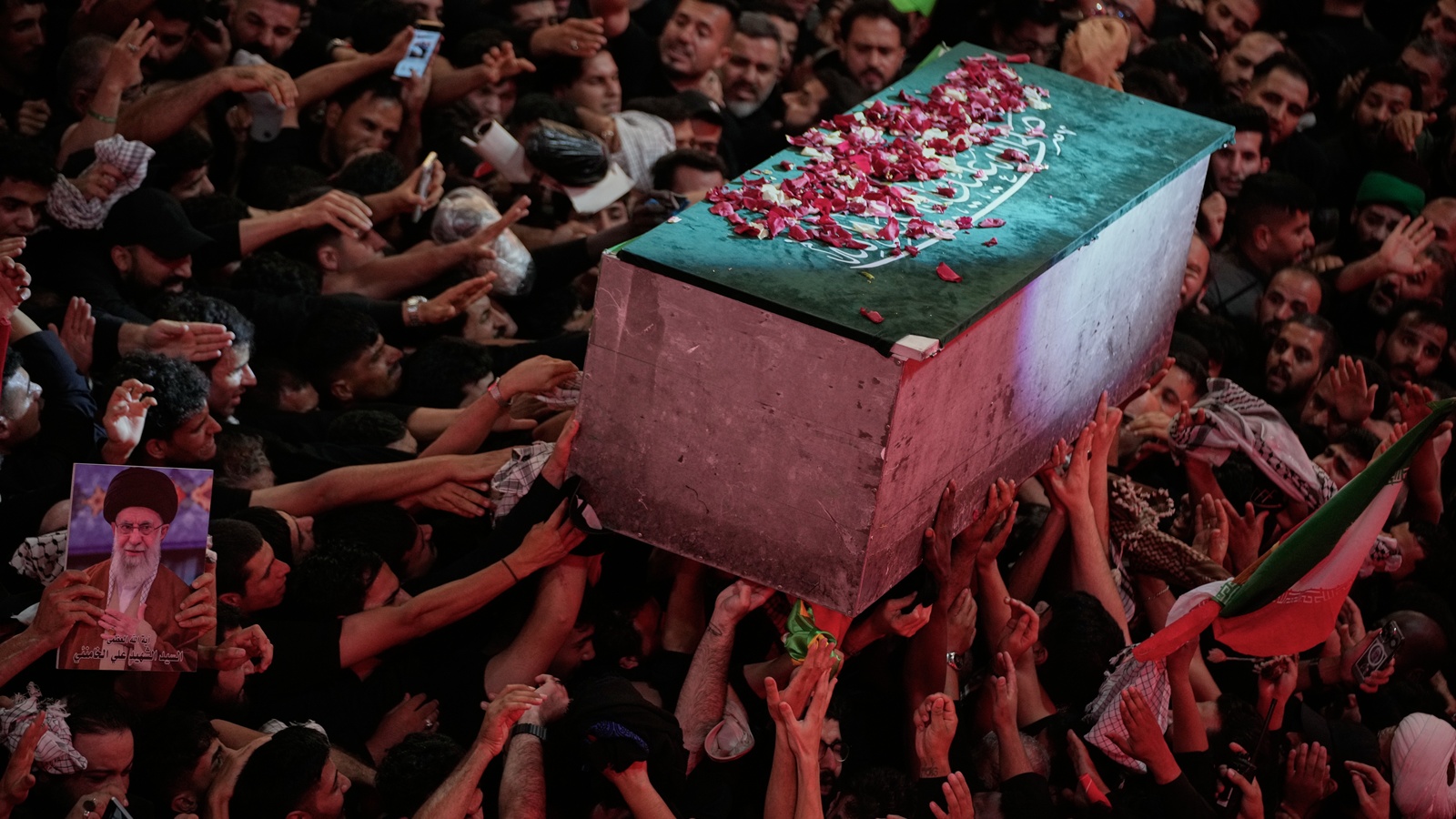
Last week, processions of Khamenei’s coffin in Tehran and other cities brought out huge crowds of supporters in a show of strength at the core of the Islamic Republic, essentially by those who regarded him as a defender of clerical rule, as he stood up against the West and Israel, the Associated Press reported.
His funeral ceremony is set to conclude with his burial in his hometown of Mashhad, the holy city in northeastern Iran, today.
Khamenei succeeded Ayatollah Ruhollah Khomeini as Supreme Leader in 1989 and became the Islamic Republic’s most powerful political and religious figure. He was 86 at the time of his death and led the Islamic Republic for 36 years.
Khamenei’s son, Mojtaba Khamenei, succeeded him as Supreme Leader in early March.
Stay updated with the latest - Click here to follow us on Instagram
Iranian state media on Thursday released, for the first time, footage showing the damage inside late Supreme Leader Ayatollah Ali Khamenei’s residential compound following the US-Israeli strike that killed him on February 28.
The footage was released on the day Khamenei is set to be buried in Mashhad, bringing to a close week-long funeral ceremonies for Iran’s late Supreme Leader.
Khamenei’s son, Mojtaba Khamenei, was injured in the February 28 attack. Mojtaba’s wife, Zahra, and his teenage son, Mohammad Bagher, and Ali Khamenei’s 14-month-old granddaughter were also killed in the same attack.
Khamenei’s funeral was postponed from March to July amid escalation in the war between the US and Iran.
The video shared by Iranian media shows extensive damage and debris within the hall inside Khamenei’s residential compound in Tehran. It showcases huge structures in ruins and mounds of rubble that resulted from the US-Israel joint strikes that killed Khamenei.
The compound, known as Beyt-e Rahbari, serves as the headquarters of Iran’s Supreme Leader and is regarded as the centre of political and religious power in the Islamic Republic.
On February 28, soon after the attack, pictures showing smoke billowing from the compound had gone viral on social media. Damage was reported to several buildings, a CNN report released at the time stated.
Khamenei’s residential compound, also known as the beyt-e rahbari, has served as the hub of power in the Islamic country and serves as the nerve centre of Iran’s theocratic rule.
Last week, processions of Khamenei’s coffin in Tehran and other cities brought out huge crowds of supporters in a show of strength at the core of the Islamic Republic, essentially by those who regarded him as a defender of clerical rule, as he stood up against the West and Israel, the Associated Press reported.
His funeral ceremony is set to conclude with his burial in his hometown of Mashhad, the holy city in northeastern Iran, today.
Khamenei succeeded Ayatollah Ruhollah Khomeini as Supreme Leader in 1989 and became the Islamic Republic’s most powerful political and religious figure. He was 86 at the time of his death and led the Islamic Republic for 36 years.
Khamenei’s son, Mojtaba Khamenei, succeeded him as Supreme Leader in early March.