

Meat, faith, freedom: The ‘proudly non-halal’ restaurant that has divided London
On November 13, London’s Metropolitan Police arrested restaurant owner Harman over “suspicion of possession and distribution of an extreme image”. He was later granted bail.
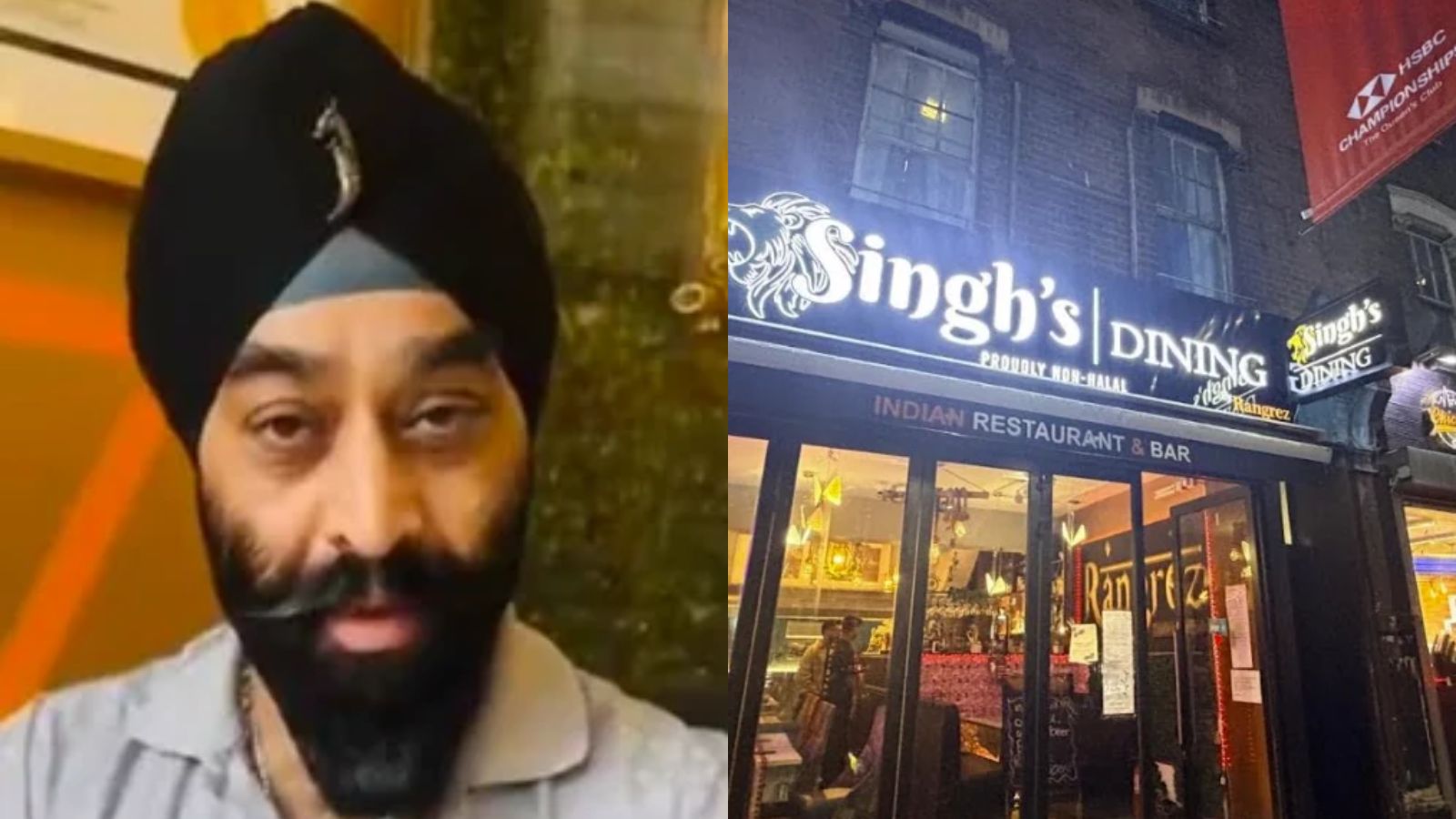
The arrest of Harman Singh Kapoor, who made headlines for a ‘proudly non-halal’ banner at his restaurant in London’s Hammersmith, has divided public opinion and reignited the debate on the limits of freedom of speech. On November 13, London’s Metropolitan Police arrested Harman over “suspicion of possession and distribution of an extreme image”. He was later granted bail.
An Afghan Sikh refugee turned British national, Harman left Kabul around 1996, got asylum in London and started working in the city’s restaurants, washing utensils and cleaning tables. He opened Rangrez 14 years later. Later, the restaurant was named Singh’s Dining, with Harman saying it serves the “taste of authentic India”.
For months now, he has been drawing criticism for the ‘proudly non-halal’ banner at his restaurant, and his inflammatory social media posts about Muslims, immigrants and Palestinians. In a social media post in April, he wrote, “Muslims are setting up Sharia law in Britain.” Then in September, he posted a video showing a girls’ school in Gaza, tagged Israel Prime Minister Benjamin Netanyahu and asked why the building was still standing. After a backlash, he released a video, saying he was “swallowing his pride”. In this video, he said negative reviews were mounting financial pressure on him and urged customers to help keep his business afloat.
Harman has supporters, who argue he has the freedom to express his views and serve whatever he wants at this establishment. British actor John Cleese, who starred in Monty Python and Fawlty Towers, criticised London police for arresting Harman and also arranged private security for his restaurant. “This is Britain in 2026, under a Labour government,” Cleese wrote on X after Kapoor’s arrest. He called the arrest “an absolutely absurd overreaction by the police” and said Harman was being targeted for expressing himself.
At the restaurant, Harman’s wife Khushi Harman Kapoor held a placard that read, “John Cleese is paying to defend this restaurant because MET police won’t”. Earlier, Kapoor posted through his wife’s account that protesters were turning up at his restaurant and sought police protection. “Let’s stand together for justice, freedom, equality and a safer Britain. Let’s make Britain great again!” he said.
Britain has two pieces of legislation on freedom of speech – the Human Rights Act of 1998 and the Public Order Act, revised in 2023. This freedom is not absolute and includes restrictions for security and public safety. In fact, some voices within the Muslim community have also defended Harman’s freedom of speech.
Mansoor Hussain Laghari, a US Army veteran who calls himself a Muslim Zionist, posted on X, “A man in London can say what he thinks about my religion. I can tell him he’s wrong, go home, pray, and sleep just fine… And if you take to the streets to exercise your freedom of speech, have the decency to defend his freedom to speak, too.”
Human rights organisation Liberty has emphasised that police and courts must assess the context of individual communications rather than assume that every offensive statement constitutes a criminal offence. But Harman’s views have distanced him from many within his own community. Randeep S Lall, founder of Nishkam SWAT (Sikh Welfare and Awareness Team) that works with several Sikh representatives and communities in London, said, “He is not a representative of the Sikh community. He is a one-man brand that represents himself.”
Jaas Singh of AkMedia47, an active member of several Sikh organisations, said taking a stand for jhatka meat is important, but added, “Harman should have done it in a better way… not so aggressively”. “For the non-halal movement, we would have wanted communities to work together. But his antics are causing more hate towards communities,” Jaas said.
For many, Harman’s comments on Palestine have been the last straw. “Every community has the right to self-determination. No loss of life should ever be celebrated. Our political views may differ, but that never justifies disrespecting or mocking an entire community. Social media can be weaponised to spread hatred and prejudice, and I believe Harman has used it to target and vilify the Palestinian community,” Lall said. Lall said Sikh groups in London have met to discuss how to tackle the situation.
Stay updated with the latest - Click here to follow us on Instagram
The arrest of Harman Singh Kapoor, who made headlines for a ‘proudly non-halal’ banner at his restaurant in London’s Hammersmith, has divided public opinion and reignited the debate on the limits of freedom of speech. On November 13, London’s Metropolitan Police arrested Harman over “suspicion of possession and distribution of an extreme image”. He was later granted bail.
An Afghan Sikh refugee turned British national, Harman left Kabul around 1996, got asylum in London and started working in the city’s restaurants, washing utensils and cleaning tables. He opened Rangrez 14 years later. Later, the restaurant was named Singh’s Dining, with Harman saying it serves the “taste of authentic India”.
For months now, he has been drawing criticism for the ‘proudly non-halal’ banner at his restaurant, and his inflammatory social media posts about Muslims, immigrants and Palestinians. In a social media post in April, he wrote, “Muslims are setting up Sharia law in Britain.” Then in September, he posted a video showing a girls’ school in Gaza, tagged Israel Prime Minister Benjamin Netanyahu and asked why the building was still standing. After a backlash, he released a video, saying he was “swallowing his pride”. In this video, he said negative reviews were mounting financial pressure on him and urged customers to help keep his business afloat.
Harman has supporters, who argue he has the freedom to express his views and serve whatever he wants at this establishment. British actor John Cleese, who starred in Monty Python and Fawlty Towers, criticised London police for arresting Harman and also arranged private security for his restaurant. “This is Britain in 2026, under a Labour government,” Cleese wrote on X after Kapoor’s arrest. He called the arrest “an absolutely absurd overreaction by the police” and said Harman was being targeted for expressing himself.
At the restaurant, Harman’s wife Khushi Harman Kapoor held a placard that read, “John Cleese is paying to defend this restaurant because MET police won’t”. Earlier, Kapoor posted through his wife’s account that protesters were turning up at his restaurant and sought police protection. “Let’s stand together for justice, freedom, equality and a safer Britain. Let’s make Britain great again!” he said.
Britain has two pieces of legislation on freedom of speech – the Human Rights Act of 1998 and the Public Order Act, revised in 2023. This freedom is not absolute and includes restrictions for security and public safety. In fact, some voices within the Muslim community have also defended Harman’s freedom of speech.
Mansoor Hussain Laghari, a US Army veteran who calls himself a Muslim Zionist, posted on X, “A man in London can say what he thinks about my religion. I can tell him he’s wrong, go home, pray, and sleep just fine… And if you take to the streets to exercise your freedom of speech, have the decency to defend his freedom to speak, too.”
Human rights organisation Liberty has emphasised that police and courts must assess the context of individual communications rather than assume that every offensive statement constitutes a criminal offence. But Harman’s views have distanced him from many within his own community. Randeep S Lall, founder of Nishkam SWAT (Sikh Welfare and Awareness Team) that works with several Sikh representatives and communities in London, said, “He is not a representative of the Sikh community. He is a one-man brand that represents himself.”
Jaas Singh of AkMedia47, an active member of several Sikh organisations, said taking a stand for jhatka meat is important, but added, “Harman should have done it in a better way… not so aggressively”. “For the non-halal movement, we would have wanted communities to work together. But his antics are causing more hate towards communities,” Jaas said.
For many, Harman’s comments on Palestine have been the last straw. “Every community has the right to self-determination. No loss of life should ever be celebrated. Our political views may differ, but that never justifies disrespecting or mocking an entire community. Social media can be weaponised to spread hatred and prejudice, and I believe Harman has used it to target and vilify the Palestinian community,” Lall said. Lall said Sikh groups in London have met to discuss how to tackle the situation.