

‘Why can’t I be like other children’: Gaza boy cries over broken spectacles | Video
A seven-year-old displaced Palestinian boy, Ayoub Junaid, captured global attention after a viral video showed him weeping over his shattered eyeglasses in Gaza.
Written by Salonee Kulkarni
“Why don’t the other children wear glasses like me? Why can’t I move like them? Why can’t I go to school like them?” A seven-year-old Palestinian boy, Ayoub Junaid, displaced in Gaza and suffering from visual impairment requiring immediate surgery, asks his mother. He is among the many children in Gaza who have suffered from the plight of Israel’s blockade, denying the children access to eye examinations, corrective lenses, or specialist ophthalmic care and surgery, The Guardian reports.
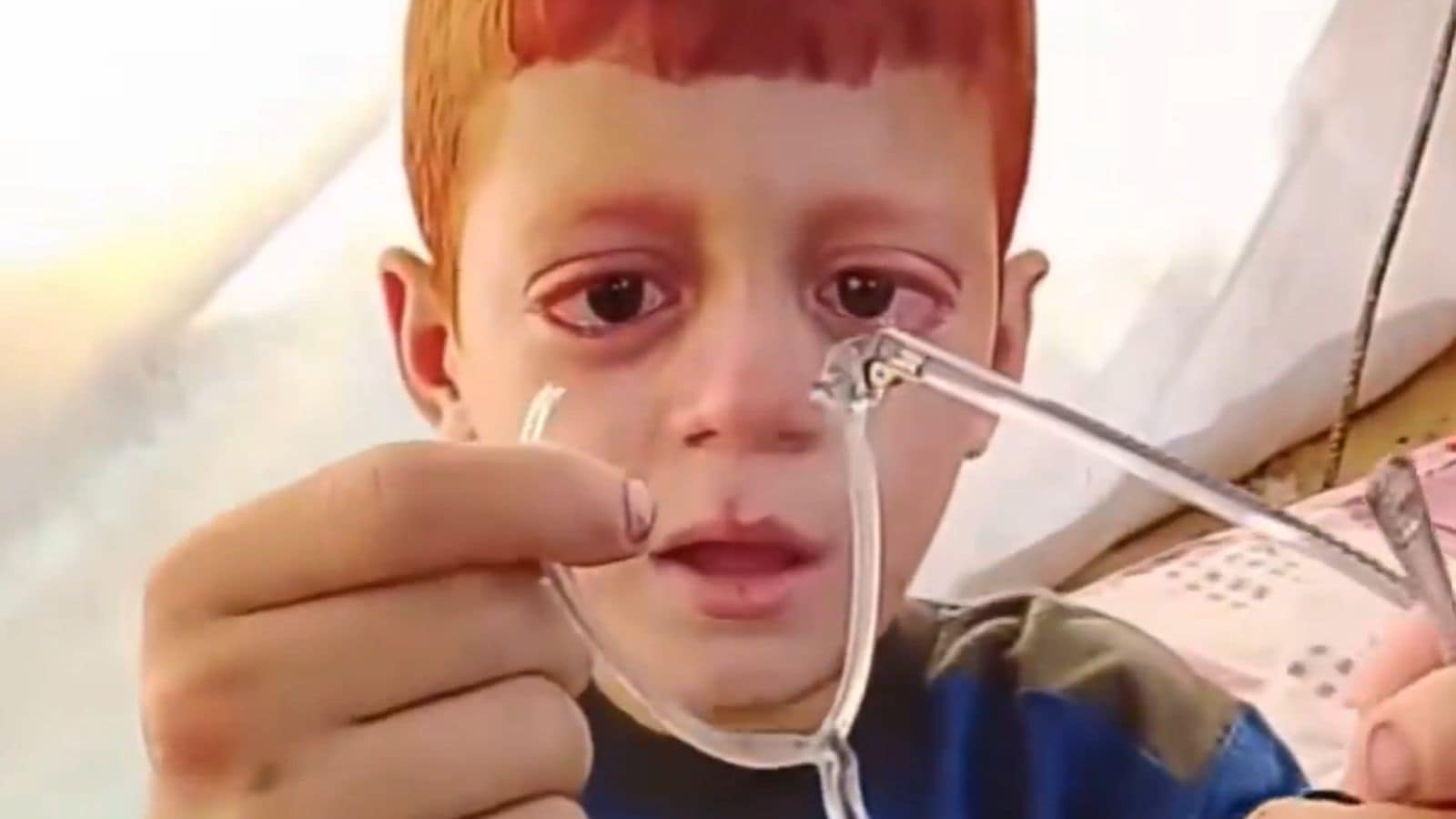
In a video that went viral, Ayoub is seen shedding tears over his shattered glasses. The video received 10 million views, and the little boy received a new pair of glasses. However, like many kids who suffer from limited access to an ophthalmologist, a new pair of glasses won’t suffice for his urgent need for an operation.
“The video I shared was filmed after we reached the tent,” his mother says. “In the street, he was crying even more and saying he wanted to fix his glasses because he could not see without them. After the video spread, donors helped us, and we were able to get a new pair of glasses, but it is still not the correct prescription he needs.”
L’immagine del giorno è questa. Quella del piccolo Ayoub Ali Junaid che in lacrime, nella sua tenda a nord di Gaza, mostra i suoi occhiali rotti. Soffre di gravi problemi alla vista.
Nel giro di 4 giorni dalla pubblicazione del video sui social, una associazione turca lo ha… pic.twitter.com/9fLqlpUEXs
— Ultimora.net (@ultimoranet) June 5, 2026
https://platform.x.com/widgets.js
In an interview with The Guardian, Ayoub’s mother, Eman Junaid, 30, displaced in the Gaza City port, said that her son’s vision began to deteriorate when he was two.
“Ayoub suffers from very severe nearsightedness after he suffered from a fever,” she says. A doctor told her that his vision would improve as he gets older. However, the prescription he required increased, and the lenses required for his vision are no longer available in Gaza.
The family was preparing to travel for treatment but the blockade by Israel halted the lives of many. He was advised by the doctors to refrain from engaging in strenuous activities, suggesting a blow or a fall may damage his retinas. Since then, the seven-year-old boy clings to his glasses with extreme caution. The fear of losing his vision restricts him from leaving his tent, jumping, or playing freely.
“At the end of April, while walking with a family member along a road strewn with rubble, he fell and struck his face on the ground, breaking the glasses. He burst into tears, rolled on the ground, and desperately tried to piece them back together. For Ayoub, those glasses were everything. Even with them, he cannot see clearly and often has to hold objects just inches from his face. But without them, he can barely move around at all,” his mother says.
Ayoub was distressed without his glasses. His family said he required assistance to move around and was reluctant to move from the tent for more than three days. He would crouch closer to the ground to make sense of the surroundings. Repeated attempts by his relatives to fix the glasses had failed.
Ayoub has shown signs of improvement emotionally. He is beginning to interact with his family members, friends, and visitors. Though the change is minute, it brings a sense of relief to his family.
Health officials in Gaza have estimated that around 4000 children required immediate medical evacuation. Israel’s bombardment has impaired the functioning of eye care facilities. The Gaza City Government Eye Hospital, the only public eye care center in the city, is temporarily closed.
The hospitals are ill-equipped, lacking microscopes and phaco machines. More than 4,000 patients need immediate surgery- cornea transplants, glaucoma operations, and reconstructive surgery. Moreover, cataract surgery has to be performed on 2,800 patients.
“The current situation clearly shows a shortage in all medical consumables and surgical tools,” says Dr Hussam Dawoud, a senior consultant in ophthalmology and eye surgery and the director of the hospital. “Currently, we are providing services at around 60% of what we used to offer before the war. The main reason is that Israel is preventing the entry of medical equipment and surgical instruments.”
Due to poor sanitation conditions, overcrowded spaces, and limited access to medication, many patients have suffered permanent vision loss. Doctors living in the conditions have seen a sharp rise in corneal infections.
The situation highlights the broader humanitarian crisis. More children per inhabitant in the territory have been injured and seek immediate medical attention and evacuation. Tens of thousands of children require specialized attention.
“A child who breaks their glasses may remain effectively blind for a long time because replacement glasses are impossible to find,” says Dr Irdi Memaj, a surgeon working in Gaza with the humanitarian organisation Emergency. “Around 40% of the patients treated at our clinic in al-Qarara are children under the age of 14. One of the most recent concerns has been infestations of parasites and rats, with numerous reports of children being bitten by rodents while they sleep.”
(The article is curated by Salonee Kulkarni, who is an intern with The Indian Express)
Stay updated with the latest - Click here to follow us on Instagram
Written by Salonee Kulkarni
“Why don’t the other children wear glasses like me? Why can’t I move like them? Why can’t I go to school like them?” A seven-year-old Palestinian boy, Ayoub Junaid, displaced in Gaza and suffering from visual impairment requiring immediate surgery, asks his mother. He is among the many children in Gaza who have suffered from the plight of Israel’s blockade, denying the children access to eye examinations, corrective lenses, or specialist ophthalmic care and surgery, The Guardian reports.
In a video that went viral, Ayoub is seen shedding tears over his shattered glasses. The video received 10 million views, and the little boy received a new pair of glasses. However, like many kids who suffer from limited access to an ophthalmologist, a new pair of glasses won’t suffice for his urgent need for an operation.
“The video I shared was filmed after we reached the tent,” his mother says. “In the street, he was crying even more and saying he wanted to fix his glasses because he could not see without them. After the video spread, donors helped us, and we were able to get a new pair of glasses, but it is still not the correct prescription he needs.”
L’immagine del giorno è questa. Quella del piccolo Ayoub Ali Junaid che in lacrime, nella sua tenda a nord di Gaza, mostra i suoi occhiali rotti. Soffre di gravi problemi alla vista.
Nel giro di 4 giorni dalla pubblicazione del video sui social, una associazione turca lo ha… pic.twitter.com/9fLqlpUEXs
— Ultimora.net (@ultimoranet) June 5, 2026
https://platform.x.com/widgets.js
In an interview with The Guardian, Ayoub’s mother, Eman Junaid, 30, displaced in the Gaza City port, said that her son’s vision began to deteriorate when he was two.
“Ayoub suffers from very severe nearsightedness after he suffered from a fever,” she says. A doctor told her that his vision would improve as he gets older. However, the prescription he required increased, and the lenses required for his vision are no longer available in Gaza.
The family was preparing to travel for treatment but the blockade by Israel halted the lives of many. He was advised by the doctors to refrain from engaging in strenuous activities, suggesting a blow or a fall may damage his retinas. Since then, the seven-year-old boy clings to his glasses with extreme caution. The fear of losing his vision restricts him from leaving his tent, jumping, or playing freely.
“At the end of April, while walking with a family member along a road strewn with rubble, he fell and struck his face on the ground, breaking the glasses. He burst into tears, rolled on the ground, and desperately tried to piece them back together. For Ayoub, those glasses were everything. Even with them, he cannot see clearly and often has to hold objects just inches from his face. But without them, he can barely move around at all,” his mother says.
Ayoub was distressed without his glasses. His family said he required assistance to move around and was reluctant to move from the tent for more than three days. He would crouch closer to the ground to make sense of the surroundings. Repeated attempts by his relatives to fix the glasses had failed.
Ayoub has shown signs of improvement emotionally. He is beginning to interact with his family members, friends, and visitors. Though the change is minute, it brings a sense of relief to his family.
Health officials in Gaza have estimated that around 4000 children required immediate medical evacuation. Israel’s bombardment has impaired the functioning of eye care facilities. The Gaza City Government Eye Hospital, the only public eye care center in the city, is temporarily closed.
The hospitals are ill-equipped, lacking microscopes and phaco machines. More than 4,000 patients need immediate surgery- cornea transplants, glaucoma operations, and reconstructive surgery. Moreover, cataract surgery has to be performed on 2,800 patients.
“The current situation clearly shows a shortage in all medical consumables and surgical tools,” says Dr Hussam Dawoud, a senior consultant in ophthalmology and eye surgery and the director of the hospital. “Currently, we are providing services at around 60% of what we used to offer before the war. The main reason is that Israel is preventing the entry of medical equipment and surgical instruments.”
Due to poor sanitation conditions, overcrowded spaces, and limited access to medication, many patients have suffered permanent vision loss. Doctors living in the conditions have seen a sharp rise in corneal infections.
The situation highlights the broader humanitarian crisis. More children per inhabitant in the territory have been injured and seek immediate medical attention and evacuation. Tens of thousands of children require specialized attention.
“A child who breaks their glasses may remain effectively blind for a long time because replacement glasses are impossible to find,” says Dr Irdi Memaj, a surgeon working in Gaza with the humanitarian organisation Emergency. “Around 40% of the patients treated at our clinic in al-Qarara are children under the age of 14. One of the most recent concerns has been infestations of parasites and rats, with numerous reports of children being bitten by rodents while they sleep.”
(The article is curated by Salonee Kulkarni, who is an intern with The Indian Express)