

More than 750 suspected Ebola cases in DRC, health worker says no isolation beds available
Congo’s Ebola outbreak has triggered alarm as suspected cases near 750, hospitals run out of isolation beds and patients flee treatment centres.
Nearly 750 suspected Ebola cases and 177 suspected deaths have been reported since the first known patient died, on 24 April in Bunia in Congo. The virus spread further after mourners touched the victim during a funeral in the nearby town of Mongbwalu, says a report by the Guardian.
Hospitals and health centres are struggling to cope with the rising number of Ebola cases. Trish Newport, an emergency manager at Medecins Sans Frontieres (Doctors without Borders), told the Guardian that the staff found suspected patients at Bunia’s Salama hospital over the weekend but could not find any available isolation beds.
“Every health facility they contacted said they were full and had no space,” she said, adding that the situation is becoming increasingly difficult.
“The speed of this Ebola outbreak is deeply worrying,” Rose Tchwenko of Mercy Corps told the Guardian, warning that the virus could spread further and that urgent international support is needed.
Hama Amado, a field coordinator in Bunia for the Alima aid group, told the Associated Press that the virus is spreading quickly across many areas. He said more action is needed and that the situation is still far from being under control.
The report by the Guardian says that aid response has been hampered by several challenges, including the rare virus Bundibugyo strain, which has no approved treatment or vaccine, the remote and conflict-hit location of the outbreak and local funeral customs that make disease control harder.
Aid efforts are also being affected by major funding shortages, largely due to cuts in US foreign aid.
Angry residents in eastern Congo attacked and burned part of an Ebola treatment centre in Mongbwalu, the second such attack in a week. No one was injured, but 18 patients with suspected Ebola fled during the chaos and are now missing, raising fears of further spread, reports the Associated Press.
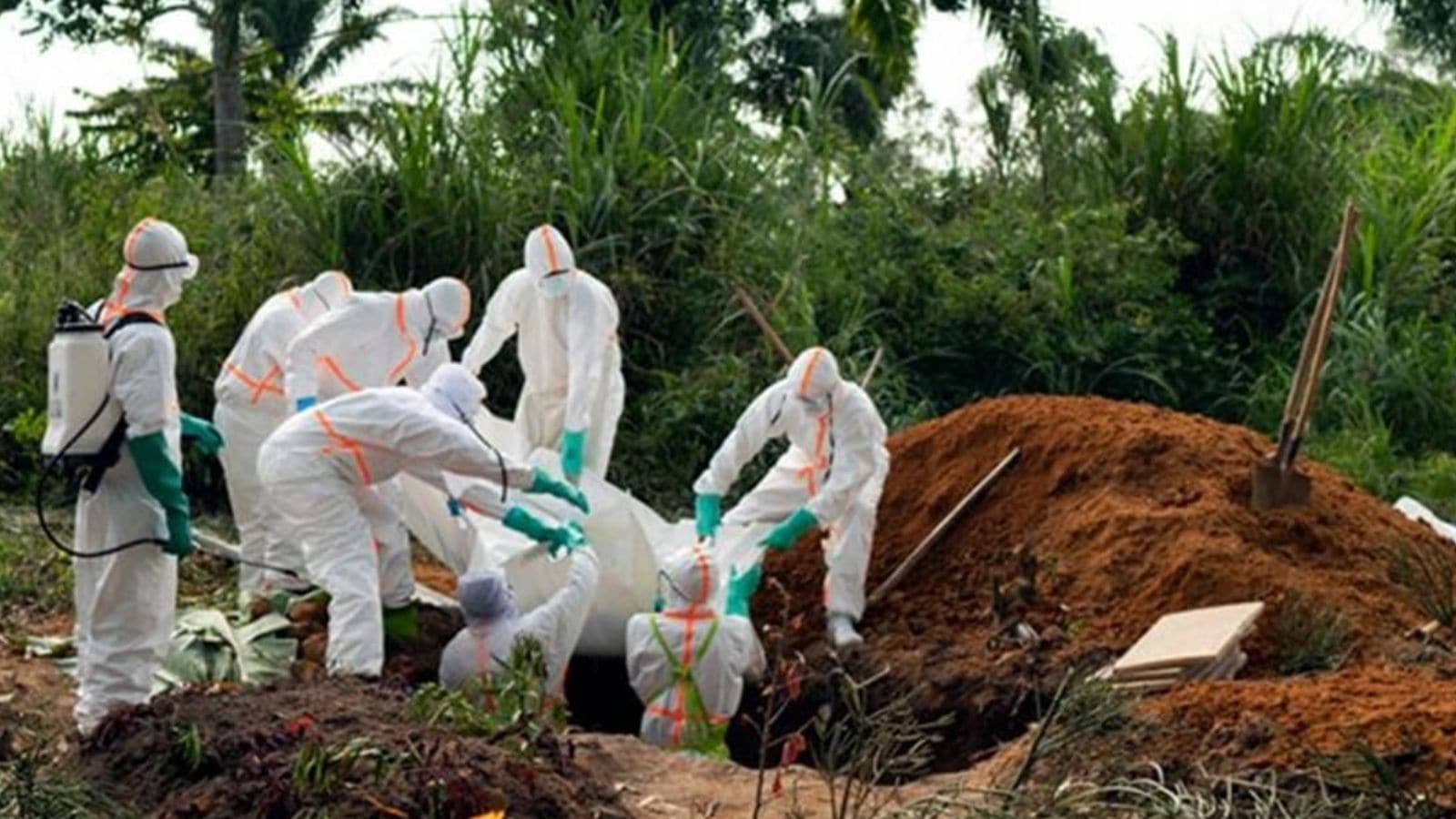
Health officials condemned the attack, saying it caused panic among staff. Tensions have grown over strict Ebola burial rules, as authorities are handling burials to prevent infection, but some families are upset at being unable to prepare bodies or hold traditional funeral gatherings.
A study by the International Committee of the Red Cross (ICRC) found that more than half of health facilities in North and South Kivu have been damaged or destroyed. Nearly half also reported major staff shortages since January 2025 due to ongoing conflict and insecurity.
The situation has worsened after fresh violence in Ituri in DRC, where at least 17 people were killed in an attack by the Allied Democratic Forces (ADF).
“We are facing a double war: one of weapons and another of disease outbreak,” local resident Zawadi Jeanne, who lost her brother and uncle in an earlier attack, told the Guardian.
The ADF is a militant group originally from Uganda that operates in eastern DRC, particularly in Ituri and North Kivu provinces.
As per the report by the Guardian, officials in Rwampara in Uganda are working to trace patients who may have fled and identify people they may have contacted. A local chief blamed recent unrest on ‘young people who do not grasp the reality of the disease’.
To control the outbreak, authorities have banned funeral wakes, ordered that burials be handled only by specialist teams, and limited public gatherings to 50 people.
Avoiding physical contact remains difficult, as handshakes are a strong part of local culture. ‘A small mistake can cost you dearly,’ Bunia resident Jackson Lubula, who now washes his hands with soap after every greeting, told the Guardian.
The Democratic Republic of Congo has been battling its 17th Ebola outbreak for a week. The disease can be deadly, with fatality rates ranging from 25% to 90%, and spreads through bodily fluids or contaminated materials, causing organ damage and severe bleeding.
Stay updated with the latest - Click here to follow us on Instagram
Nearly 750 suspected Ebola cases and 177 suspected deaths have been reported since the first known patient died, on 24 April in Bunia in Congo. The virus spread further after mourners touched the victim during a funeral in the nearby town of Mongbwalu, says a report by the Guardian.
Hospitals and health centres are struggling to cope with the rising number of Ebola cases. Trish Newport, an emergency manager at Medecins Sans Frontieres (Doctors without Borders), told the Guardian that the staff found suspected patients at Bunia’s Salama hospital over the weekend but could not find any available isolation beds.
“Every health facility they contacted said they were full and had no space,” she said, adding that the situation is becoming increasingly difficult.
“The speed of this Ebola outbreak is deeply worrying,” Rose Tchwenko of Mercy Corps told the Guardian, warning that the virus could spread further and that urgent international support is needed.
Hama Amado, a field coordinator in Bunia for the Alima aid group, told the Associated Press that the virus is spreading quickly across many areas. He said more action is needed and that the situation is still far from being under control.
The report by the Guardian says that aid response has been hampered by several challenges, including the rare virus Bundibugyo strain, which has no approved treatment or vaccine, the remote and conflict-hit location of the outbreak and local funeral customs that make disease control harder.
Aid efforts are also being affected by major funding shortages, largely due to cuts in US foreign aid.
Angry residents in eastern Congo attacked and burned part of an Ebola treatment centre in Mongbwalu, the second such attack in a week. No one was injured, but 18 patients with suspected Ebola fled during the chaos and are now missing, raising fears of further spread, reports the Associated Press.
Health officials condemned the attack, saying it caused panic among staff. Tensions have grown over strict Ebola burial rules, as authorities are handling burials to prevent infection, but some families are upset at being unable to prepare bodies or hold traditional funeral gatherings.
A study by the International Committee of the Red Cross (ICRC) found that more than half of health facilities in North and South Kivu have been damaged or destroyed. Nearly half also reported major staff shortages since January 2025 due to ongoing conflict and insecurity.
The situation has worsened after fresh violence in Ituri in DRC, where at least 17 people were killed in an attack by the Allied Democratic Forces (ADF).
“We are facing a double war: one of weapons and another of disease outbreak,” local resident Zawadi Jeanne, who lost her brother and uncle in an earlier attack, told the Guardian.
The ADF is a militant group originally from Uganda that operates in eastern DRC, particularly in Ituri and North Kivu provinces.
As per the report by the Guardian, officials in Rwampara in Uganda are working to trace patients who may have fled and identify people they may have contacted. A local chief blamed recent unrest on ‘young people who do not grasp the reality of the disease’.
To control the outbreak, authorities have banned funeral wakes, ordered that burials be handled only by specialist teams, and limited public gatherings to 50 people.
Avoiding physical contact remains difficult, as handshakes are a strong part of local culture. ‘A small mistake can cost you dearly,’ Bunia resident Jackson Lubula, who now washes his hands with soap after every greeting, told the Guardian.
The Democratic Republic of Congo has been battling its 17th Ebola outbreak for a week. The disease can be deadly, with fatality rates ranging from 25% to 90%, and spreads through bodily fluids or contaminated materials, causing organ damage and severe bleeding.