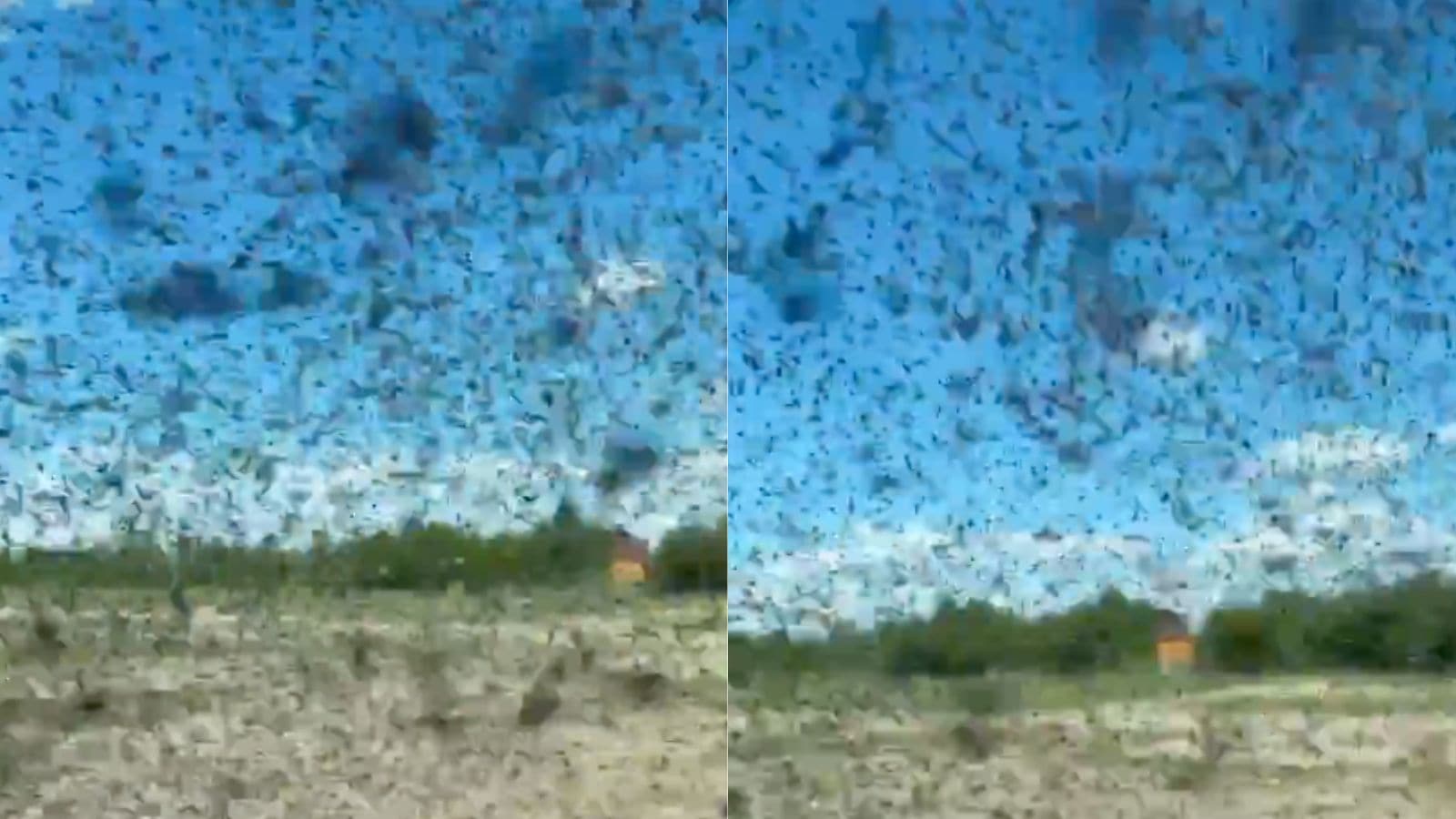


Huge mosquito swarm overtakes popular destination in Russia, tourists rush to safety
Entomologists said that unusually high mosquito activity is expected to continue until next week.
Tourists in Russia’s Buryatia region had to take refuge in their car after being ambushed by an enormous swarm of mosquitoes. The incident unfolded near Lake Shchuchye, the New York Post reported.
Many visitors were unable to continue their trip and did not get the chance to reach or explore the lake, the report added.
Entomologists cited in the report said that unusually high mosquito activity is expected to continue until next week.
Watch here:
🇷🇺 Die russische Region Burjatien erlebt einen so großen Mückenangriff, dass Schwärme dieser Insekten die Menschen daran hindern, aus ihren Autos zu steigen. pic.twitter.com/rv0MxfYFm4
— Nachrichten (@NewsFokus) June 8, 2026
A video of the incident has gone viral across all social media platforms, prompting reactions. “As an Indian, the urge to use the electric racquet,” a user joked. “In India: Let’s celebrate Diwali in advance, Avengers Assemble,” another user commented.
“I see it instagram google want release billion mosquito in USA but he changed plans he released in Russia,” a third user chimed in.
This is not the first time such an incident has been reported in Russia. In 2021, millions of mosquitoes descended on the Kamchatka Peninsula along the Bering Sea, creating similarly dramatic scenes.
Recently, Google sought permission from the US government to release up to 32 million sterilised mosquitoes across Florida and California. The initiative intends to curb the spread of mosquito-borne diseases, such as chikungunya, dengue, Zika, and West Nile virus.
As per a notice published in the Federal Register, the project is based on a scientific technique that uses male mosquitoes infected with a naturally occurring bacterium called Wolbachia.
DISCLAIMER: This article reports on a viral trending event involving wildlife and environmental phenomena, alongside factual public information regarding scientific mosquito-control initiatives.
Tourists in Russia’s Buryatia region had to take refuge in their car after being ambushed by an enormous swarm of mosquitoes. The incident unfolded near Lake Shchuchye, the New York Post reported.
Many visitors were unable to continue their trip and did not get the chance to reach or explore the lake, the report added.
Entomologists cited in the report said that unusually high mosquito activity is expected to continue until next week.
Watch here:
🇷🇺 Die russische Region Burjatien erlebt einen so großen Mückenangriff, dass Schwärme dieser Insekten die Menschen daran hindern, aus ihren Autos zu steigen. pic.twitter.com/rv0MxfYFm4
— Nachrichten (@NewsFokus) June 8, 2026
A video of the incident has gone viral across all social media platforms, prompting reactions. “As an Indian, the urge to use the electric racquet,” a user joked. “In India: Let’s celebrate Diwali in advance, Avengers Assemble,” another user commented.
“I see it instagram google want release billion mosquito in USA but he changed plans he released in Russia,” a third user chimed in.
This is not the first time such an incident has been reported in Russia. In 2021, millions of mosquitoes descended on the Kamchatka Peninsula along the Bering Sea, creating similarly dramatic scenes.
Recently, Google sought permission from the US government to release up to 32 million sterilised mosquitoes across Florida and California. The initiative intends to curb the spread of mosquito-borne diseases, such as chikungunya, dengue, Zika, and West Nile virus.
As per a notice published in the Federal Register, the project is based on a scientific technique that uses male mosquitoes infected with a naturally occurring bacterium called Wolbachia.
DISCLAIMER: This article reports on a viral trending event involving wildlife and environmental phenomena, alongside factual public information regarding scientific mosquito-control initiatives.