




Year in review: The highs (and lows) of AI in 2025
As we close out 2025, let’s recount some of the most unexpected breakthroughs and AI messes of the year.
This past year saw the hype and celebration around AI begin to fade, replaced by growing scrutiny and tough questions about how far and fast the technology can really go. Big wins that reshaped markets amid shifting user behaviour were matched by big missteps that reset expectations of what AI models can and cannot do.
OpenAI, the company that set off the AI race with the launch of ChatGPT in 2022, faced a difficult year as the rollout of its much-awaited GPT-5 model stumbled and wrongful death lawsuits mounted. But at the same time, the AI startup continued to attract investment and made a trillion-dollar commitment to build out data centres and other AI infrastructure.
As we close out 2025, let’s recount some of the most unexpected breakthroughs and AI messes of the year.
1. Big tech’s alliance with Trump
The tech industry’s efforts to woo US President Donald Trump seem to have paid off as he has relaxed many limits on AI chip exports and fast-tracked the building of data centres that power AI development. Trump has also taken a light-touch approach to regulating AI, most recently signing an executive order aimed at blocking states from enforcing their own AI rules.
2. Shift in users’ search behaviour
2025 saw a mass deflection away from traditional search engines, as an increasing number of people turned to AI chatbots like ChatGPT and Perplexity to look up information online. Eddy Cue, a senior VP at Apple, testified in court that search volume to its Safari browser had declined for the first time in 22 years, linking it to the rise of AI search. Cue’s testimony spooked investors of Google parent Alphabet. This shift in user behaviour was also corroborated by a Pew Research survey as well as reports from SEO firms.
3. DeepSeek triggers market sell-off
The release of DeepSeek-R1 led to a massive sell-off of AI stocks as investors worried about an open-weight AI reasoning model from a Chinese startup performing on par or better than frontier models developed by US rivals OpenAI and Google while using fewer resources and costing less. NVIDIA shares plunged 17 per cent in a single session, wiping out nearly $600 billion in market value (the largest one-day loss ever for a US company). The incident underscored how the US’ lead over China in the AI arms race had significantly narrowed despite efforts to slow China’s AI progress through export restrictions on advanced chips and other AI hardware.
4. NVIDIA and fears of an AI market bubble
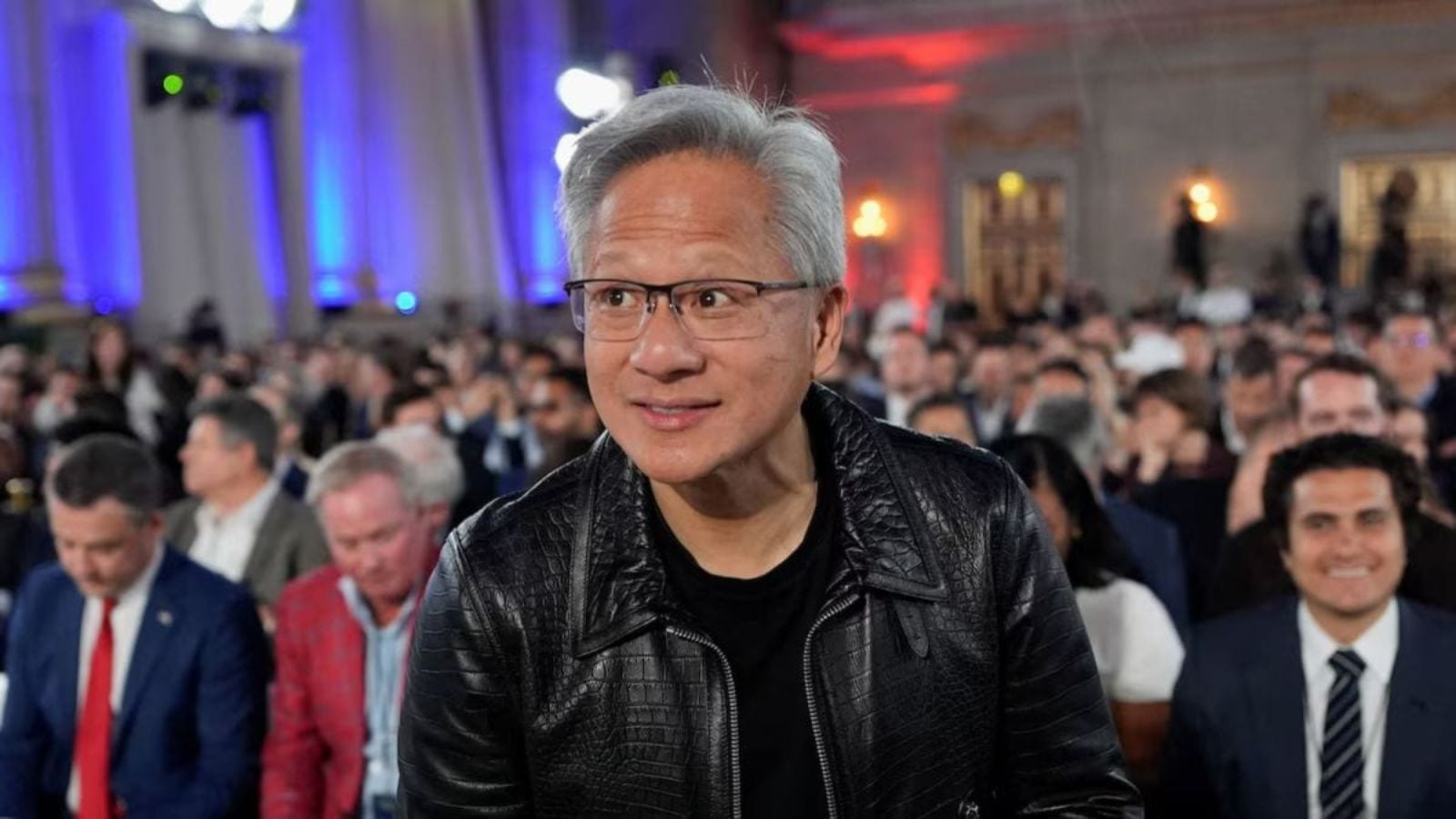
NVIDIA has emerged as the clearest winner of the AI boom, riding the wave to a $4.5 trillion-dollar market cap and cementing its status as one of the world’s most valuable companies. Yet, its rally has also fuelled fears of an AI market bubble reminiscent of the dot-com era, largely driven by lofty valuations, surging capital expenditures on AI infrastructure, unclear monetisation paths, and increasingly circular deals such as NVIDIA’s $100 billion investment in OpenAI to deploy its chips.
However, the AI chip giant has also repeatedly calmed nerves: in the October quarter, NVIDIA beat market expectations and reported a 62 per cent jump in YoY revenue along with a 65 per cent increase in profits to $31.9 billion.
5. Gemini 3 helps Google take the lead
When OpenAI introduced ChatGPT in 2022, it was the starting pistol in the AI race that woke Google up from its slumber. Since then, the tech giant is said to have disrupted itself by breaking down internal silos, streamlining leadership, consolidating AI projects, and overhauling its AI development strategy. The release of Gemini 3, the tech giant’s latest series of AI models, was well-received by many users who noted the improvements in model quality. It forced OpenAI to declare a ‘code red’ situation, and the fact that Gemini 3 was trained only on Google’s custom Tensor Processing Units (TPUs) also prompted a response from NVIDIA about how its GPUs were still ‘a generation ahead’ of other chips.
1. Runaway AI
Grok, the AI chatbot developed by Elon Musk-owned xAI, became embroiled in several controversies this year. The rollout of Grok 3 and its ‘unhinged’ mode sparked chaos in India after the chatbot responded to user queries with expletives of its own – Hindi slang and misogynistic slurs included. Its profanity-laden and politically sensitive responses even caught the regulatory eye of the IT Ministry. In June, the chatbot referred to itself as ‘MechaHitler’, reshared conspiracy theories, and made inappropriate comments in response to users’ posts on X. Recently, Grok also responded to some users by saying that Musk would be more effective than Hitler at conquering Europe and would make for a better role model than Jesus Christ.
2. Sycophantic AI
The tone and behaviour of ChatGPT were a recurring issue in 2025. Earlier this year, OpenAI rolled back a behavioural update to the AI chatbot after users complained that its responses were sycophantic and overly agreeable. After adjusting GPT-5, users again said they were frustrated by the new model, calling it colder and less friendly. OpenAI CEO Sam Altman acknowledged that the startup had ‘screwed up’ GPT-5’s rollout as many users were left disappointed by its underwhelming release, which had been hyped up since the 2023 debut of GPT-4.
3. Anthropomorphic AI
In July, Elon Musk’s xAI launched a new visual chatbot feature within the Grok app called AI Companions. This feature lets users talk dirty to a ‘flirtatious’ anime girl called Ani, who is dressed in a black corset and sways back and forth on your screen. There’s also an animated red panda called Rudi that narrates children’s stories, but it also came with a ‘bad Rudi’ switch that turned it into a foul-mouthed gremlin.
Chatbots like Ani that are designed for companionship are actually built for engagement. They are designed to optimise the time spent by users on the platform. Role-playing companion bots could have an even stronger influence on children because they could be perceived as a friend or familial figure. These risks are highlighted by lawsuits against Google-backed Character AI.
4. Agentic AI
AI agents, widely seen as a step toward making AI companies more commercially viable, struggled to live up to expectations in 2025. While they might have shown some promise in tightly controlled enterprise settings, most AI agent-focused tools rolled out this year proved unreliable and inefficient for everyday tasks. These shortcomings have been compounded by a growing turf war over access and control.
For instance, Amazon issued a cease-and-desist notice to Perplexity, accusing its AI browser agent, Comet, of violating the e-commerce giant’s terms of service. Experts such as Andrej Karpathy, one of the founders of OpenAI, have revised their projected timelines and said that AI agents will continue to evolve over a decade rather than a single year.
5. Gadget AI
Much like 2024, which was marked by debacles like the Humane Pin and Rabbit R1, efforts to build AI-first wearables and hardware fell short this year, too. The AI-powered Friend pendant, which listens to the wearer’s surroundings and conversations and can chime in with advice or general small talk from a smartphone app, was met with backlash.
Users said they did not feel uncomfortable wearing the Friend device in public, especially around people who had not consented to an AI device listening in on their conversations. Others also expressed concerns about tech companies pushing to incorporate such AI tools into everyday lives, potentially at the expense of human interaction.
This past year saw the hype and celebration around AI begin to fade, replaced by growing scrutiny and tough questions about how far and fast the technology can really go. Big wins that reshaped markets amid shifting user behaviour were matched by big missteps that reset expectations of what AI models can and cannot do.
OpenAI, the company that set off the AI race with the launch of ChatGPT in 2022, faced a difficult year as the rollout of its much-awaited GPT-5 model stumbled and wrongful death lawsuits mounted. But at the same time, the AI startup continued to attract investment and made a trillion-dollar commitment to build out data centres and other AI infrastructure.
As we close out 2025, let’s recount some of the most unexpected breakthroughs and AI messes of the year.
1. Big tech’s alliance with Trump
The tech industry’s efforts to woo US President Donald Trump seem to have paid off as he has relaxed many limits on AI chip exports and fast-tracked the building of data centres that power AI development. Trump has also taken a light-touch approach to regulating AI, most recently signing an executive order aimed at blocking states from enforcing their own AI rules.
2. Shift in users’ search behaviour
2025 saw a mass deflection away from traditional search engines, as an increasing number of people turned to AI chatbots like ChatGPT and Perplexity to look up information online. Eddy Cue, a senior VP at Apple, testified in court that search volume to its Safari browser had declined for the first time in 22 years, linking it to the rise of AI search. Cue’s testimony spooked investors of Google parent Alphabet. This shift in user behaviour was also corroborated by a Pew Research survey as well as reports from SEO firms.
3. DeepSeek triggers market sell-off
The release of DeepSeek-R1 led to a massive sell-off of AI stocks as investors worried about an open-weight AI reasoning model from a Chinese startup performing on par or better than frontier models developed by US rivals OpenAI and Google while using fewer resources and costing less. NVIDIA shares plunged 17 per cent in a single session, wiping out nearly $600 billion in market value (the largest one-day loss ever for a US company). The incident underscored how the US’ lead over China in the AI arms race had significantly narrowed despite efforts to slow China’s AI progress through export restrictions on advanced chips and other AI hardware.
4. NVIDIA and fears of an AI market bubble
NVIDIA has emerged as the clearest winner of the AI boom, riding the wave to a $4.5 trillion-dollar market cap and cementing its status as one of the world’s most valuable companies. Yet, its rally has also fuelled fears of an AI market bubble reminiscent of the dot-com era, largely driven by lofty valuations, surging capital expenditures on AI infrastructure, unclear monetisation paths, and increasingly circular deals such as NVIDIA’s $100 billion investment in OpenAI to deploy its chips.
However, the AI chip giant has also repeatedly calmed nerves: in the October quarter, NVIDIA beat market expectations and reported a 62 per cent jump in YoY revenue along with a 65 per cent increase in profits to $31.9 billion.
5. Gemini 3 helps Google take the lead
When OpenAI introduced ChatGPT in 2022, it was the starting pistol in the AI race that woke Google up from its slumber. Since then, the tech giant is said to have disrupted itself by breaking down internal silos, streamlining leadership, consolidating AI projects, and overhauling its AI development strategy. The release of Gemini 3, the tech giant’s latest series of AI models, was well-received by many users who noted the improvements in model quality. It forced OpenAI to declare a ‘code red’ situation, and the fact that Gemini 3 was trained only on Google’s custom Tensor Processing Units (TPUs) also prompted a response from NVIDIA about how its GPUs were still ‘a generation ahead’ of other chips.
1. Runaway AI
Grok, the AI chatbot developed by Elon Musk-owned xAI, became embroiled in several controversies this year. The rollout of Grok 3 and its ‘unhinged’ mode sparked chaos in India after the chatbot responded to user queries with expletives of its own – Hindi slang and misogynistic slurs included. Its profanity-laden and politically sensitive responses even caught the regulatory eye of the IT Ministry. In June, the chatbot referred to itself as ‘MechaHitler’, reshared conspiracy theories, and made inappropriate comments in response to users’ posts on X. Recently, Grok also responded to some users by saying that Musk would be more effective than Hitler at conquering Europe and would make for a better role model than Jesus Christ.
2. Sycophantic AI
The tone and behaviour of ChatGPT were a recurring issue in 2025. Earlier this year, OpenAI rolled back a behavioural update to the AI chatbot after users complained that its responses were sycophantic and overly agreeable. After adjusting GPT-5, users again said they were frustrated by the new model, calling it colder and less friendly. OpenAI CEO Sam Altman acknowledged that the startup had ‘screwed up’ GPT-5’s rollout as many users were left disappointed by its underwhelming release, which had been hyped up since the 2023 debut of GPT-4.
3. Anthropomorphic AI
In July, Elon Musk’s xAI launched a new visual chatbot feature within the Grok app called AI Companions. This feature lets users talk dirty to a ‘flirtatious’ anime girl called Ani, who is dressed in a black corset and sways back and forth on your screen. There’s also an animated red panda called Rudi that narrates children’s stories, but it also came with a ‘bad Rudi’ switch that turned it into a foul-mouthed gremlin.
Chatbots like Ani that are designed for companionship are actually built for engagement. They are designed to optimise the time spent by users on the platform. Role-playing companion bots could have an even stronger influence on children because they could be perceived as a friend or familial figure. These risks are highlighted by lawsuits against Google-backed Character AI.
4. Agentic AI
AI agents, widely seen as a step toward making AI companies more commercially viable, struggled to live up to expectations in 2025. While they might have shown some promise in tightly controlled enterprise settings, most AI agent-focused tools rolled out this year proved unreliable and inefficient for everyday tasks. These shortcomings have been compounded by a growing turf war over access and control.
For instance, Amazon issued a cease-and-desist notice to Perplexity, accusing its AI browser agent, Comet, of violating the e-commerce giant’s terms of service. Experts such as Andrej Karpathy, one of the founders of OpenAI, have revised their projected timelines and said that AI agents will continue to evolve over a decade rather than a single year.
5. Gadget AI
Much like 2024, which was marked by debacles like the Humane Pin and Rabbit R1, efforts to build AI-first wearables and hardware fell short this year, too. The AI-powered Friend pendant, which listens to the wearer’s surroundings and conversations and can chime in with advice or general small talk from a smartphone app, was met with backlash.
Users said they did not feel uncomfortable wearing the Friend device in public, especially around people who had not consented to an AI device listening in on their conversations. Others also expressed concerns about tech companies pushing to incorporate such AI tools into everyday lives, potentially at the expense of human interaction.