

Daughters of cook, daily wager make waves, set to sail into Asian Games
Lahiri Kommaravelly (15) and Suragani Eswa (16) from Telangana to represent India in 29ers two-person boat feeder-class youth category; Hyderabad Yacht Club president Suheim Shaikh, offered to train Lahiri in sailing, her mother worked as a cook at the club
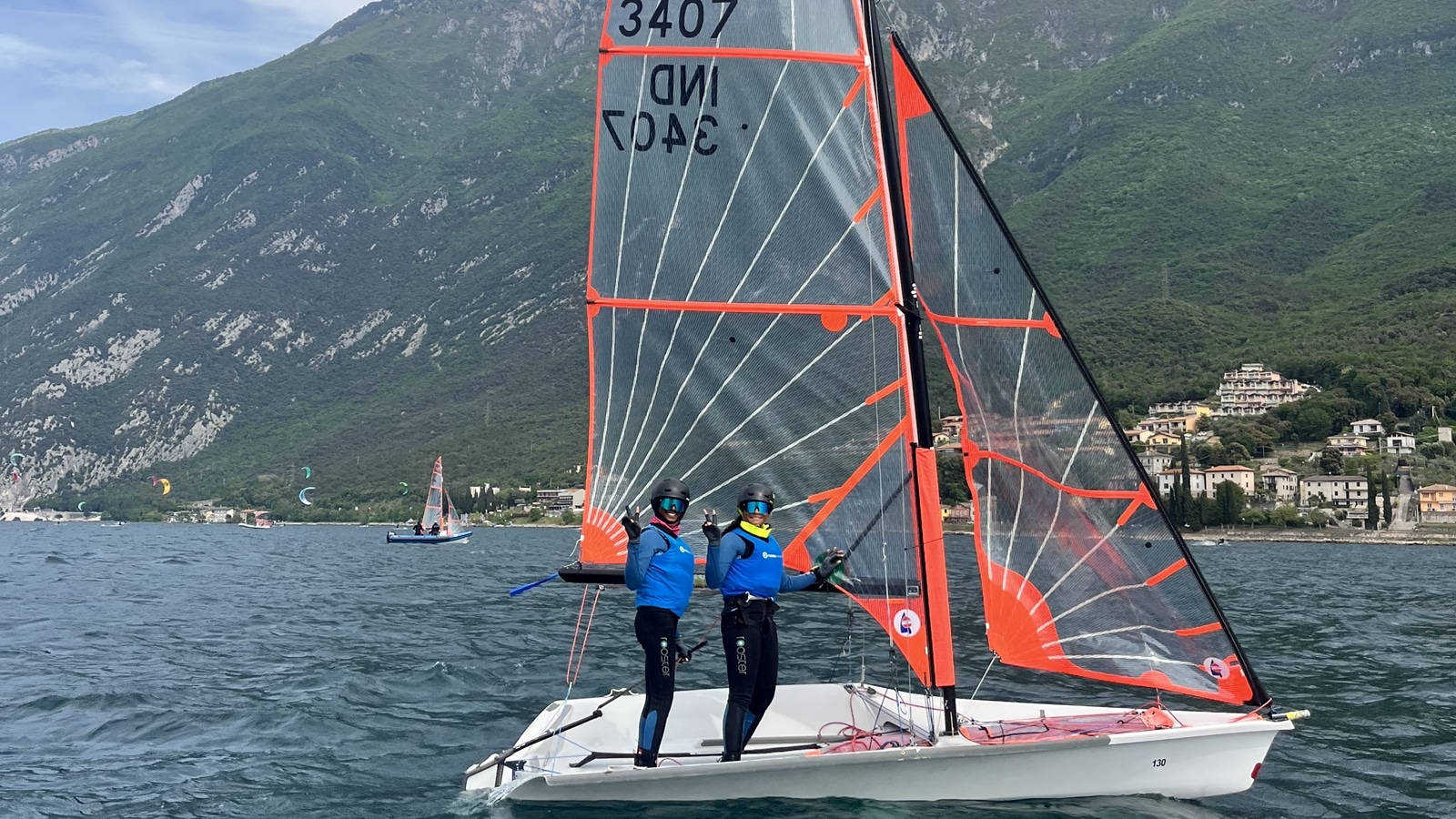
One is the daughter of a cook at a yacht club from Siddipet; the other’s mother, a widow, works as a daily wager in a pickle factory in Suryapet. Breaking into the elite sport of sailing, the two girls — Lahiri Kommaravelly (15) and Suragani Eswa (16) — from Telangana are now bound for the Asian Games in Japan this September, in the 29ers two-person boat feeder-class youth category.
Lahiri’s mother, Kavitha, struggled to make ends meet during the Covid pandemic in 2020. With her husband, a barber unable to earn a living, a desperate, Kavitha took the risk of working in a local hospital’s housekeeping department. But her family’s life changed when the Hyderabad Yacht Club hired her as a cook and the club’s president, Suheim Shaikh, offered to train her three daughters in sailing.
Shaikh, a former IITian and entrepreneur, sailed for over five decades, inheriting the generational privilege, while he realised that access to the Hussain Sagar lake waters in Hyderabad was a preserve of the elite. “Sailing was an exotic, elite sport, and only people with access to this club or that club, or Army/ Navy could sail. I went to bureaucrats in Hyderabad and told them that I would throw sailing open to everybody,” he says.
That’s how Project Naavika was launched in 2015. “We only train underprivileged children from shanty towns, orphanages, destitute and abandoned families. We are meeting our goal of pulling hundreds out of poverty,” says Shaikh.
Over the last decade, 27 have found spots in sports companies and units across Navy and Army sailing nodes.
Lahiri’s partner at a recent exposure tour regatta at the Eurocup at Garda Lake in Italy was Suragani Eswa, from Chilukuru village, whose life changed after the death of her father, an ambulance driver. Suragani was studying at the Mahatma Jyothiba Phule Telangana Backward Classes Welfare school in Telangana’s Yadadri-Bhuvanagiri district, from where she was scouted out. Her mother, Madhavi, works as a daily wage labourer in a pickle factory, earning Rs 300 per day, and a monthly widow’s pension of Rs 2,000.
Only a year into sailing, but chosen because she was good at keeping the sails flat, not loosening up while trimming, gybing and tacking, Suragani is learning fast. “Earlier, my mother was scared and didn’t allow me. The first time we capsized, I didn’t know what happened. But I like sailing because I’m getting good at it fast,” she says.
It’s hard work, but the duo aced the Mumbai trials last December, despite capsizes, while finding their way around the trapeze chord that runs down the sail.
While they adapted quickly to international travel, Lahiri and Suragani were thrown off by the cold winds of northern Italy, a stark contrast from the 39 degrees Celsius temperature when they trained in India.
Back in Hyderabad, there are similar stories emerging from the yacht club. Rameeza Bhanu, whose parents were abandoned in the streets and fell to alcohol addiction, would force her to beg on the streets, before she fled and started to live in parks and footpaths. Watching boats at Tank Bund, she was drawn to sailing and joined up.
As talented as Lahiri is Ravali Parandi, 19, who was on the streets for two years before she enlisted and went on to win the prestigious Maj Gen Harry Kapoor Trophy at YAI Youth Nationals in 2021. The Yacht Club also funds their education and helps them land jobs. Ravali learnt German at Goethe-Zentrum.
Vadla Mallesh from Kondapur Kalan village went on become an Agniveer, while Durga Prasad of Rasoolpura left behind sailors from tony neighbourhoods to become the national U-17 champion and is now serving in the Navy.
Tungara Mahbubee, from a tribal hamlet of Pedda Thanda, Kuravi, in Telangana, lost her father and watched her mother’s health sink. Sailing dragged her out of desperation and she is now a police constable.
The build of a sailor is important as it helps them to balance their boat. At the Italy regatta, Lahiri and Suragani had a combined weight of 103 kg, at least 27 kg less than the average weight of the fleet.
“When I see other well-built sailors, I know the importance of weight. I like chicken biryani, KFC and my mother’s tomato pachadi,” Lahiri says, adding that it is an effort to put on weight. “Sometimes, travelling internationally, we find the food odd. But we need to eat it to keep the boat stable,” she says.
Suragani, who is still slow in tacking, says sailing pulled her out of family strife and the shock of her father’s death. “On the waters, sometimes I fall in front, sometimes behind in heavy winds. But sailing teaches us to get back up and start again.”
That is a lesson they have learnt very early in life, without even dipping their toes in water.
One is the daughter of a cook at a yacht club from Siddipet; the other’s mother, a widow, works as a daily wager in a pickle factory in Suryapet. Breaking into the elite sport of sailing, the two girls — Lahiri Kommaravelly (15) and Suragani Eswa (16) — from Telangana are now bound for the Asian Games in Japan this September, in the 29ers two-person boat feeder-class youth category.
Lahiri’s mother, Kavitha, struggled to make ends meet during the Covid pandemic in 2020. With her husband, a barber unable to earn a living, a desperate, Kavitha took the risk of working in a local hospital’s housekeeping department. But her family’s life changed when the Hyderabad Yacht Club hired her as a cook and the club’s president, Suheim Shaikh, offered to train her three daughters in sailing.
Shaikh, a former IITian and entrepreneur, sailed for over five decades, inheriting the generational privilege, while he realised that access to the Hussain Sagar lake waters in Hyderabad was a preserve of the elite. “Sailing was an exotic, elite sport, and only people with access to this club or that club, or Army/ Navy could sail. I went to bureaucrats in Hyderabad and told them that I would throw sailing open to everybody,” he says.
That’s how Project Naavika was launched in 2015. “We only train underprivileged children from shanty towns, orphanages, destitute and abandoned families. We are meeting our goal of pulling hundreds out of poverty,” says Shaikh.
Over the last decade, 27 have found spots in sports companies and units across Navy and Army sailing nodes.
Lahiri’s partner at a recent exposure tour regatta at the Eurocup at Garda Lake in Italy was Suragani Eswa, from Chilukuru village, whose life changed after the death of her father, an ambulance driver. Suragani was studying at the Mahatma Jyothiba Phule Telangana Backward Classes Welfare school in Telangana’s Yadadri-Bhuvanagiri district, from where she was scouted out. Her mother, Madhavi, works as a daily wage labourer in a pickle factory, earning Rs 300 per day, and a monthly widow’s pension of Rs 2,000.
Only a year into sailing, but chosen because she was good at keeping the sails flat, not loosening up while trimming, gybing and tacking, Suragani is learning fast. “Earlier, my mother was scared and didn’t allow me. The first time we capsized, I didn’t know what happened. But I like sailing because I’m getting good at it fast,” she says.
It’s hard work, but the duo aced the Mumbai trials last December, despite capsizes, while finding their way around the trapeze chord that runs down the sail.
While they adapted quickly to international travel, Lahiri and Suragani were thrown off by the cold winds of northern Italy, a stark contrast from the 39 degrees Celsius temperature when they trained in India.
Back in Hyderabad, there are similar stories emerging from the yacht club. Rameeza Bhanu, whose parents were abandoned in the streets and fell to alcohol addiction, would force her to beg on the streets, before she fled and started to live in parks and footpaths. Watching boats at Tank Bund, she was drawn to sailing and joined up.
As talented as Lahiri is Ravali Parandi, 19, who was on the streets for two years before she enlisted and went on to win the prestigious Maj Gen Harry Kapoor Trophy at YAI Youth Nationals in 2021. The Yacht Club also funds their education and helps them land jobs. Ravali learnt German at Goethe-Zentrum.
Vadla Mallesh from Kondapur Kalan village went on become an Agniveer, while Durga Prasad of Rasoolpura left behind sailors from tony neighbourhoods to become the national U-17 champion and is now serving in the Navy.
Tungara Mahbubee, from a tribal hamlet of Pedda Thanda, Kuravi, in Telangana, lost her father and watched her mother’s health sink. Sailing dragged her out of desperation and she is now a police constable.
The build of a sailor is important as it helps them to balance their boat. At the Italy regatta, Lahiri and Suragani had a combined weight of 103 kg, at least 27 kg less than the average weight of the fleet.
“When I see other well-built sailors, I know the importance of weight. I like chicken biryani, KFC and my mother’s tomato pachadi,” Lahiri says, adding that it is an effort to put on weight. “Sometimes, travelling internationally, we find the food odd. But we need to eat it to keep the boat stable,” she says.
Suragani, who is still slow in tacking, says sailing pulled her out of family strife and the shock of her father’s death. “On the waters, sometimes I fall in front, sometimes behind in heavy winds. But sailing teaches us to get back up and start again.”
That is a lesson they have learnt very early in life, without even dipping their toes in water.