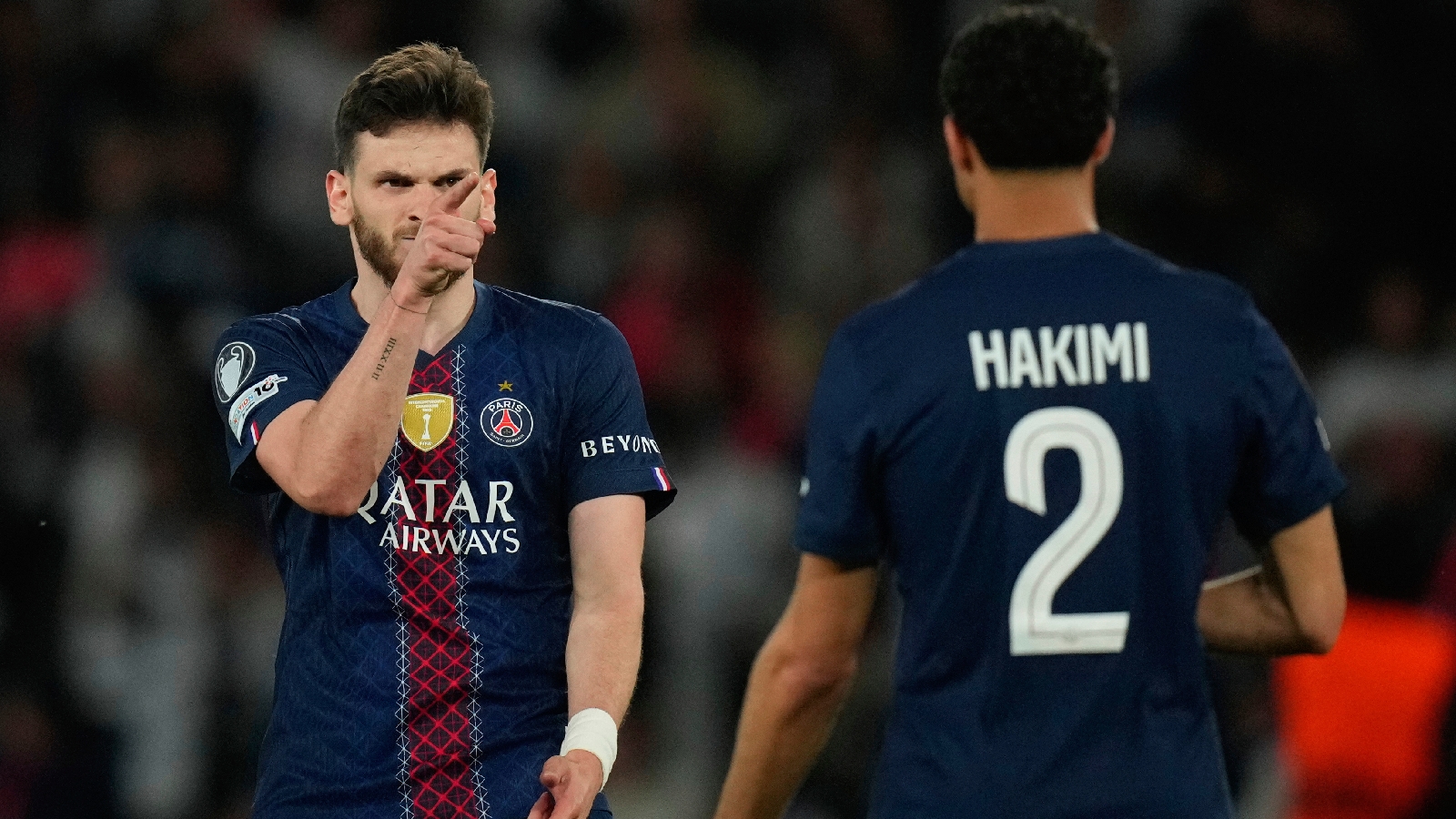


Who is PSG’s Khvicha Kvaratskhelia, the boy from Georgia, who waited for apples to grow to play football
The 25-year-old's twin goals in the Champions League semifinals first-leg hurt Bayern Munich and going into the second leg on Wednesday, all eyes are again the Georgian and his all-round play
Apples and geniuses share an eternal bond. Issac Newton is said to have discovered the phenomenon of gravity by watching apples fall in an orchard. Khvicha Kvaratskhelia found the solution to an age-old inconvenience with the help of apples in his orchard. The ground, a converted farmland, he played during summers in his ancestral home in Tsalenjikha, Georgia, had an iron gate with sharp edges, resembling the head of a spear, on one side. His father, competent enough to play in Azerbaijan’s top league, warned him of the edges that had torn numerous footballs in his childhood. His son glanced around the ground, plucked a few apples and stuck those into the protruding spikes.
The father marvelled at his son’s ingenuity. The solution was in plain-sight for several generations. But it took a child’s observation to find it. Years later, fans, managers, colleagues and defenders marvelled at Kvaratskhelia’s wisdom to find simple solutions to complex problems. He sees the path that no one sees, he charts the route that no one visualises. He zips the balls through channels that exist only in his vision. The PSG man’s opponents in the Champions League semifinal, Bayern Munich, knows the key to reaching the final lies in locking the man who flows through the turf like a smooth but unstoppable stream.
He flooded them twice, with two beauteous goals in the first-leg. The first would haunt them as the worst nightmare. He ambled down the left-flank — he never runs — slid infield, dribbled past the left-back Josip Stanišić, as if he didn’t exist, then spread his body and curled a low short into the bottom right past two pairs of outstretched legs cannoning onto him and a third just standing hypnotised at an artiste from a different era.
Kvaratskhelia belongs to time when football was less processed and mechanical, but more flair and free-spirited, the milieu of short shorts, skinny legs and low-hung socks. The hair is unruffled, the movements are without extreme athletic violence, the demeanour is un-hubristic.
He leaves his markers with hollow eyes and scarred hearts. Like Aston Villa’s Axel Disasi last year. With the fresh legs and enthusiasm, he hurtled into the Georgian, who merely rolled his right foot over the ball and swivelled his snake hips to the right. Disasi’s attempted tackle met the Parisian air and he slumped backwards. When Disasi turned his head back, Kvaratskhelia had slithered beyond his reach and launched a missile into the near top corner of the near post.
In moments as these, the moniker Napoli fans struck on him, Kvaradona, after their most famous player Diego Maradona, doesn’t sound hyperbolic. His arrival in Napoli was no accident either. His father, Badri, idolised the Argentine. “From the time I was little, my father always has been always talking about Maradona like a God,” he wrote in Players’ Tribune. “So when my agent told me Napoli wanted me to come, I was so happy. But my father? Unbelievable. My father says, “You cannot say no to Napoli! You cannot say no to Maradona’s club!” So we didn’t think too much. No debate.”
His own idol, though, was his father. Some of his goals were videographed in VHS tape he rewatches frequently. “If somebody was speaking about Messi or Ronaldo, I’d say, “No, no, no … My father is better. I will show you the videos,” he wrote.
But unlike his father’s idol, he keeps himself at an arm’s distance from scandals. It’s perhaps because he can’t be taken off the field. In Dinamo Tbilisi’s academy, he snuck out of his bed to train alone in the night. The guards would oblige, and soon they would be his friends and nocturnal spectators. He once overheard seniors ridiculing his frail physique. He felt like crying. But he held his tears back and told himself: “I have to show them that I can play good (football).” “My mentality goes hard then. It was motivation. And it made me good,” he penned.
He took this mentality to Naples and Paris. Luis Enrique calls him a warrior. His backline colleagues praise his contributions in defending. In the first leg against Bayern Munich, he made three significant defensive contributions and won five of the 10 duels on the ground. He defends like he is “crazy hungry” as manager Enrique had instructed him. He is his own man, but operating within the collective identity of his team. He is grounded, doesn’t strut with the aura of a superstar when he is with the national team. “I consider myself a simple person,” Kvaratskhelia once told BBC Sport. “I try to stay grounded, listen to my family, and always remember who I am and where I come from.”
He embodies the freshness of the Caucasus ranges, where his hometown is; his close control and dribbling in tight spaces owes to the congested lanes and alleys of urban Tbilisi, where he lived in a nondescript house in a Soviet-era apartment block. “It was like four buildings. In the centre of these buildings was our “stadium.” But only hard concrete.” Heavy falls broke his knees. So he learned not to fall even under the heaviest challenges. “You learn to escape the defender’s slightest touch,” he wrote. It was ingenuity again. As it is now; and as it was that day the idea of the apple struck him.
Apples and geniuses share an eternal bond. Issac Newton is said to have discovered the phenomenon of gravity by watching apples fall in an orchard. Khvicha Kvaratskhelia found the solution to an age-old inconvenience with the help of apples in his orchard. The ground, a converted farmland, he played during summers in his ancestral home in Tsalenjikha, Georgia, had an iron gate with sharp edges, resembling the head of a spear, on one side. His father, competent enough to play in Azerbaijan’s top league, warned him of the edges that had torn numerous footballs in his childhood. His son glanced around the ground, plucked a few apples and stuck those into the protruding spikes.
The father marvelled at his son’s ingenuity. The solution was in plain-sight for several generations. But it took a child’s observation to find it. Years later, fans, managers, colleagues and defenders marvelled at Kvaratskhelia’s wisdom to find simple solutions to complex problems. He sees the path that no one sees, he charts the route that no one visualises. He zips the balls through channels that exist only in his vision. The PSG man’s opponents in the Champions League semifinal, Bayern Munich, knows the key to reaching the final lies in locking the man who flows through the turf like a smooth but unstoppable stream.
He flooded them twice, with two beauteous goals in the first-leg. The first would haunt them as the worst nightmare. He ambled down the left-flank — he never runs — slid infield, dribbled past the left-back Josip Stanišić, as if he didn’t exist, then spread his body and curled a low short into the bottom right past two pairs of outstretched legs cannoning onto him and a third just standing hypnotised at an artiste from a different era.
Kvaratskhelia belongs to time when football was less processed and mechanical, but more flair and free-spirited, the milieu of short shorts, skinny legs and low-hung socks. The hair is unruffled, the movements are without extreme athletic violence, the demeanour is un-hubristic.
He leaves his markers with hollow eyes and scarred hearts. Like Aston Villa’s Axel Disasi last year. With the fresh legs and enthusiasm, he hurtled into the Georgian, who merely rolled his right foot over the ball and swivelled his snake hips to the right. Disasi’s attempted tackle met the Parisian air and he slumped backwards. When Disasi turned his head back, Kvaratskhelia had slithered beyond his reach and launched a missile into the near top corner of the near post.
In moments as these, the moniker Napoli fans struck on him, Kvaradona, after their most famous player Diego Maradona, doesn’t sound hyperbolic. His arrival in Napoli was no accident either. His father, Badri, idolised the Argentine. “From the time I was little, my father always has been always talking about Maradona like a God,” he wrote in Players’ Tribune. “So when my agent told me Napoli wanted me to come, I was so happy. But my father? Unbelievable. My father says, “You cannot say no to Napoli! You cannot say no to Maradona’s club!” So we didn’t think too much. No debate.”
His own idol, though, was his father. Some of his goals were videographed in VHS tape he rewatches frequently. “If somebody was speaking about Messi or Ronaldo, I’d say, “No, no, no … My father is better. I will show you the videos,” he wrote.
But unlike his father’s idol, he keeps himself at an arm’s distance from scandals. It’s perhaps because he can’t be taken off the field. In Dinamo Tbilisi’s academy, he snuck out of his bed to train alone in the night. The guards would oblige, and soon they would be his friends and nocturnal spectators. He once overheard seniors ridiculing his frail physique. He felt like crying. But he held his tears back and told himself: “I have to show them that I can play good (football).” “My mentality goes hard then. It was motivation. And it made me good,” he penned.
He took this mentality to Naples and Paris. Luis Enrique calls him a warrior. His backline colleagues praise his contributions in defending. In the first leg against Bayern Munich, he made three significant defensive contributions and won five of the 10 duels on the ground. He defends like he is “crazy hungry” as manager Enrique had instructed him. He is his own man, but operating within the collective identity of his team. He is grounded, doesn’t strut with the aura of a superstar when he is with the national team. “I consider myself a simple person,” Kvaratskhelia once told BBC Sport. “I try to stay grounded, listen to my family, and always remember who I am and where I come from.”
He embodies the freshness of the Caucasus ranges, where his hometown is; his close control and dribbling in tight spaces owes to the congested lanes and alleys of urban Tbilisi, where he lived in a nondescript house in a Soviet-era apartment block. “It was like four buildings. In the centre of these buildings was our “stadium.” But only hard concrete.” Heavy falls broke his knees. So he learned not to fall even under the heaviest challenges. “You learn to escape the defender’s slightest touch,” he wrote. It was ingenuity again. As it is now; and as it was that day the idea of the apple struck him.