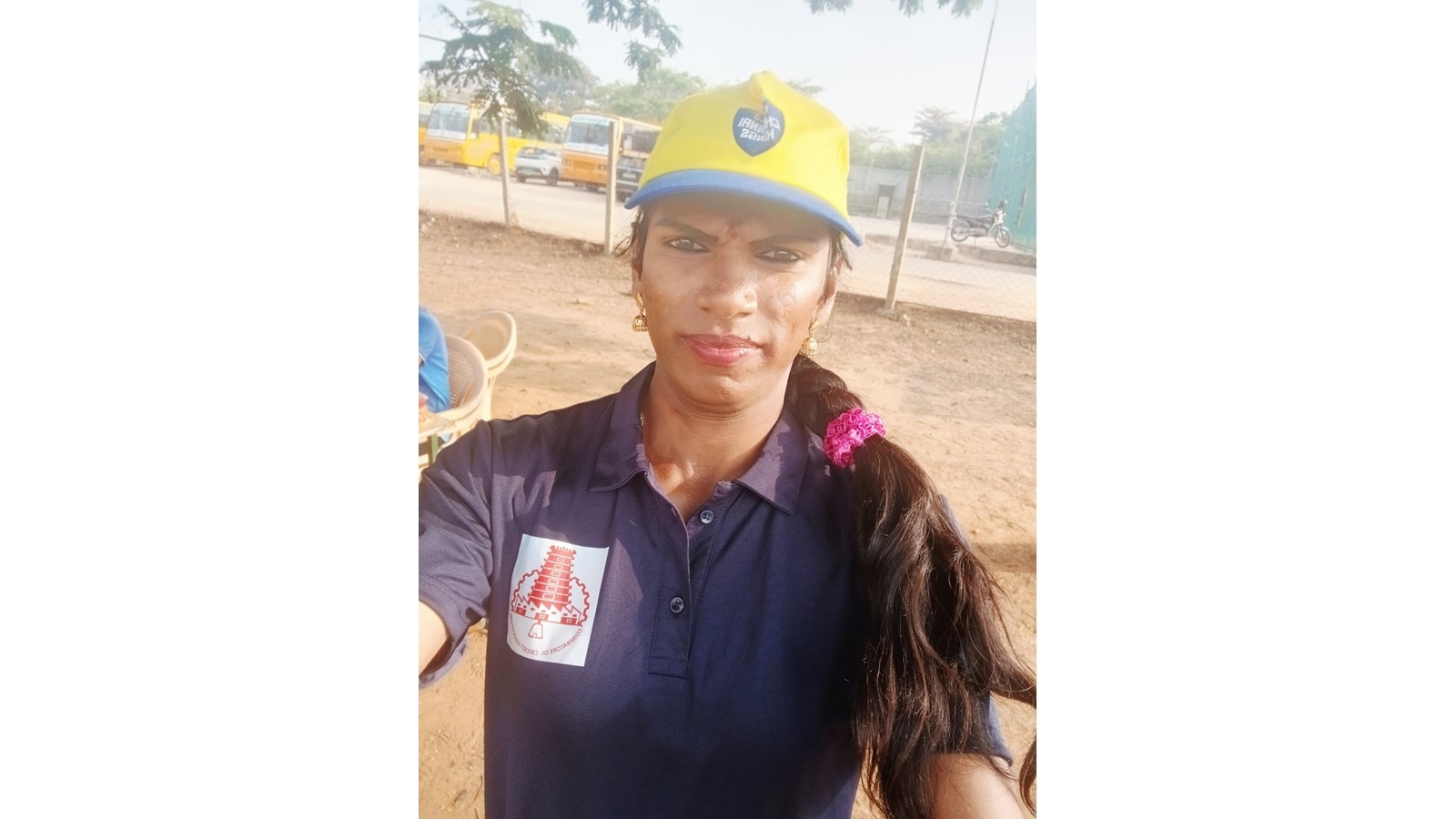


She fought her way past security guards. Now she’s Tamil Nadu’s first transgender umpire
Rithika Shri was chased away from a ground before her first game. The system has been changing around her ever since
Last September, a security guard at a premier educational institution in Coimbatore wouldn’t let Rithika Shri through the gate. She had come to umpire a cricket match. It was her first game since her gender transformation a year earlier.
“The security guard didn’t even allow me inside. The first thing he did was to chase me away. But, that day, something in me told me to confront him and tell him, ‘I’m here to be an umpire.’ I fought my way inside, but before I could enter the ground, another set of security guards arrived and stopped me,” she tells The Indian Express.
A few calls were made. The nod eventually arrived. But by then Rithika had been through a range of emotions.
“I couldn’t control my emotions that morning. It was a big moment for me, to start a dignified life rather than go around for collections or being sexually abused. But what I faced again was rejection. That morning I spoke my mind, I asked a few stern questions — why can’t a transgender live a normal life and be treated equally? I couldn’t accept the humiliation I faced,” she says.
Rithika walked through the gate and onto the ground. She stood at the crease. She is the first registered transgender umpire in Tamil Nadu. She is 31.
***
It started in 2019, at an IPL game in Mohali. Rithika — then 25, going by the name Muthu Raj — watched the umpires work and decided, quietly, that was what she wanted to do.
The 2020 lockdown took her IT job. She moved to Salem, where umpiring would become her full-time profession. She was still living as a man then. “If I wanted to be a professional umpire, I’d to start from the districts and Salem DCA was very helpful. Shanthipooshan and Parthasarathy, who were the two senior umpires, helped me — and they were the first set of people whom I spoke about the transformation that was happening inside me,” she says.
She stood in over 300 matches across Salem and Namakkal. Each one went into her record.
Gender transformation treatment kept her away from the game for a year. When she returned, there was a structural problem waiting.
“There is no third gender when it comes to match officials. It is either men or women. But when I wanted to continue, CDCA helped me a lot. The umpires committee purely went by my records — I’d officiated in over 300 matches in Salem and Namakkal. So they integrated me without any stigma,” she says.
Before her first game back, she had a fractured leg. She stood in friendly fixtures anyway, so the other umpires could build confidence in her. She ran ice-breaking sessions with male umpires and with players. “I wanted to earn their trust so that it is all smooth in the middle,” she says.
Then came Coimbatore.
The gate incident prompted the CDCA to act. They held gender-sensitivity sessions with club owners, match officials, players and venue owners. The institution that had turned Rithika away no longer hosts matches. Now, on the eve of any league game she is assigned, a message goes from the CDCA to the venue: Rithika Shri will be officiating. Ensure her safety.
“Post that incident, CDCA understood that I could face this issue in other grounds as well. They had a separate meeting with team officials and players, sensitising them about a transgender coming into the system. They said no matter what, I should be treated on equal par,” she says.
On the field, the reception has been warmer than she expected.
“You won’t believe, I’ve not heard a single bad comment being made even on my back. The players started addressing me as ‘Ma’am’. I believe making the right decisions on the field helped me earn that respect. They don’t treat me as a transgender. They just treat me like another individual. Now with familiarity, they engage a lot as well. In a team of 15-20, maybe one or two might not handshake at the end of the game, but that’s fine,” she says.
Next month, Rithika will sit the umpires exam conducted by the Tamil Nadu Cricket Association — the next step after CDCA. When the form was released, there was no mention of third gender.
“R Chandramouli spoke to TNCA and to my surprise, they said I can write the exam, but I’d to do it in the female category. But once it was brought to their notice, the TNCA changed the form and included third gender. For me that was my first success. It is the first such instance, and I’m glad I’d made history,” she says.
In 2008, Tamil Nadu became the first Indian state to formally recognise third gender for welfare measures. The TNCA, following the CDCA’s lead, is now doing the same for cricket — without a BCCI policy requiring them to. “Although there is no policy from the BCCI, the TNCA can support her. If she clears the exam, she will get all the support like the rest of the umpires do,” TNCA secretary Bhagwandas Rao said.
The exam is next month. Rithika has been ready since Mohali.
Stay updated with the latest sports news across Cricket, Football, Chess, and more. Catch all the action with real-time live cricket score updates and in-depth coverage of ongoing matches.
Last September, a security guard at a premier educational institution in Coimbatore wouldn’t let Rithika Shri through the gate. She had come to umpire a cricket match. It was her first game since her gender transformation a year earlier.
“The security guard didn’t even allow me inside. The first thing he did was to chase me away. But, that day, something in me told me to confront him and tell him, ‘I’m here to be an umpire.’ I fought my way inside, but before I could enter the ground, another set of security guards arrived and stopped me,” she tells The Indian Express.
A few calls were made. The nod eventually arrived. But by then Rithika had been through a range of emotions.
“I couldn’t control my emotions that morning. It was a big moment for me, to start a dignified life rather than go around for collections or being sexually abused. But what I faced again was rejection. That morning I spoke my mind, I asked a few stern questions — why can’t a transgender live a normal life and be treated equally? I couldn’t accept the humiliation I faced,” she says.
Rithika walked through the gate and onto the ground. She stood at the crease. She is the first registered transgender umpire in Tamil Nadu. She is 31.
***
It started in 2019, at an IPL game in Mohali. Rithika — then 25, going by the name Muthu Raj — watched the umpires work and decided, quietly, that was what she wanted to do.
The 2020 lockdown took her IT job. She moved to Salem, where umpiring would become her full-time profession. She was still living as a man then. “If I wanted to be a professional umpire, I’d to start from the districts and Salem DCA was very helpful. Shanthipooshan and Parthasarathy, who were the two senior umpires, helped me — and they were the first set of people whom I spoke about the transformation that was happening inside me,” she says.
She stood in over 300 matches across Salem and Namakkal. Each one went into her record.
Gender transformation treatment kept her away from the game for a year. When she returned, there was a structural problem waiting.
“There is no third gender when it comes to match officials. It is either men or women. But when I wanted to continue, CDCA helped me a lot. The umpires committee purely went by my records — I’d officiated in over 300 matches in Salem and Namakkal. So they integrated me without any stigma,” she says.
Before her first game back, she had a fractured leg. She stood in friendly fixtures anyway, so the other umpires could build confidence in her. She ran ice-breaking sessions with male umpires and with players. “I wanted to earn their trust so that it is all smooth in the middle,” she says.
Then came Coimbatore.
The gate incident prompted the CDCA to act. They held gender-sensitivity sessions with club owners, match officials, players and venue owners. The institution that had turned Rithika away no longer hosts matches. Now, on the eve of any league game she is assigned, a message goes from the CDCA to the venue: Rithika Shri will be officiating. Ensure her safety.
“Post that incident, CDCA understood that I could face this issue in other grounds as well. They had a separate meeting with team officials and players, sensitising them about a transgender coming into the system. They said no matter what, I should be treated on equal par,” she says.
On the field, the reception has been warmer than she expected.
“You won’t believe, I’ve not heard a single bad comment being made even on my back. The players started addressing me as ‘Ma’am’. I believe making the right decisions on the field helped me earn that respect. They don’t treat me as a transgender. They just treat me like another individual. Now with familiarity, they engage a lot as well. In a team of 15-20, maybe one or two might not handshake at the end of the game, but that’s fine,” she says.
Next month, Rithika will sit the umpires exam conducted by the Tamil Nadu Cricket Association — the next step after CDCA. When the form was released, there was no mention of third gender.
“R Chandramouli spoke to TNCA and to my surprise, they said I can write the exam, but I’d to do it in the female category. But once it was brought to their notice, the TNCA changed the form and included third gender. For me that was my first success. It is the first such instance, and I’m glad I’d made history,” she says.
In 2008, Tamil Nadu became the first Indian state to formally recognise third gender for welfare measures. The TNCA, following the CDCA’s lead, is now doing the same for cricket — without a BCCI policy requiring them to. “Although there is no policy from the BCCI, the TNCA can support her. If she clears the exam, she will get all the support like the rest of the umpires do,” TNCA secretary Bhagwandas Rao said.
The exam is next month. Rithika has been ready since Mohali.