

He had a +3 advantage over Praggnanandhaa. Then this IITian remembered who he was playing
What happened when one of India's top chess prodigies, R Praggnanandhaa, visited IIT Delhi and played 19 chess matches across two events.
Shoan Raj has shown the image to at least 30 people.
It is a screenshot from a chess game, taken at move 11. It shows that Shoan — a third year Electrical Engineering student at IIT Delhi and captain of its chess team — had a +3 advantage over Praggnanandhaa, one of the strongest grandmasters in the country.
A +3 advantage in chess is the equivalent of having an extra bishop or knight over your opponent — or three additional pawns on the board. A position most players would convert without thinking twice.
Shoan did not convert it.
“If it were any other opponent in front of me, I wouldn’t even think twice before playing the correct move,” he says. “But simply because I was facing Pragg, I felt like he’d played some trick. So I didn’t capitalise. There is a mental factor attached to playing one of the best players in India.”
He fumbled. Pragg won. The screenshot remains — a document of the moment a grandmaster’s reputation did the work his pieces couldn’t.
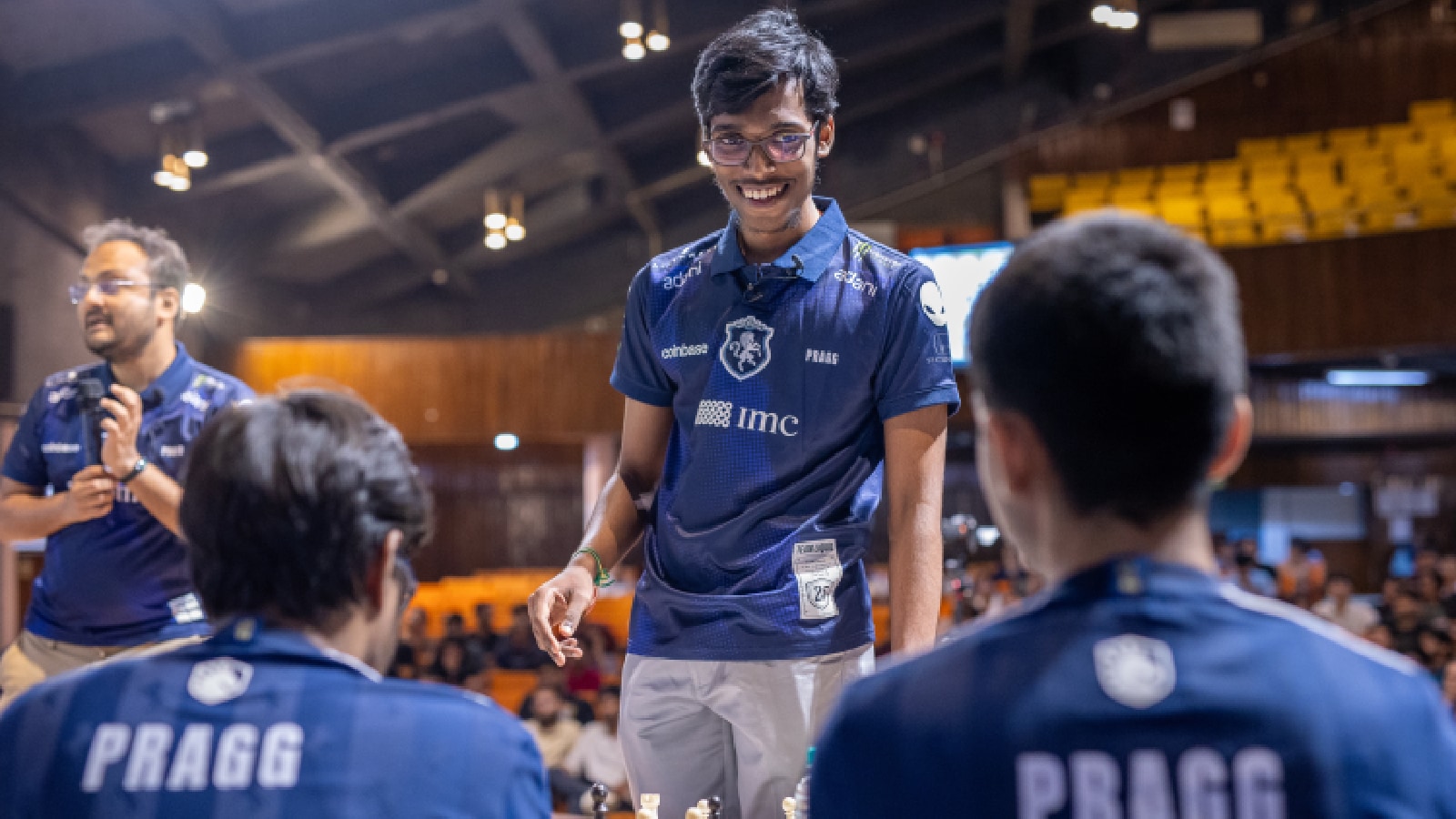
Last week, 19 players from IIT Delhi got to experience that mental factor firsthand when Praggnanandhaa visited the campus for two events organised by his sponsors IMC Trading.
In the first, seven members of the chess team faced him in a handicap match — one minute on his clock, five on theirs. All seven were FIDE-rated players, some close to 2000. A video posted on YouTube by ChessBase India shows Pragg’s hand a blur across the boards, his mind computing faster than a computer. Even when things looked hairy on the board, the 20-year-old super GM politely replied to commentator Sagar Shah’s queries standing beside him, and occasionally made wisecracks about his opponents.
He defeated all seven. He said he had “barely made it” in many of them. The biggest compliment he offered: the seven games had been a “challenge.”
One of those challenges came from Soham Palkar, a fourth year Mathematics and Computing student who had watched Pragg terrorise opponents as a 10-year-old in age-group nationals. Soham played an opening Pragg admitted he had no idea about. Pragg defused it anyway — with one fifth of the time on his clock.
“I used to hope I’d play him sometime,” Soham says. “We were never paired against each other. So to face him now was a great experience.”
The Jedi mind tricks arrived in another game, against Sumit Biswal, the incoming chess captain. Pragg played the Scotch Gambit — an opening he rarely employs in serious games — purely to unsettle.
It worked.
“When he played that I was kind of scared I would fall into some trap,” Sumit recalls. “So I ended up spending over two minutes in a five-minute game just contemplating my third move.”
Later that day, Pragg played a simul — an event where a grandmaster simultaneously takes on multiple players by moving from board to board — at the famous Dogra Hall. Twelve opponents, all with white pieces, waited with 45 minutes each. Pragg had 45 minutes too.
He won all twelve.
One opponent, Aniket, had a +2.5 advantage by move 10. He made an error on move 11 and never recovered. As the game wound down, the organisers reduced Pragg’s time from 15 minutes to one minute.
Then, to make things truly interesting, they made him turn his back on the board and finish the game blind.
He finished it.
It is rare for the brightest young minds in the country to be easily impressed. But there is something about watching a grandmaster’s reputation arrive in the room before he does — watching a +3 advantage dissolve because the opponent simply cannot believe what they’re seeing — that stays with you.
Shoan Raj still has the screenshot. He will probably show it to more people.
Shoan Raj has shown the image to at least 30 people.
It is a screenshot from a chess game, taken at move 11. It shows that Shoan — a third year Electrical Engineering student at IIT Delhi and captain of its chess team — had a +3 advantage over Praggnanandhaa, one of the strongest grandmasters in the country.
A +3 advantage in chess is the equivalent of having an extra bishop or knight over your opponent — or three additional pawns on the board. A position most players would convert without thinking twice.
Shoan did not convert it.
“If it were any other opponent in front of me, I wouldn’t even think twice before playing the correct move,” he says. “But simply because I was facing Pragg, I felt like he’d played some trick. So I didn’t capitalise. There is a mental factor attached to playing one of the best players in India.”
He fumbled. Pragg won. The screenshot remains — a document of the moment a grandmaster’s reputation did the work his pieces couldn’t.
Last week, 19 players from IIT Delhi got to experience that mental factor firsthand when Praggnanandhaa visited the campus for two events organised by his sponsors IMC Trading.
In the first, seven members of the chess team faced him in a handicap match — one minute on his clock, five on theirs. All seven were FIDE-rated players, some close to 2000. A video posted on YouTube by ChessBase India shows Pragg’s hand a blur across the boards, his mind computing faster than a computer. Even when things looked hairy on the board, the 20-year-old super GM politely replied to commentator Sagar Shah’s queries standing beside him, and occasionally made wisecracks about his opponents.
He defeated all seven. He said he had “barely made it” in many of them. The biggest compliment he offered: the seven games had been a “challenge.”
One of those challenges came from Soham Palkar, a fourth year Mathematics and Computing student who had watched Pragg terrorise opponents as a 10-year-old in age-group nationals. Soham played an opening Pragg admitted he had no idea about. Pragg defused it anyway — with one fifth of the time on his clock.
“I used to hope I’d play him sometime,” Soham says. “We were never paired against each other. So to face him now was a great experience.”
The Jedi mind tricks arrived in another game, against Sumit Biswal, the incoming chess captain. Pragg played the Scotch Gambit — an opening he rarely employs in serious games — purely to unsettle.
It worked.
“When he played that I was kind of scared I would fall into some trap,” Sumit recalls. “So I ended up spending over two minutes in a five-minute game just contemplating my third move.”
Later that day, Pragg played a simul — an event where a grandmaster simultaneously takes on multiple players by moving from board to board — at the famous Dogra Hall. Twelve opponents, all with white pieces, waited with 45 minutes each. Pragg had 45 minutes too.
He won all twelve.
One opponent, Aniket, had a +2.5 advantage by move 10. He made an error on move 11 and never recovered. As the game wound down, the organisers reduced Pragg’s time from 15 minutes to one minute.
Then, to make things truly interesting, they made him turn his back on the board and finish the game blind.
He finished it.
It is rare for the brightest young minds in the country to be easily impressed. But there is something about watching a grandmaster’s reputation arrive in the room before he does — watching a +3 advantage dissolve because the opponent simply cannot believe what they’re seeing — that stays with you.
Shoan Raj still has the screenshot. He will probably show it to more people.