

How hi-tech boots that clear lactic acid helped Malvika Bansod bounce back
The 24-year-old engineer-shuttler from Nagpur had reached a career-high of World No.23 and India No.2 behind Sindhu, right when she suffered an on-court injury that tore her knee. Funding from Australia’s Direct Aid Program which covers training, international exposure, equipment, recovery, and sports science also helped the shuttler
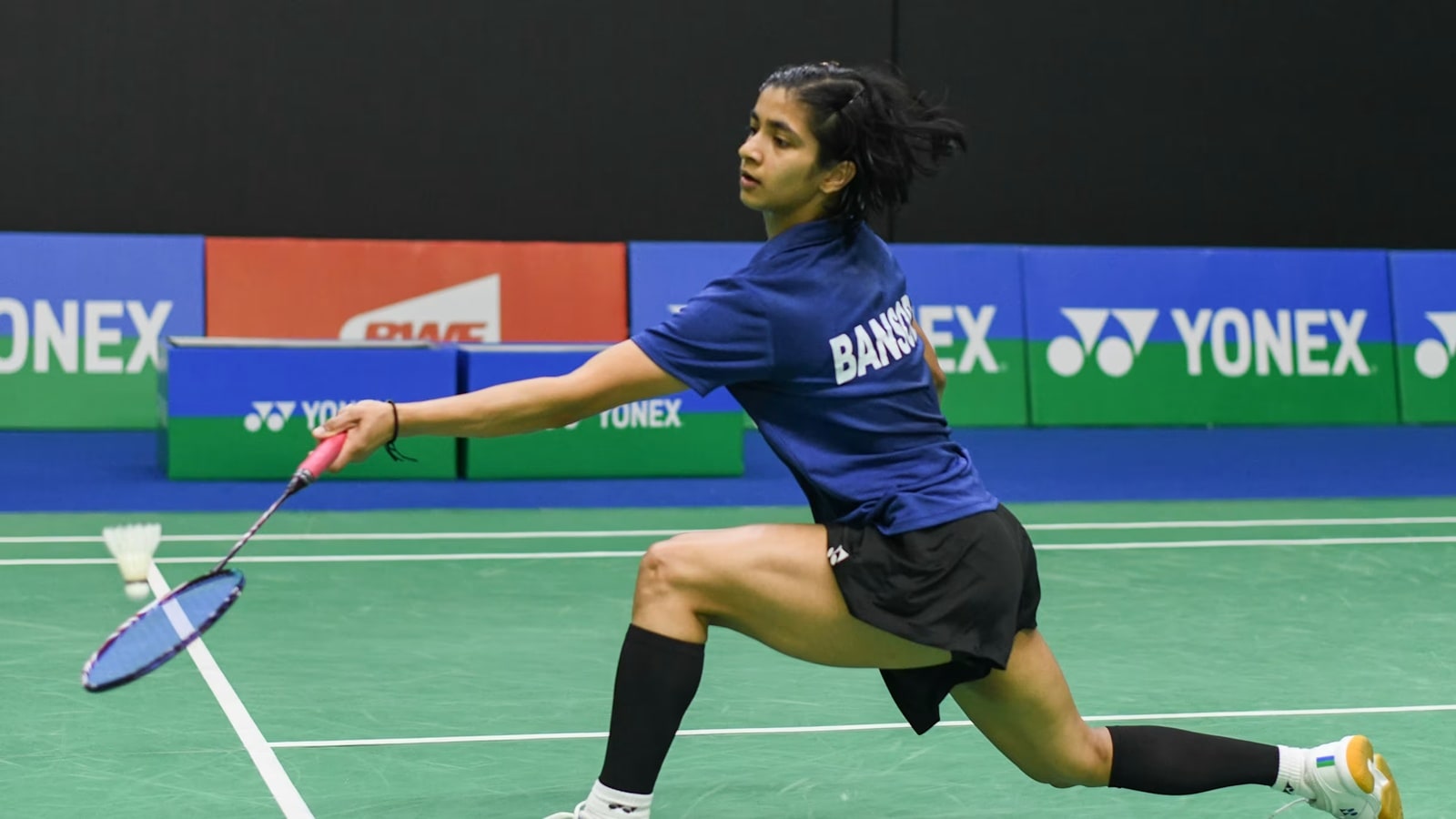
Malvika Bansod was on a career-high of World No.23 in June of 2025, one good tournament result away from overhauling PV Sindhu as India No.1, who was at her lowest ranking point in years back then. What the 24-year-old did not have was Sindhu’s physical conditioning.
Malvika had made the China Open quarters previous September defeating Olympic medalist Gregoria Mariska Tunjung. But at the Indonesia Open a year ago, she landed awkwardly and suffered a badminton player’s worst nightmare – an ACL knee injury, needing surgery. She lost to former Olympic champion Chen Yufei last week, but is determined to make a strong comeback, even if she is India’s 8th best ranked Indian player now, instead of second when the injury struck.
Malvika is now back on the court after intense rehab, and hoping to make a lift-off from her present World No.50. She tested waters on the European circuit starting February, and is now back on Tour.
ALSO READ | Malvika Bansod, a computer engineer, also a badminton player looking to qualify for Olys
“Everyone fears the ACL,” she says of the dreaded three letters that have stuttered and ended many badminton careers. “But with the support of my family, my coach, sponsors, doctors and Rehab staff and above all the almighty I could overcome the most feared injury in the life of a badminton player, the ACL surgery,” she says.
The struggle was physically daunting. “I have never forgotten the pain and tears during the rehab I went through,” she says. “Believing in myself and rebuilding everything took time. My physique looked like it was the biggest struggle and I have not taken a single day off in my schedule from last July to be able to come back to my original strength. Yet still I am not my 100 percent,” she states.
Since returning to competition post injury, she has participated in nine tournaments on the European tour, including a quarterfinal finish at the Orleans Masters in March. “Confidence comes from each match played and won,” she adds.
Having slipped down the pecking order after injury, and with India’s TOPS funding only reserved for the Top 25 ranked, Malvika would’ve ordinarily struggled. And the Nagpur shuttler has known for a while that funding would go to the pack of teenaged juniors – asking for government help was not likely to work out.
Fortunately, her backers GoSports Foundation had recently received help from the Australian Consulate-General in Mumbai in supporting emerging Indian athletes through Australia’s Direct Aid Program which covers funding for training, international exposure, equipment, recovery, and sports science. Malavika could dip into spending on sports specific equipment, through the program.
‘With funding from our Direct Aid program, GoSports Foundation provides crucial equipment, exposure and sports science support to five emerging athletes with diverse needs from Gujarat and Maharashtra,” said Paul Murphy, Australian Consul-General in Western India.
Malvika would use the DAP funds primarily for procurement of a recovery device, the Normatec boots. Returning from the knee injury, the emphasis was on her rehabilitation and recovery. These are near knee length boots (that look like gum boots) with air compressors that aid muscle recovery.
The sleeve has air chambers that inflate and deflate to simulate muscle pumping. The pulsating action moves lactic acid up the limbs and drains lymphatic fluid to aid recovery from swelling and soreness. It meant within ten months of her surgery, Malvika was playing in back to back tournaments.
ACLs are notorious for sinking spirits, but newer recovery technology saw Malvika begin to dream again. She was brought down just when she thought her career was taking off. “The toughest day undoubtedly was the day when I qualified for the Paris World Championships at a good rank next to Sindhu and I was unable to play,” she says.
The voracious reader would look for examples of players who had returned from ACL setbacks. “My biggest inspiration undoubtedly was Gopichand Sir who had undergone knee surgeries prior to winning the All England championships. I told myself that he has paved a path of strength and bravery and successful comeback for each of us athletes who go through this ACL injury,” she would say.
In a statement released by GoSports Foundation, Paul Murphy, Australian Consul General to Western India, would say, “The Direct Aid Program strengthens pathways from grassroots participation to elite competition, supporting athletes of all backgrounds and abilities with opportunities to excel.”
It was designed to address the gaps that most commonly hold back emerging athletes in India: access to competition, quality equipment, and the science of performance – those left behind, after the elite ones are offered support.
For Malvika, the journey gets tougher on court. She was 20-14 up last week in the second set at Thailand after losing the first, but contrived to go into extra points and win it 26-24. She lost patience, played steady, then took some risks and finally beat Wen Yu Zhang. Confidence post injury is sand in a fist. “At times I lost patience but was happy that ultimately had it my way. Injury on court is a part and parcel of an athlete’s life,” she says.
Malvika Bansod was on a career-high of World No.23 in June of 2025, one good tournament result away from overhauling PV Sindhu as India No.1, who was at her lowest ranking point in years back then. What the 24-year-old did not have was Sindhu’s physical conditioning.
Malvika had made the China Open quarters previous September defeating Olympic medalist Gregoria Mariska Tunjung. But at the Indonesia Open a year ago, she landed awkwardly and suffered a badminton player’s worst nightmare – an ACL knee injury, needing surgery. She lost to former Olympic champion Chen Yufei last week, but is determined to make a strong comeback, even if she is India’s 8th best ranked Indian player now, instead of second when the injury struck.
Malvika is now back on the court after intense rehab, and hoping to make a lift-off from her present World No.50. She tested waters on the European circuit starting February, and is now back on Tour.
ALSO READ | Malvika Bansod, a computer engineer, also a badminton player looking to qualify for Olys
“Everyone fears the ACL,” she says of the dreaded three letters that have stuttered and ended many badminton careers. “But with the support of my family, my coach, sponsors, doctors and Rehab staff and above all the almighty I could overcome the most feared injury in the life of a badminton player, the ACL surgery,” she says.
The struggle was physically daunting. “I have never forgotten the pain and tears during the rehab I went through,” she says. “Believing in myself and rebuilding everything took time. My physique looked like it was the biggest struggle and I have not taken a single day off in my schedule from last July to be able to come back to my original strength. Yet still I am not my 100 percent,” she states.
Since returning to competition post injury, she has participated in nine tournaments on the European tour, including a quarterfinal finish at the Orleans Masters in March. “Confidence comes from each match played and won,” she adds.
Having slipped down the pecking order after injury, and with India’s TOPS funding only reserved for the Top 25 ranked, Malvika would’ve ordinarily struggled. And the Nagpur shuttler has known for a while that funding would go to the pack of teenaged juniors – asking for government help was not likely to work out.
Fortunately, her backers GoSports Foundation had recently received help from the Australian Consulate-General in Mumbai in supporting emerging Indian athletes through Australia’s Direct Aid Program which covers funding for training, international exposure, equipment, recovery, and sports science. Malavika could dip into spending on sports specific equipment, through the program.
‘With funding from our Direct Aid program, GoSports Foundation provides crucial equipment, exposure and sports science support to five emerging athletes with diverse needs from Gujarat and Maharashtra,” said Paul Murphy, Australian Consul-General in Western India.
Malvika would use the DAP funds primarily for procurement of a recovery device, the Normatec boots. Returning from the knee injury, the emphasis was on her rehabilitation and recovery. These are near knee length boots (that look like gum boots) with air compressors that aid muscle recovery.
The sleeve has air chambers that inflate and deflate to simulate muscle pumping. The pulsating action moves lactic acid up the limbs and drains lymphatic fluid to aid recovery from swelling and soreness. It meant within ten months of her surgery, Malvika was playing in back to back tournaments.
ACLs are notorious for sinking spirits, but newer recovery technology saw Malvika begin to dream again. She was brought down just when she thought her career was taking off. “The toughest day undoubtedly was the day when I qualified for the Paris World Championships at a good rank next to Sindhu and I was unable to play,” she says.
The voracious reader would look for examples of players who had returned from ACL setbacks. “My biggest inspiration undoubtedly was Gopichand Sir who had undergone knee surgeries prior to winning the All England championships. I told myself that he has paved a path of strength and bravery and successful comeback for each of us athletes who go through this ACL injury,” she would say.
In a statement released by GoSports Foundation, Paul Murphy, Australian Consul General to Western India, would say, “The Direct Aid Program strengthens pathways from grassroots participation to elite competition, supporting athletes of all backgrounds and abilities with opportunities to excel.”
It was designed to address the gaps that most commonly hold back emerging athletes in India: access to competition, quality equipment, and the science of performance – those left behind, after the elite ones are offered support.
For Malvika, the journey gets tougher on court. She was 20-14 up last week in the second set at Thailand after losing the first, but contrived to go into extra points and win it 26-24. She lost patience, played steady, then took some risks and finally beat Wen Yu Zhang. Confidence post injury is sand in a fist. “At times I lost patience but was happy that ultimately had it my way. Injury on court is a part and parcel of an athlete’s life,” she says.