

India’s first Asian judo medal in 13 years — and the blazer that finally got worn
Inunganbi Takhellambam ended India's 13-year wait for a continental medal. But the moment that stayed was her coach finally getting to wear her blazer
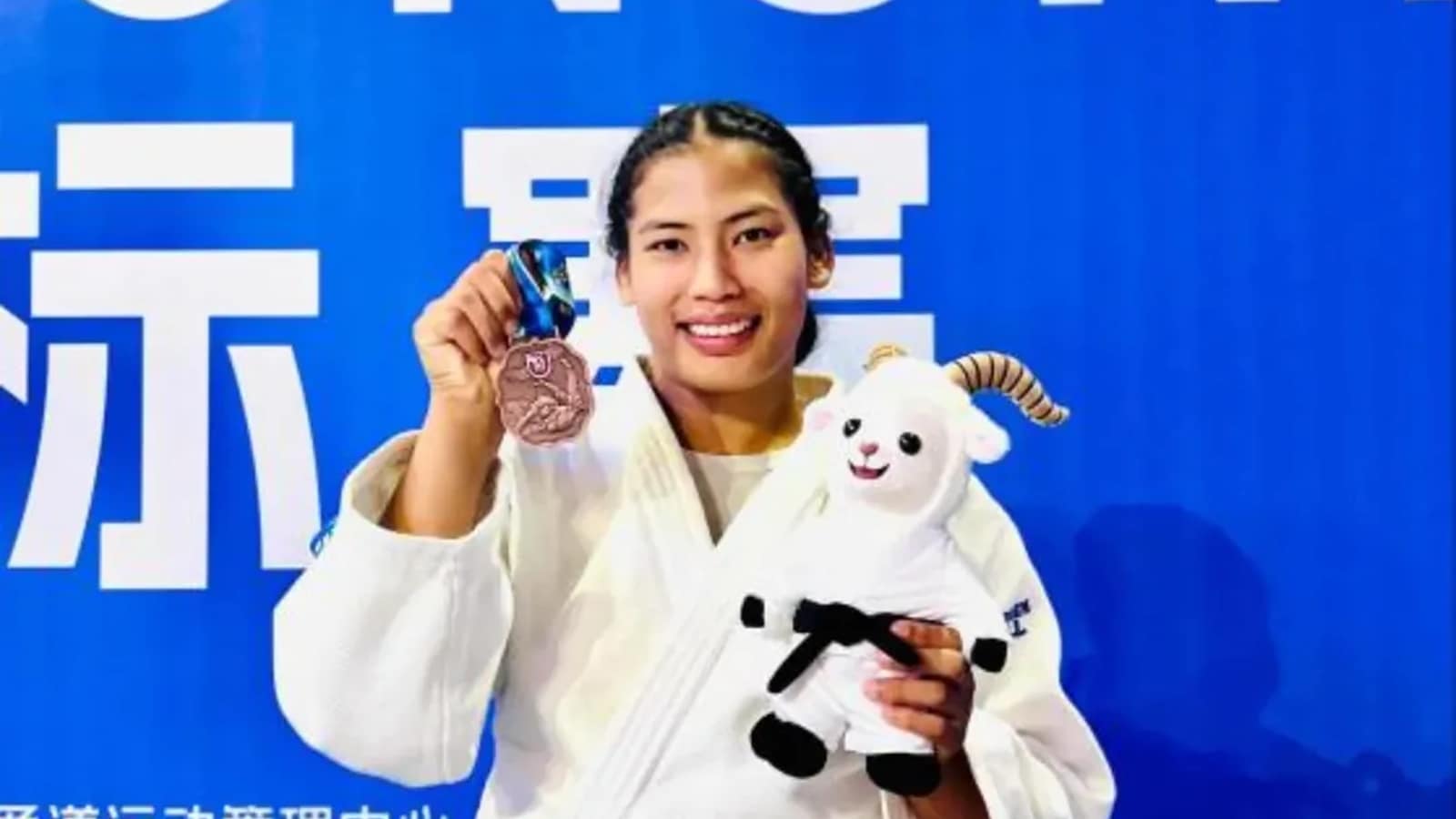
When Inunganbi Takhellambam locked in a chokehold against Mongolia’s Lkhavadulam Sarantsetseg in the bronze medal match of the Asian Judo Championships earlier this month, she was thinking about the match, not the history. The history came after.
The 27-year-old from Manipur ended India’s 13-year wait for a continental judo medal. The last had come in 2013, when Angom Anita Chanu won bronze at the same tournament. Chanu is now a national team coach — and she travels everywhere with a blazer she has never had reason to wear. In judo, coaches wear tracksuits through the elimination rounds. The formal blazer comes out only for medal matches.
“Pehle tournament se blazer leke jaa rahe the but pehenane ka mauka nahi mila tha (Since the first time I travelled with Anita mam, she had always carried a blazer but never got a chance to wear it),” Inunganbi said. “This time she asked me that should I wear it. I I told her — mam, you will wear it this time.”
“I had no idea it was Anita mam who won the last medal. I thought she must have won it way before 2013. When my coaches told me I had become the first Indian after her to win the medal, it doubled my happiness,” she said. “I have been part of the senior Indian team since 2021 but never used to go beyond the first round. This is a big victory for me and it will give me more and more self-belief.”
The road to that moment was neither straight nor easy. At these championships she lost her quarter-final to Uzbekistan’s Shirinjon Yuldoshova, then waited — as Yuldoshova reached the final, the repechage route opened. “When I entered the bronze medal match, I told myself this is a very big match and a big opportunity,” she said.
She comes from Manipur, a state that has produced Kunjarani Devi and Mary Kom, and like many young athletes there she tried everything before something stuck.
“I tried multiple sports watching the likes of Kunjarani Devi and Mary Kom. I also played football. But judo caught my eye,” she said. “I had no idea about chokeholds or any other moves. I saw cartwheeling and chose it.”
She trained under Deven Moirangthem at the National Sports Academy in Manipur before moving away from home to pursue the sport seriously. Her knee gave way in 2018 — surgery, a year of recovery. It gave way again in 2024, same knee. “My body was like a pencil,” she said of that first recovery. The second time she came back faster.
A continental medal now in her pocket, Inunganbi is looking at the Commonwealth Games and Asian Games. But she is measured about what it will take. “Apart from me, two other girls qualified for the bronze medal matches here. I believe more foreign exposure and training camps will improve our performances at the international level,” she said.
The blazer, at least, has finally been worn.
When Inunganbi Takhellambam locked in a chokehold against Mongolia’s Lkhavadulam Sarantsetseg in the bronze medal match of the Asian Judo Championships earlier this month, she was thinking about the match, not the history. The history came after.
The 27-year-old from Manipur ended India’s 13-year wait for a continental judo medal. The last had come in 2013, when Angom Anita Chanu won bronze at the same tournament. Chanu is now a national team coach — and she travels everywhere with a blazer she has never had reason to wear. In judo, coaches wear tracksuits through the elimination rounds. The formal blazer comes out only for medal matches.
“Pehle tournament se blazer leke jaa rahe the but pehenane ka mauka nahi mila tha (Since the first time I travelled with Anita mam, she had always carried a blazer but never got a chance to wear it),” Inunganbi said. “This time she asked me that should I wear it. I I told her — mam, you will wear it this time.”
“I had no idea it was Anita mam who won the last medal. I thought she must have won it way before 2013. When my coaches told me I had become the first Indian after her to win the medal, it doubled my happiness,” she said. “I have been part of the senior Indian team since 2021 but never used to go beyond the first round. This is a big victory for me and it will give me more and more self-belief.”
The road to that moment was neither straight nor easy. At these championships she lost her quarter-final to Uzbekistan’s Shirinjon Yuldoshova, then waited — as Yuldoshova reached the final, the repechage route opened. “When I entered the bronze medal match, I told myself this is a very big match and a big opportunity,” she said.
She comes from Manipur, a state that has produced Kunjarani Devi and Mary Kom, and like many young athletes there she tried everything before something stuck.
“I tried multiple sports watching the likes of Kunjarani Devi and Mary Kom. I also played football. But judo caught my eye,” she said. “I had no idea about chokeholds or any other moves. I saw cartwheeling and chose it.”
She trained under Deven Moirangthem at the National Sports Academy in Manipur before moving away from home to pursue the sport seriously. Her knee gave way in 2018 — surgery, a year of recovery. It gave way again in 2024, same knee. “My body was like a pencil,” she said of that first recovery. The second time she came back faster.
A continental medal now in her pocket, Inunganbi is looking at the Commonwealth Games and Asian Games. But she is measured about what it will take. “Apart from me, two other girls qualified for the bronze medal matches here. I believe more foreign exposure and training camps will improve our performances at the international level,” she said.
The blazer, at least, has finally been worn.
Sports
Former India player says IPL teams have figured out Mumbai Indians’ Hardik Pandya
30 Apr 2026
Sports
India’s first Asian judo medal in 13 years — and the blazer that finally got worn
30 Apr 2026