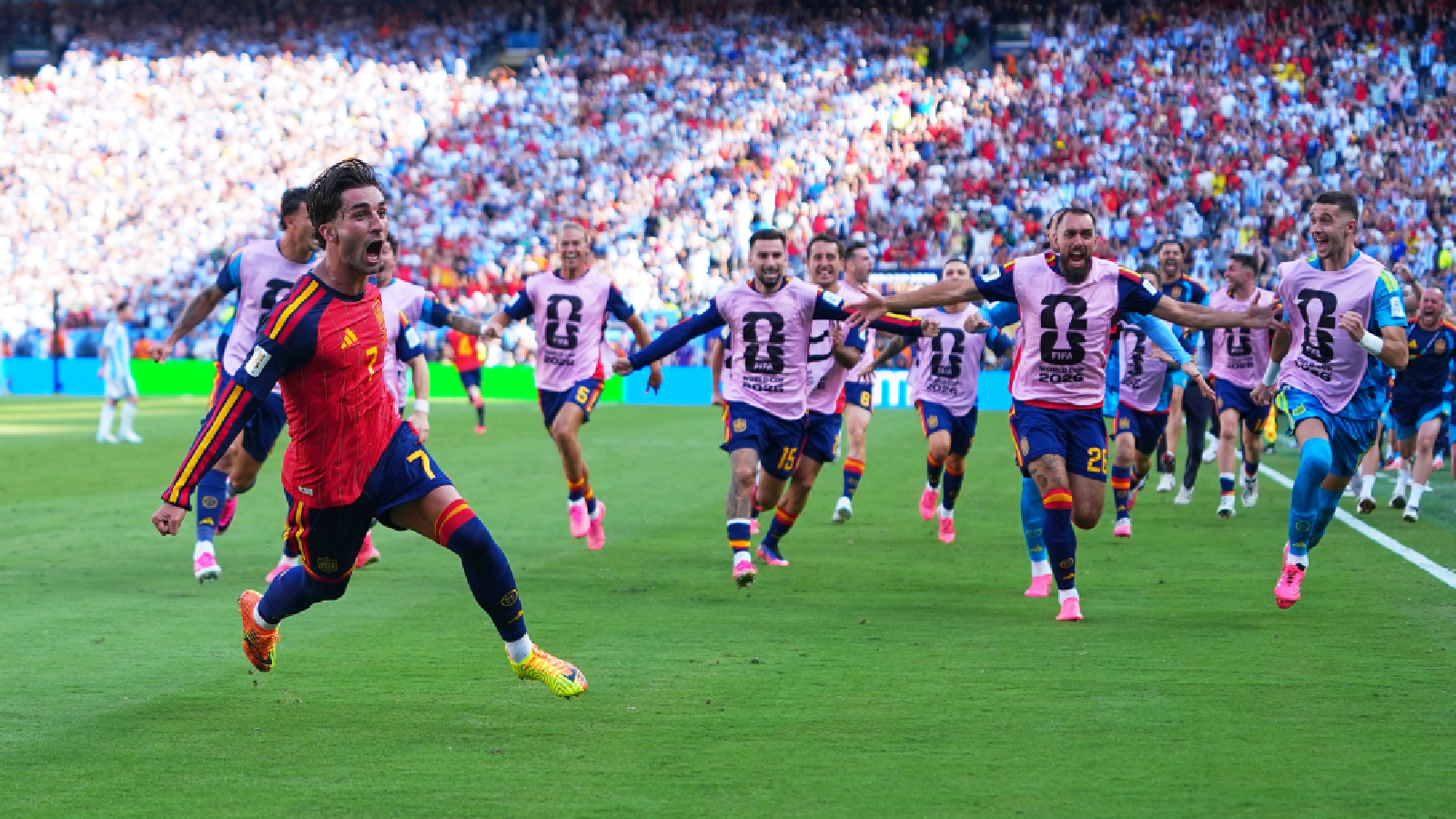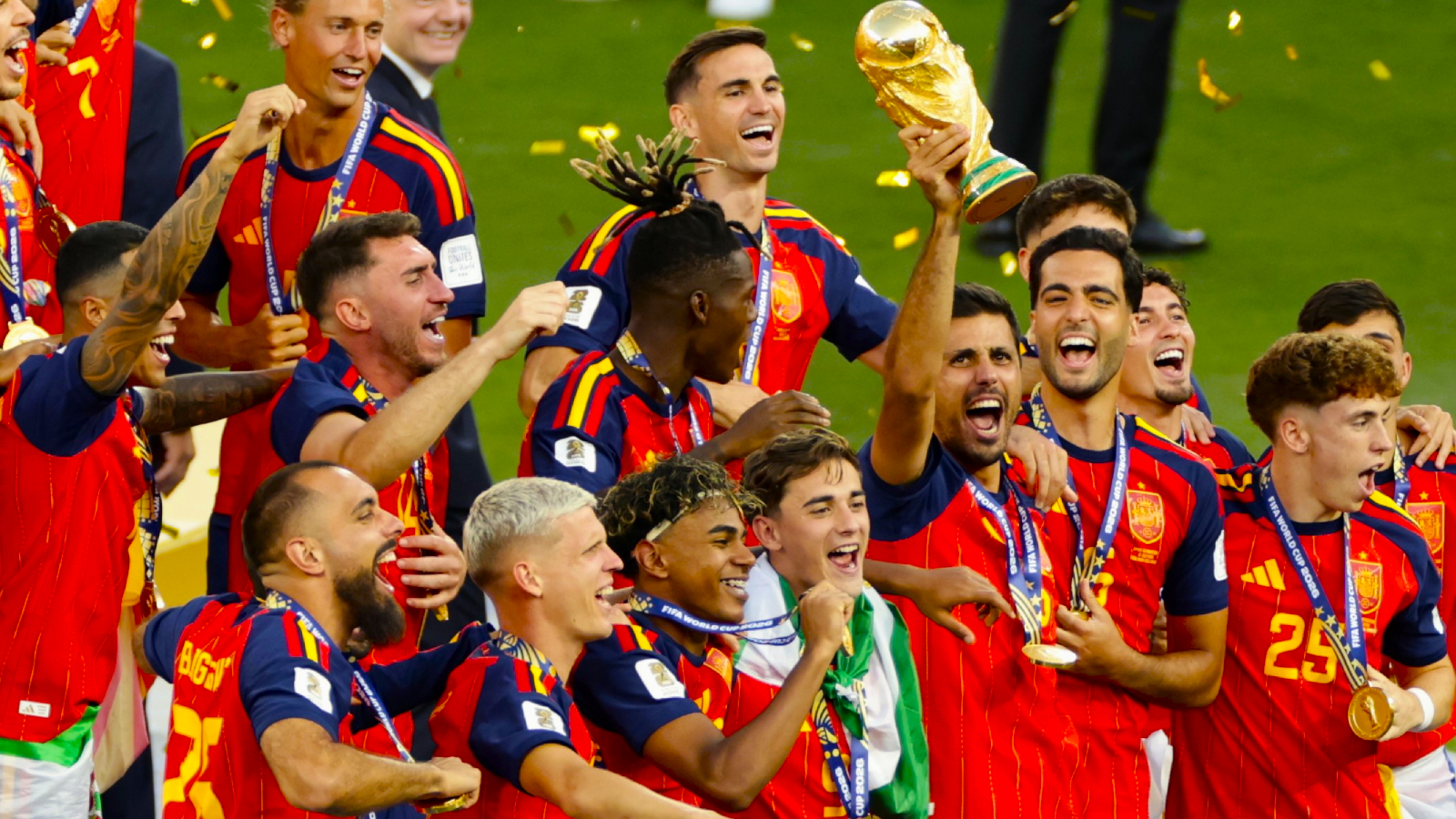


In a World Cup that rarely allowed football to be the main character, Spain’s victory feels poetic
While everyone else argued with referees, surrounded officials, fought opponents, debated formats and embraced spectacle, Spain simply played football. No theatrics. No chaos. No reliance on one superstar. Just intelligent movement, technical excellence and collective brilliance
The best thing about Spain winning the World Cup was that it finally put an end to the conspiracy theories.
For a month, social media had convinced itself that FIFA was determined to deliver Lionel Messi one last fairytale – something even Donald Trump joked about on the eve of the final. Spain’s victory, by completely outlasting the previous holders, settled that argument.
Then came the final whistle. A mass confrontation. Tempers spilling over. Players being kicked and pushed, Argentina churlishly turning their backs on the trophy presentation. More headlines about what happened after the game than what happened during it.
It was, in many ways, the perfect ending to a World Cup that rarely allowed football to be the main character.
Every tournament has its defining image. Maradona lifting the trophy in 1986. Ronaldo’s redemption in 2002. Zinedine Zidane’s headbutt in 2006. Iniesta in Johannesburg. Germany’s demolition of Brazil. Messi in Doha.
What will 2026 be remembered for?
Spain’s triumph will feature somewhere in the conversation. But so will refereeing controversies, mass confrontations, cynical football, bloated expansion, a four-quarter, made-for-television experiment and an uncomfortable feeling that, for the first time, football’s soul was fighting for space inside its own World Cup.
The referees became bigger stars than many players. Almost every knockout round ended with fresh outrage. VAR decisions were dissected frame by frame before the football itself. Germany’s penalty shootout defeat to Paraguay generated as much debate over officiating as over Paraguay’s remarkable escape. Argentina’s route to the final fuelled endless accusations of preferential treatment. Even Norway’s clash with England descended into a debate over perception versus reality, in which everybody was left asking a strangely modern football question – should they believe their own eyes or the machine? Whether those theories had merit almost became irrelevant. The perception itself overshadowed the football.
Then there was the football itself.
Intensity has always been part of the World Cup’s appeal. But too often, this tournament confused aggression with competitiveness. The France-Paraguay round of 16 was the clearest example. So were Argentina’s semifinals and finals. That pattern repeated itself throughout the tournament. Teams increasingly realised they didn’t have to outplay better opponents. They simply had to drag them into trench warfare.
The World Cup has always celebrated emotion. This one often celebrated attrition.
Then came FIFA’s great experiment. The 48-team tournament was sold as football’s democratisation. More countries. More representation. More dreams. Instead, it often delivered more predictability.
Yes, there were fresh faces. Cape Verde became one of the stories of the group stage. But even that came with an important caveat. They weren’t a romantic underdog who had stumbled into the World Cup. They had topped their African qualifying group and earned their place on merit. But apart from their run to the Round of 32, the tournament provided few eye-catching results and largely stuck to the script.
The expanded format promised more Moroccos. Instead, it produced more mismatches. And by the quarterfinals, the tournament had largely reset itself to football’s established order. Expansion was supposed to create chaos. Instead, it insulated the elite. Bigger nations now had more room for error than ever before.
Which raises an uncomfortable question: If 48 teams reduced jeopardy, what exactly will 64, being mulled for 2030, achieve? Football’s greatest tournament has always been ruthless. One bad evening could send giants home. That sense of danger has slowly been diluted.
Hovering over all of it was another question. What exactly was America adding to football that football didn’t already possess?
Football has spent decades teaching the United States how to love the game. This World Cup often looked like America trying to teach football how to entertain when the sport has never needed help creating drama. Its greatest moments are built on anticipation. A silent stadium before a penalty. Forty-five uninterrupted minutes where the game belongs entirely to the players.
This tournament occasionally looked as though it didn’t trust football enough to stand on its own. And once commercial logic begins reshaping tradition, where does it stop? Today, it is extended ceremonies and endless entertainment. Tomorrow, will cooling breaks become permanent television inventory? Will football’s sacred two halves one day give way to quarters because broadcasters discover another advertising opportunity?
Which is why Spain’s triumph felt almost poetic. While everyone else argued with referees, surrounded officials, fought opponents, debated formats and embraced spectacle, Spain simply played football. No theatrics. No chaos. No reliance on one superstar. Just intelligent movement, technical excellence and collective brilliance.
Their victory was a reminder that football’s greatest attraction has never been controversy or commerce. It is the game itself. Fittingly, Spain will be waiting when the World Cup returns in 2030 as one of its co-hosts. After a tournament where the sport often seemed buried beneath the noise, perhaps there is no better nation to help bring it back to centre stage.
The writer is deputy associate editor, The Indian Express. [email protected]