

With Piprahwa relics, Leh’s Buddhist history comes home
If India is serious about Buddhist diplomacy, then Ladakh must be seen not merely as a border to defend, but as a heritage zone to recover, preserve, and present.
The arrival of the sacred Piprahwa relics in Leh on Buddha Purnima next month will not be a religious event but a moment of civilisational significance. The relics — bone fragments, reliquary caskets, crystal, soapstone, ornaments, and funerary objects associated with the Buddha — are among the most important Buddhist discoveries in India. Unearthed in 1898 at Piprahwa in present-day Uttar Pradesh, they are widely regarded as part of the tradition of the Sakya clan, the Buddha’s own people. Their repatriation to India in 2025, after 127 years abroad and following an attempted auction in Hong Kong, was rightly celebrated as an act of cultural recovery. Their arrival in Leh restores the relics to one of the oldest Buddhist frontiers of Indian civilisation.
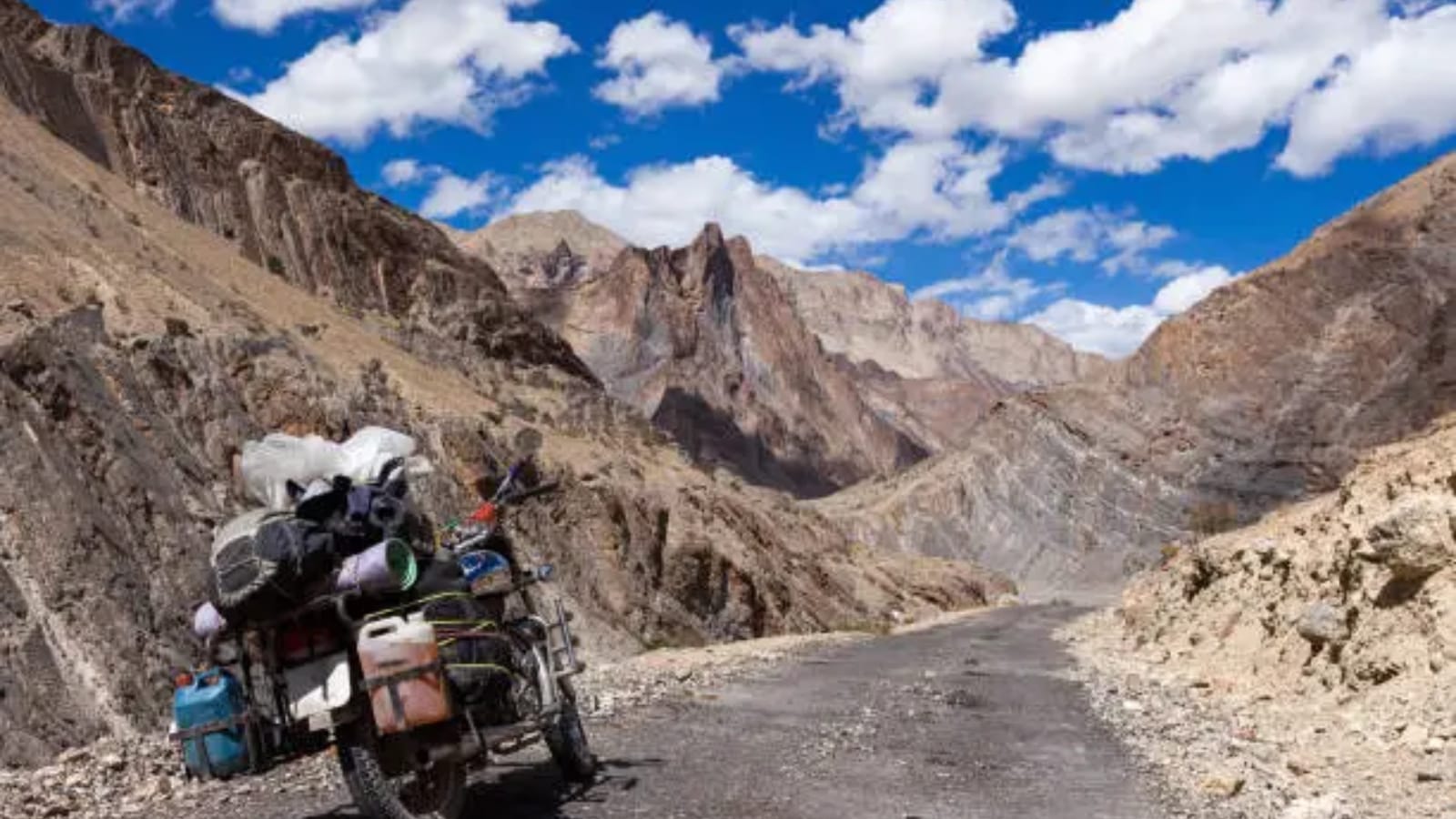
In much of mainland India, Ladakh is seen through the lens of strategy: A militarised borderland. But long before it became a theatre of modern geopolitics, Ladakh was one of Asia’s great civilisational corridors. It connected India to China, Central Asia, and the wider Buddhist world beyond the Himalaya. From Kashmir and Gandhara, Buddhism moved through the mountain world of Ladakh toward the trans-Karakoram Hindu Kush routes and onward into the oasis kingdoms of the Tarim Basin, especially Khotan. Along with merchants and caravans travelled monks, manuscripts, artistic styles, ritual traditions, and sacred ideas.
Across Ladakh and Kargil, traces of early Buddhist presence survive: Ancient stupas, inscriptions, rock carvings, and monumental sculptures that reflect clear links with Kashmir, Gandhara, and northwestern Indian Buddhist traditions. Sites in the Suru and Dras regions, the old Buddhist remains around Khaltse, and iconic sculptures such as the Maitreya at Mulbek all point to a Ladakh deeply embedded in Buddhist history.
Beyond Ladakh, across the passes and desert plateaus, lay the routes leading toward Khotan, one of the great Buddhist kingdoms of ancient Central Asia in present-day Xinjiang. For centuries, Khotan was a major centre of Buddhist learning, and one of the places where Indian Buddhism became a trans-Asian force.
Traditions linking Khotan to Ashokan-era Buddhist expansion may not all be verifiable historically, but capture a deeper truth: Buddhism spread through connected landscapes — passes, caravan towns, monasteries and frontier societies, including Ladakh. The veneration of the relics in Leh should not be seen merely as a devotional event. It is also an act of historical recovery.
India today invokes Buddhism as part of its civilisational diplomacy. Much of that is justified. But too often, this language remains abstract and Delhi-centric. If India is serious about Buddhist diplomacy, Ladakh must be seen not merely as a border to defend, but as a heritage zone to recover, preserve, and present. Leh is uniquely suited to that role. The return of the relics affirms that Ladakh is not simply an administrative unit at the edge of the Republic, but one of the regions through which India’s Buddhist inheritance was preserved and transmitted.
The writer, a former ambassador, is an expert on India-China affairs