

When Bihar’s Assembly was dissolved before it could speak
The 2005 Bihar crisis began with a fractured mandate, travelled through Raj Bhavan and Rashtrapati Bhavan, reached President Kalam in Moscow, and returned as a Supreme Court warning on the limits of Governor’s discretion
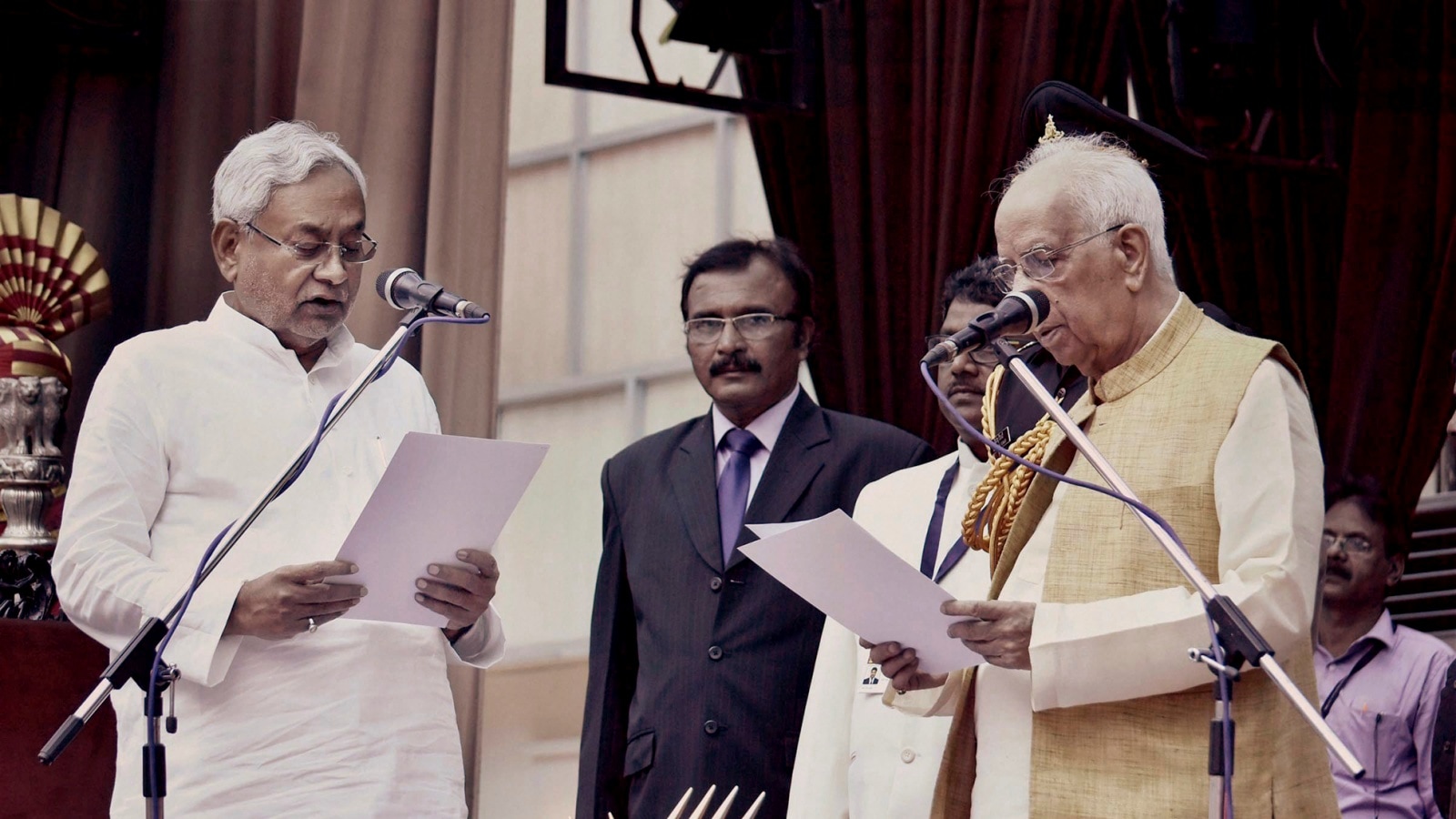
In 2000, Nitish Kumar became Bihar’s Chief Minister for the first time. The term lasted only seven days. As leader of the Samata Party, he took oath but resigned soon after when it became clear that he could not prove a majority in the Assembly. Five years later, he would return to Patna’s highest office. Between these two moments lay one of the most dramatic constitutional episodes in India’s history of hung Assemblies.
The February 2005 Bihar election did not give anyone a clear mandate. It gave everyone a claim. The RJD emerged as the single largest party with 75 seats, Nitish Kumar’s JD(U) had 55, ally BJP 37, Ram Vilas Paswan’s LJP 29, and 17 Independents held the balance. In a House of 243, the majority mark was 122.
The Governor was Buta Singh, a Congress veteran who had won eight general elections, served under four Prime Ministers, and knew Bihar’s principal leaders from Parliament. He had taken charge only months earlier, after losing the 2004 Lok Sabha election from Jalore in Rajasthan. In a hung House, his task was constitutionally sensitive but conceptually simple: find out who could form a government and require that person to prove majority on the floor.
The signals before him were messy. Paswan’s LJP said it would support neither the RJD nor the BJP. The BJP urged the Governor not to invite the RJD. The RJD staked a claim but did not have 122 MLAs. Smaller parties refused to support either camp. Six Independents claimed they could form a government. Bihar was placed under President’s Rule on March 7, with the Assembly kept in suspended animation.
In later reports to President Kalam, Buta Singh alleged that the JD(U)-BJP combine was trying to secure a majority by winning over LJP MLAs and splitting the Congress. In his final report, he claimed that 17-18 LJP MLAs were moving towards the JD(U), and that this would “distort the verdict of the people”. He therefore recommended dissolution of the Assembly.
This was the constitutional turn. The Governor did not merely assess whether a claimant had numbers. He assessed the morality of how numbers might be assembled. Before MLAs could vote, their possible movement was treated as a reason to end the House itself.
The file reached Delhi on May 22, 2005, and moved with exceptional speed. The Union Cabinet met late at night and accepted the recommendation. Prime Minister Manmohan Singh called President Kalam, who was in Moscow, to apprise him of the decision. A second call followed at 3:30 am Delhi time — 1 am in Moscow — to answer Kalam’s questions. Soon after, from Moscow, Kalam approved the dissolution of an Assembly that had not held a single sitting.
The NDA marched to Rashtrapati Bhavan in protest. Its memorandum claimed that 22 LJP MLAs had decided to merge with the JD(U). Nitish and Jaitley raised the issue repeatedly in Parliament. Lalu Prasad reportedly remarked that it was not in Nitish’s fate to become Chief Minister.
The matter reached the Supreme Court. In October 2005, roughly three weeks before Bihar began voting again, a five-judge bench constitution bench headed by Justice YK Sabbharwal held the dissolution unconstitutional. It did not restore the Assembly because fresh elections had already been notified. But the principle it laid down was enduring: a Governor cannot use apprehensions of horse-trading to prevent a possible majority from being tested in the House.
The judgment also left a personal mark on Kalam. He later wrote that after the adverse verdict, he prepared his resignation letter, signed it, and kept it ready to be sent to Vice-President Bhairon Singh Shekhawat. He first tried to reach the Vice-President, who was away. When the Prime Minister came to see him for an unrelated discussion, Kalam raised the matter, showed him the letter, and said he was waiting for Shekhawat to return. The Prime Minister was startled and pleaded with him not to act, warning that the furore could bring down the Government itself. Kalam called the scene “touching” and chose not to describe it further.
That moment showed how heavy the decision had been. What looked like a formal constitutional step had serious consequences. A Governor’s report had travelled through the Cabinet, received presidential assent, and still been found constitutionally wrong. By then, Bihar’s political course had already changed.
In the second election, voters gave the NDA a clear mandate. The JD(U) rose from 55 to 88 seats, the BJP from 37 to 55, while the RJD fell to 54 and the LJP to 10. In November 2005, Nitish Kumar became Chief Minister and began his first full tenure. But the later mandate did not cure the earlier wrong: an Assembly had been dissolved before it was allowed to decide who commanded its confidence.
That is why Bihar 2005 still matters whenever a Governor faces a hung House, including in the present Tamil Nadu debate. A Governor may examine claims and form a prima facie view, but political certainty cannot be demanded inside Raj Bhavan. The proper constitutional forum is the Assembly, and the proper method is a time-bound floor test.
The author is a lawyer with a specialisation in public law