

What a raingauge tells us about Indian science history
If Arthashastra’s system is accepted on its own terms, it represents the earliest documented, state-administered rainfall measurement system in the entire recorded human history
Also by Vijay P Singh and Solomon Vimal
India’s contributions to global scientific and technological developments are quite significant, but sadly, neither India nor the rest of the world knows much about them. A primary reason is that, unlike the West, not a single Indian university, IITs, or IISc has a credible research unit on the history of science and technology.
Consider rainfall measurement. Imagine a government official in the Mauryan Empire, sometime around 300 BCE. He stands at the entrance of a state granary in the weeks after the monsoon. In front of him is a clay bowl: wide-mouthed, standardised, placed precisely where the chief minister had dictated. The official reads the water level, converts it to dronas, and records the figure for the state. His report then travels up the administrative chain to formulate important evidence-based policies: the relief that farmers should receive, tax owed, and harvest levels. The state has measured its rainfall, and it was done because of law. This is explicitly documented in one of the most consequential administrative Indian texts.
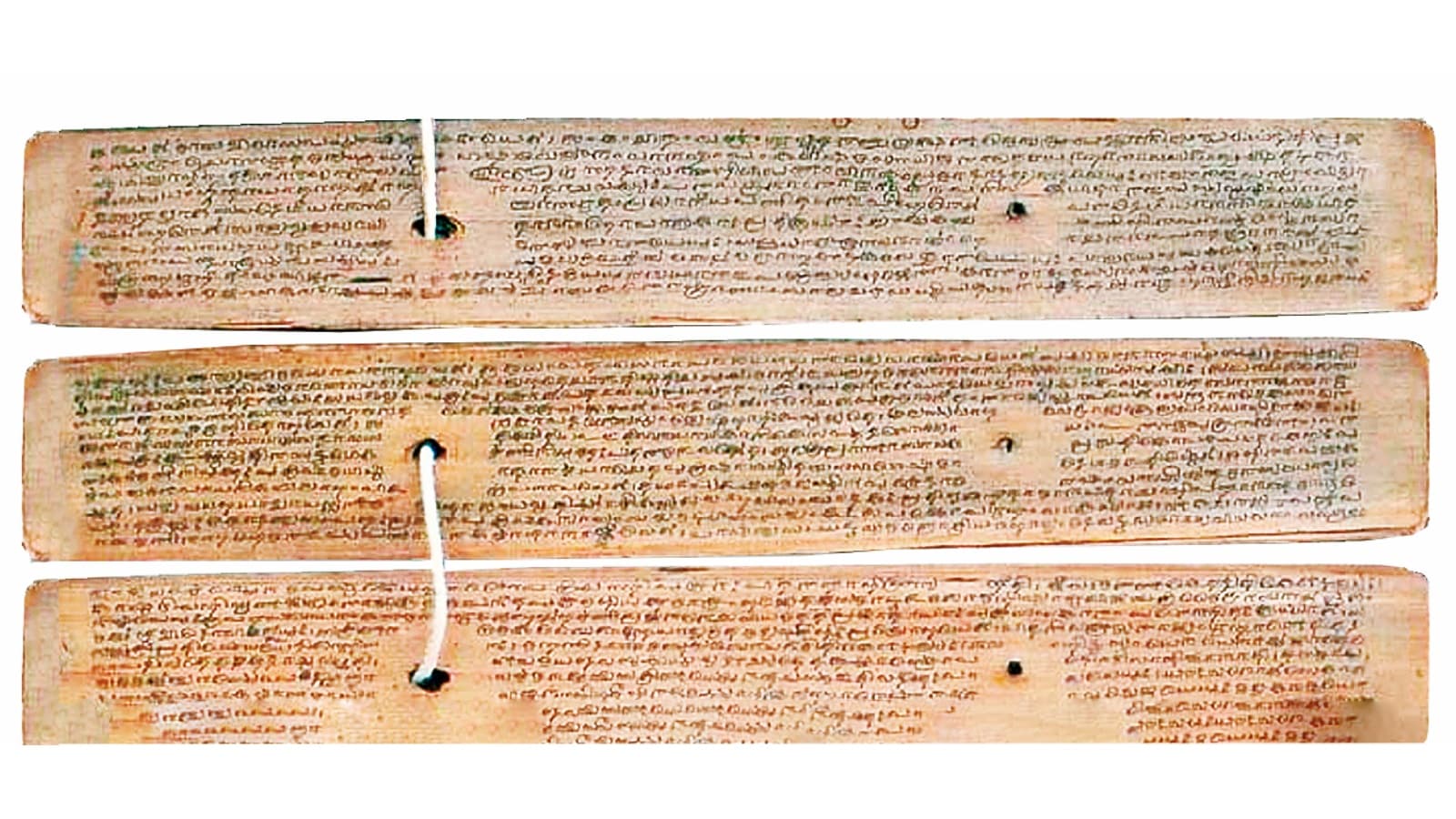
The Arthashastra, attributed to Kautilya, chief minister to Chandragupta Maurya, is a treatise on statecraft, economics, and administration written roughly around the 4th-3rd century BCE.
What is mostly unknown is that it contains the details of a complete operational system for measuring rainfall — a standardised instrument, defined units of measurement, prescribed placement locations, and a regional data collection system for six distinct zones of the subcontinent. This is an example of evidence-based hydrological knowledge that drove Indian public policy.
The unit of measurement was the drona, approximately 13.2 kg by weight of water, translatable into a depth reading. The text then enumerates expected annual rainfall for six distinct regions of the empire: Himalayan foothills, Gangetic plains, regions toward the western and southern coasts, and drier inland zones. Actual rainfall was used as a proxy for economic conditions of a primarily agrarian country to decide on taxation and also subsidies when rainfall was low.
The next development in raingauge came more than 17 centuries later. The Korean Cheugugi, installed under King Sejong in 1441 CE, is consistently cited in international hydrological literature as the world’s first standardised raingauge network. European instrumentation began even later: with Benedetto Castelli’s rainfall observations in 1639, followed by Christopher Wren’s tipping-bucket gauge in 1662.
If the Arthashastra’s system is accepted on its own terms, it represents the earliest documented, state-administered rainfall measurement system in the entire recorded human history.
What makes this finding genuinely remarkable is not merely the instrument. The measurement was mandatory, not a matter of local discretion. The gauge was placed at a specific government facility, the storehouse, ensuring consistency across locations. The data was fed directly into tax policy. The text explicitly connects rainfall totals to the remission of agricultural taxes. Farmers in drought-stricken regions received state relief calibrated to what the gauge recorded. This is integrated, evidence-based governance, a hydrological information system embedded in the machinery of an ancient state.
That this achievement has gone unrecognised in global science history reflects a problem deeper than neglect. The dominant narrative of scientific progress was written during the European Enlightenment and hardened during the colonial era. Measurement and systematic observation were framed as Western contributions to civilisation. India’s colonial education system, designed to produce administrators rather than historians of indigenous knowledge, did little to contest this. Post-Independence, investments in research on the history of science have remained conspicuously thin, not because the evidence is absent, but because institutions to pursue it rigorously have never been built.
The correction is not difficult to envision. What is needed is a coordinated national programme: new critical translations of texts such as the Arthashastra by teams combining Sanskrit scholars with historians of science and technology; peer-reviewed publications in leading international journals that place India’s contributions squarely and accurately within the global scientific timeline; and curriculum reforms that give Indian students an honest picture of where their civilisation stood in the long arc of scientific development.
Solomon Vimal is CEO and Chief Scientist of Geothara; Biswas is an international authority on water; Singh is at Texas A&M University