

West Bengal elections, politics and diplomacy: Why India’s foreign policy needs a federal front
If state governments are shaping foreign policy outcomes, they must also develop the capacity to engage with them
India’s foreign policy is not shaped in New Delhi alone; it increasingly takes form in state capitals. As West Bengal votes on April 23 and 29, the unresolved Teesta water-sharing agreement shows how domestic political calculations can shape critical bilateral relations such as between India and Bangladesh.
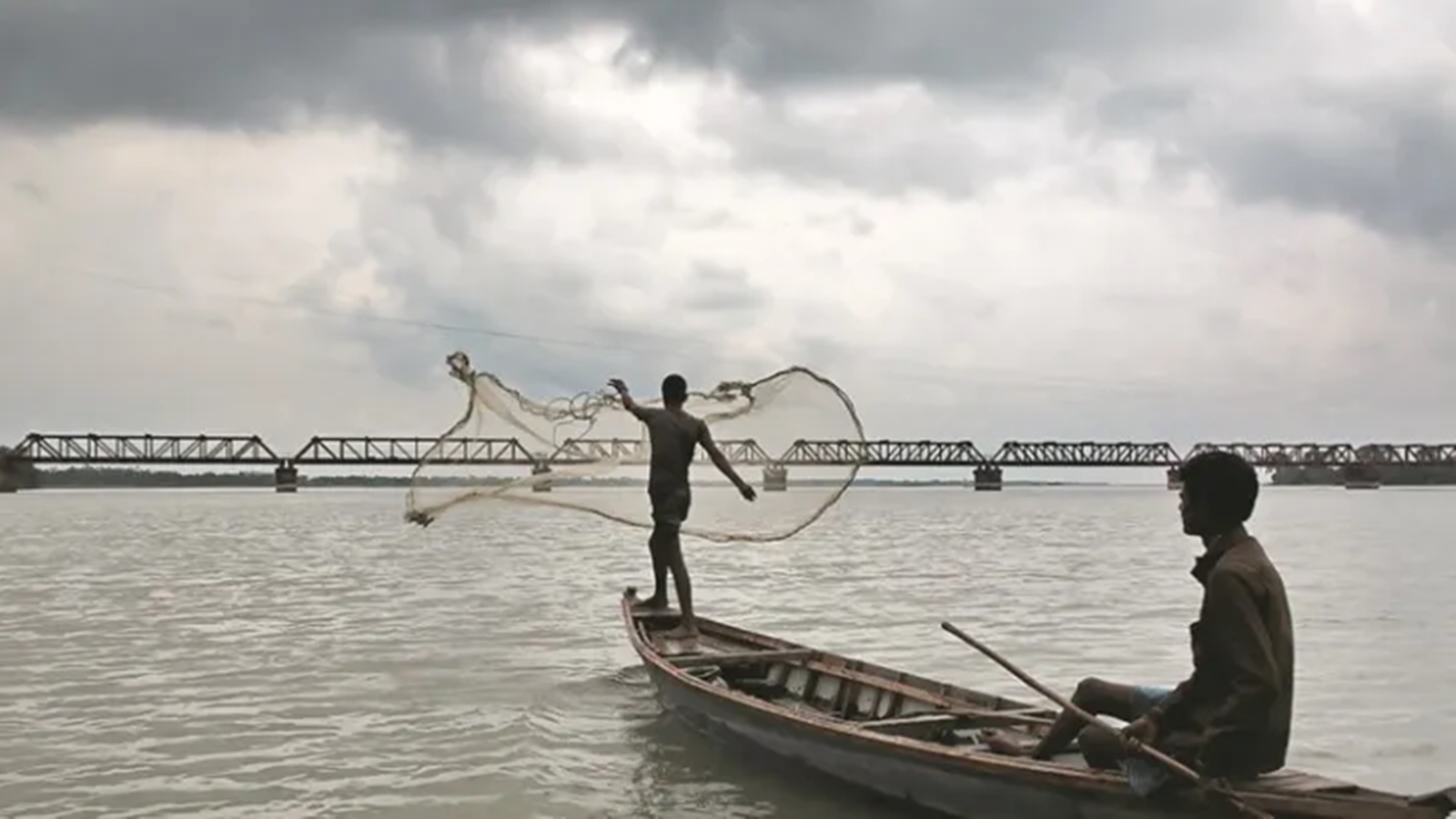
The Teesta, rising in the eastern Himalayas, flows through Sikkim and West Bengal before entering Bangladesh, where it sustains millions of people in the Rangpur region. In India, it is vital for irrigation in North Bengal, particularly in districts where agriculture depends heavily on seasonal flows. Water here is not just a resource; it is about both livelihood and politics.
In 2011, an agreement on the Teesta appeared within reach during Prime Minister Manmohan Singh’s visit to Dhaka. A draft formula allocated 42.5 per cent of dry-season flows to India and 37.5 per cent to Bangladesh. The deal collapsed after West Bengal Chief Minister Mamata Banerjee withdrew support, warning that her state would be left with insufficient water. Fifteen years later, despite repeated diplomatic assurances, the agreement remains unsigned.
This is not a minor irritation. Bangladesh is India’s largest trading partner in South Asia, with bilateral trade exceeding $14 billion in 2023-24, up from under $3 billion in 2009. India depends on Bangladesh for transit connectivity to its northeastern states and for cooperation on counterterrorism and regional stability. Yet, unresolved issues like Teesta continue to erode trust.
The deeper issue is structural. India’s foreign policy remains centralised, but many of the issues it negotiates, such as water, agriculture, and land, fall under state jurisdiction. This creates an inherent tension. International commitments require domestic consensus, yet that consensus is often shaped by electoral pressures, local resource concerns, and state-level political narratives.
West Bengal is not an outlier. In Tamil Nadu, political pressure over Sri Lankan Tamil rights and fishermen disputes has influenced India’s stance toward Colombo, including at the UN. In Punjab, sensitivities over river waters and cross-border trade with Pakistan have shaped policy choices for decades. In the northeastern states, bordering Myanmar and China, local dynamics from refugee inflows to informal trade require calibrated responses that New Delhi alone cannot manage.
Other federal systems have adapted to similar realities. In the US, states play active roles in trade promotion and climate diplomacy. California has entered into international climate partnerships of its own. In Germany, the Länder participate in shaping European policy through formal mechanisms. India, by contrast, lacks structured processes to systematically integrate state-level perspectives into foreign policy before agreements are negotiated.
The result is a reactive model. Deals are negotiated at the Centre, only to be delayed or diluted when state-level objections emerge later.
Teesta illustrates the cost of this disconnect. Despite over a decade of political alignment between New Delhi and Dhaka, the absence of internal consensus has stalled progress. For Bangladesh, where dry-season flows of the Teesta have in some years dropped to around 500 cubic feet per second, the issue is tied directly to agriculture, food security, and regional equity. For India, the delay signals a gap between intent and execution.
The answer is not to bypass states, but to equip them. If state governments are shaping foreign policy outcomes, they must also develop the capacity to engage with them. First, Centre-state coordination on external affairs must be institutionalised. Consultations on transboundary rivers, connectivity, and border trade need to happen early, not after agreements are finalised. Second, states need greater foreign policy literacy. As they engage more with global investors and neighbouring regions, understanding geopolitical trade-offs is no longer optional. Third, political debates must be anchored in transparent data. On issues like water sharing, evidence-based dialogue can help move discussions beyond zero-sum narratives.
India’s ambitions in South Asia depend not on economic or military strength, but on coherence. In an era where domestic politics and foreign policy are intertwined, that coherence cannot be achieved without aligning the centre and the states.
The Teesta agreement is often framed as a bilateral issue, but in reality, it is a test of India’s federal diplomacy. Whether India can turn its internal diversity into a source of strength rather than friction will shape not only the fate of one river, but the credibility of its leadership in the region.
The writer is senior director of IPAG India, which also has a presence in Dhaka, Melbourne, Dubai, and Vienna