

Vijay’s foreign policy challenge: Sri Lanka
Of the two issues — ethnic Tamils and fishermen — the latter is expected to be more crucial from the electoral mileage perspective
By N Manoharan and Saanvi Banyana
Taking into consideration the TVK’s election manifesto and party leader Vijay’s statements, two issues are expected to be the friction points in the India-Tamil Nadu-Sri Lanka triangulation: Ethnic Tamils and fishermen. In its manifesto, the TVK emphasised citizenship for Sri Lankan Tamil refugees settled in Tamil Nadu and that it would also press the Union government to safeguard the rights of Tamils living in Sri Lanka. The TVK understands that foreign policy is the domain of the Union and any steps on the ethnic issue have to go through the Centre. Thus, the TVK is unlikely to cross swords with New Delhi and will act as a pressure group.
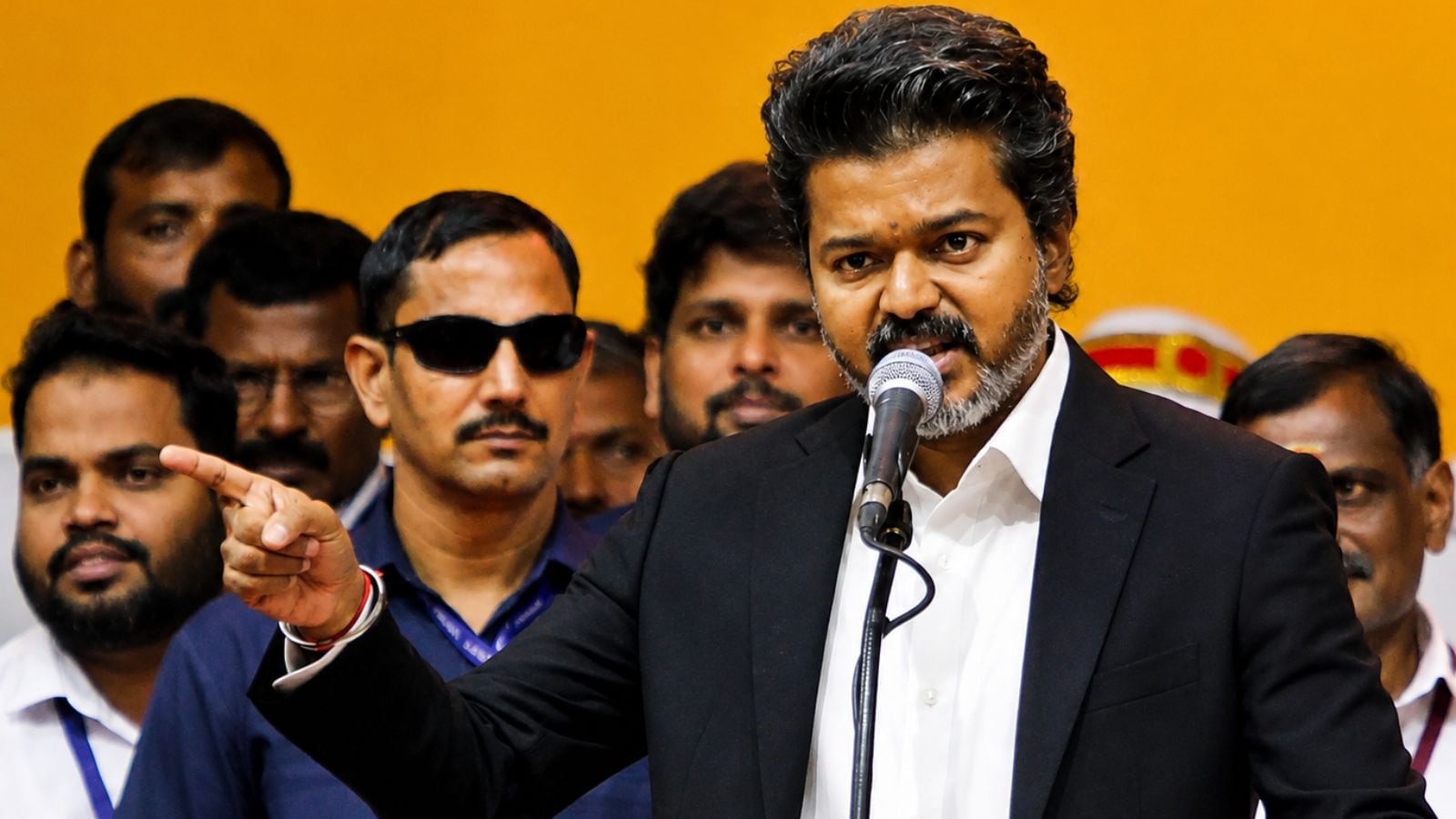
In the party’s very name, “Tamilagam” is interpreted as “the inner homeland of Tamils, and also the land where Tamils live” connected by an “umbilical-cord”. In a speech delivered in September last year, Vijay lamented that Sri Lankan Tamils “are suffering after losing a leader who showed them motherly affection”, widely seen as a reference to the LTTE’s Velupillai Prabhakaran. At the same time, depending on who its coalition partners are, the TVK will have to maintain a balance.
The TVK has paid considerable attention to the issue of fishermen, as of the many coastal assembly constituencies in which the fishermen community have significant electoral clout, the TVK won 15 of them. In its resolutions, the TVK blamed the governments of Sri Lanka and India for failing “to adhere to or enforce the provisions of the United Nations Convention on the Law of the Sea (UNCLOS)”. In particular, it pointed fingers at the Sri Lankan government, which “has already been acting beyond limits against our (Tamil Nadu) fishermen”, and “now arrests them monthly and yearly, accusing them of crossing the border to fish”.
As an interim solution, the TVK emphasised that “India should demand the lease return of our lost Kachchatheevu island” and has promised to “press New Delhi truthfully and sincerely to safeguard traditional rights of Indian fishermen in the Gulf of Mannar as per the maritime agreement between India and Sri Lanka”. Practically speaking, the fishermen issue goes beyond Kachchatheevu and is rooted in bottom trawling, unsustainable exploitation of fisheries, and the crossing of the maritime boundary. Unless these are addressed, there is little hope of a resolution.
The TVK manifesto lists more than a dozen promises for fishermen: A fishing ban allowance, insurance, fuel, a minimum support price for certain fish varieties, housing, skill development, separate outlets to sell fish products, fishing harbours, cold storage, and help to procure deep-sea fishing boats. If implemented diligently, the fishing community’s problems may be ameliorated over time. But it has to be seen in an interconnected and holistic manner. In the larger context, Vijay suggested that India’s “foreign policy must be formulated in consultation with the Tamil Nadu government. A Tamil representative should be appointed as the Indian envoy to Sri Lanka.”
In sum, of the two issues — ethnic Tamils and fishermen — the latter is expected to be more crucial from the electoral mileage perspective. The best way forward for the TVK is to avoid a confrontationist approach, both with New Delhi and Colombo.
Manoharan is professor and director, and Banyana is researcher at Centre for East Asian Studies, Christ University, Bengaluru