

Ram Madhav writes: To become a deep-tech power, India needs alliances
Nordic countries have huge investment potential running into trillions of dollars. India has engineering talent, scale, innovation and a start-up ecosystem
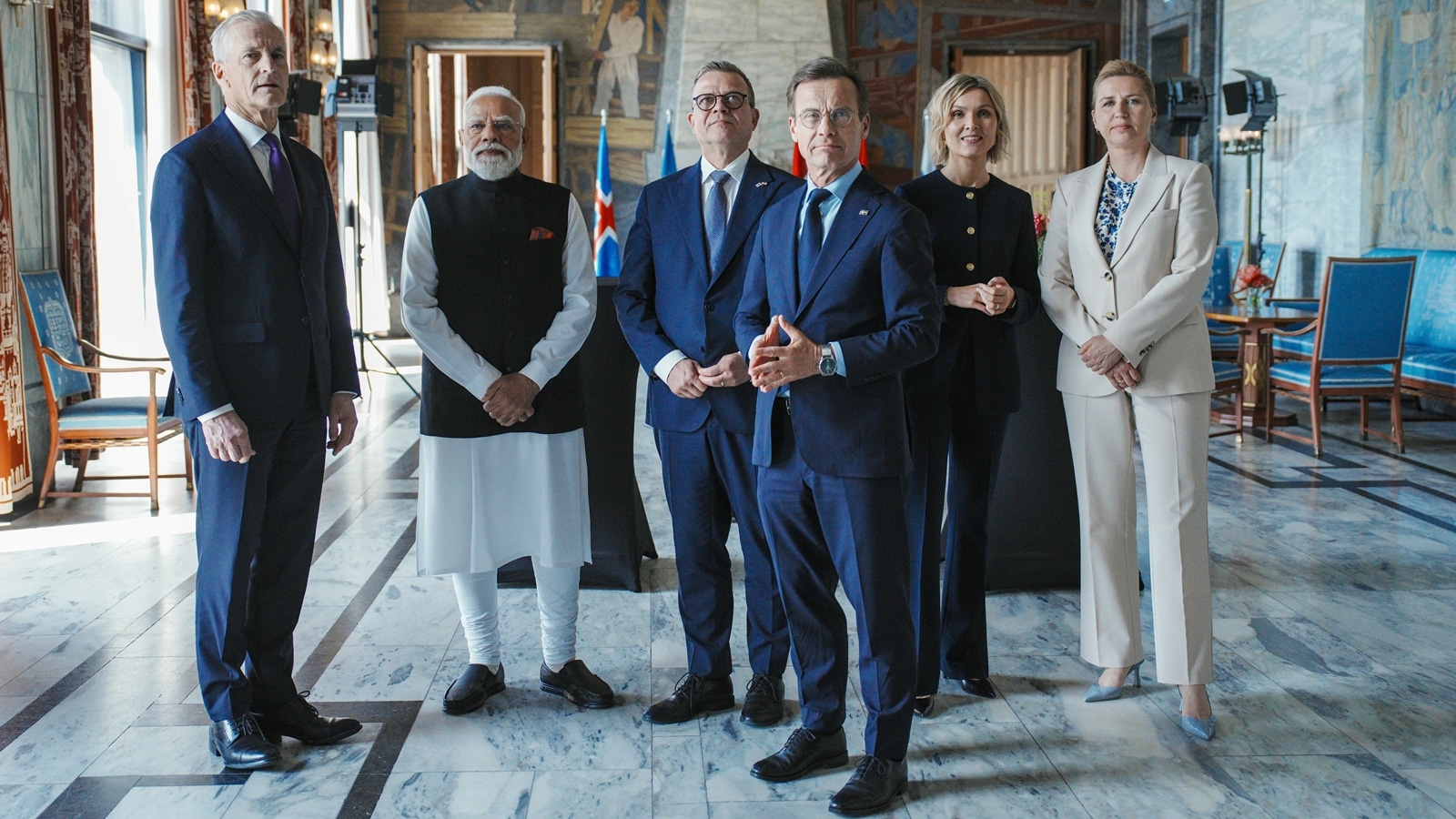
Prime Minister Narendra Modi’s visit to the Nordic countries was marred by the unbecoming behaviour of a local journalist, Helle Lyng Svendsen, at the PM’s joint appearance with Prime Minister Jonas Gahr Støre of Norway. Svendsen’s claims that it was a standard “confrontational” approach and the duty of a journalist representing the “freest press in the world” are laughable. Compared to Norway’s less than 300 news outlets, India has more than 1.55 lakh publications, 17,000 newspapers in 22 languages, 900-plus satellite TV channels, of which around 400 are dedicated to news and current affairs, and more than 3,700 digital publications. This vast and varied ecosystem enjoys enormous freedom, with several organisations dedicated to criticising the government. Just as Mahatma Gandhi dismissed American journalist Katherine Mayo’s negative portrayal of India in 1927 as “the report of a drain inspector”, Svendsen’s outbursts about the lack of media freedom and human rights in India, too, should be dismissed.
Beyond this headline-grabbing incident lies the importance of PM Modi’s mission during the visit to the Nordic countries, Italy, and the Netherlands. In an article co-authored with his Italian counterpart, Giorgia Meloni, Modi highlighted the objective of his engagements with various world powers. “Our cooperation mirrors our shared awareness”, and “that prosperity and security in the 21st century will be shaped by the ability of nations to innovate, manage energy transitions, and strengthen sovereignty,” they wrote. Our world is transitioning into a deep-tech order in which technologies like AI, semiconductors, biotechnology, robotics, and crypto will play a critical role in defining the pecking order. A few companies in the US and China mastering these technologies is leading to a new “tech-colonisation”, posing a serious threat to many countries’ sovereignty. Arthur Mensch, CEO of leading French AI firm Mistral AI, warned in a testimony before the French national assembly recently that Europe has just two years to build an independent AI stack, failing which it will perpetually be at the mercy of America. Europe will become a “vassal state”, he told policymakers.
It is this urgency and the serious concern about digital sovereignty that is propelling PM Modi to proactively engage with European and other powers. Under him, India has made commendable progress in building efficient digital public infrastructure. But more focus is needed on innovation, R&D and investment. India is facing headwinds in investing in the development of its AI stack and semiconductor infrastructure. Focussing on these areas, the Modi government has launched initiatives like the National AI Mission, the National Quantum Mission and the Anusandhan National R&D Mission. But most of these are government-funded, with little interest from private investors.
India’s annual R&D investment is around 1.25 lakh crore (roughly $13 billion). American semiconductor giant Nvidia alone spends $18.5 billion on annual R&D. India’s capital expenditure budget for 2025-26 was around Rs 11 lakh crore, roughly $130 billion. Alphabet CEO Sundar Pichai announced recently that his company plans $190 billion in capital expenditure in 2026 to drive its AI infrastructure. These are the kinds of volumes involved in deep-tech investments.
Modi’s effort through his engagements with European powers, including the EU-India FTA, was towards “pooling our complementary strengths”. Nordic countries have huge investment potential running into trillions of dollars. India has engineering talent, scale, innovation and a start-up ecosystem. Modi is attempting to achieve “a co-creation of value where our respective industrial strengths amplify one another”. He has pitched for greater investments from the Nordic countries in India’s deep-tech sectors like green energy, AI, etc.
India needs such alliances in its ambition to rise as a major deep-tech power while safeguarding its digital sovereignty. Modi is working with that futuristic vision, something a mature leader in the Opposition, Sharad Pawar, understood when he said, “political differences should not come in the way when it comes to protecting India’s prestige, and PM Modi is working to uphold the country’s honour abroad”.
The writer president, India Foundation, is with the BJP