

Can paternity leave change India’s gender norms? The Supreme Court thinks so
With data showing unequal caregiving, the court’s push could reshape family and workplace dynamics
Around International Women’s Day, two different all-male benches of the Supreme Court adjudicated upon distinct leave provisions concerning work and gender. One bench, led by the Chief Justice of India, spoke of menstrual leave as a possible roadblock for employers to hire more women as well as for women’s career prospects. In contrast, another bench examined leave provisions pertaining to parenthood and delivered a favourable judgment for the petitioner, opening important pathways towards gender justice — particularly, gender disparities in childcare and parental leaves.
The second judgment lays down two things. First, that a limit on the age of the child at three months with regard to maternity leave for adoptive mothers should be removed from The Code on Social Security, 2020. Second, that the government also recognise paternity leave and formulate provisions to that effect, wherein its duration may be “determined in a manner that is responsive to the needs of both the parent and the child”. Interestingly, defending the age limit on children for maternity leave to adoptive mothers, the Additional Solicitor General (ASG) argued that it “strikes a balance between the rights of adoptive mothers and the concerns of employers”. It is understandable that it is utterly desirable for employers to want uninterrupted availability of their employees, but it must not be at the cost of humane and just accommodations for workers. In setting aside the ASG’s argument, the court prioritises a rights-based approach towards workers and takes an expansive view of care work and motherhood in particular, and parenthood in general. This expansion entails a move beyond the act of birth giving, a broader view of child care untethered from pedantic distinctions among newborns & infants and, caregiving beyond traditional gendered divisions.
There has been a gradual legal expansion of maternity leave in India to include mothers who are not birth-givers. This judgment notes that “the object of maternity benefit is not associated with the process of childbirth but with the process of motherhood”. Moreover, since “the right of reproductive autonomy is not confined to the biological act of giving birth”, the legal claims to maternity leaves of biological, adoptive, and commissioning mothers through surrogacy can be at par. This non-limitation to the act of giving birth can therefore be a useful trope to bring fathers into the fold of parental leave. Male government employees are entitled to 15 days of paternity leave, which they can take within six months of their child’s birth or adoption. The court has recommended widening the net and “recognising paternity leave as a social security benefit”.
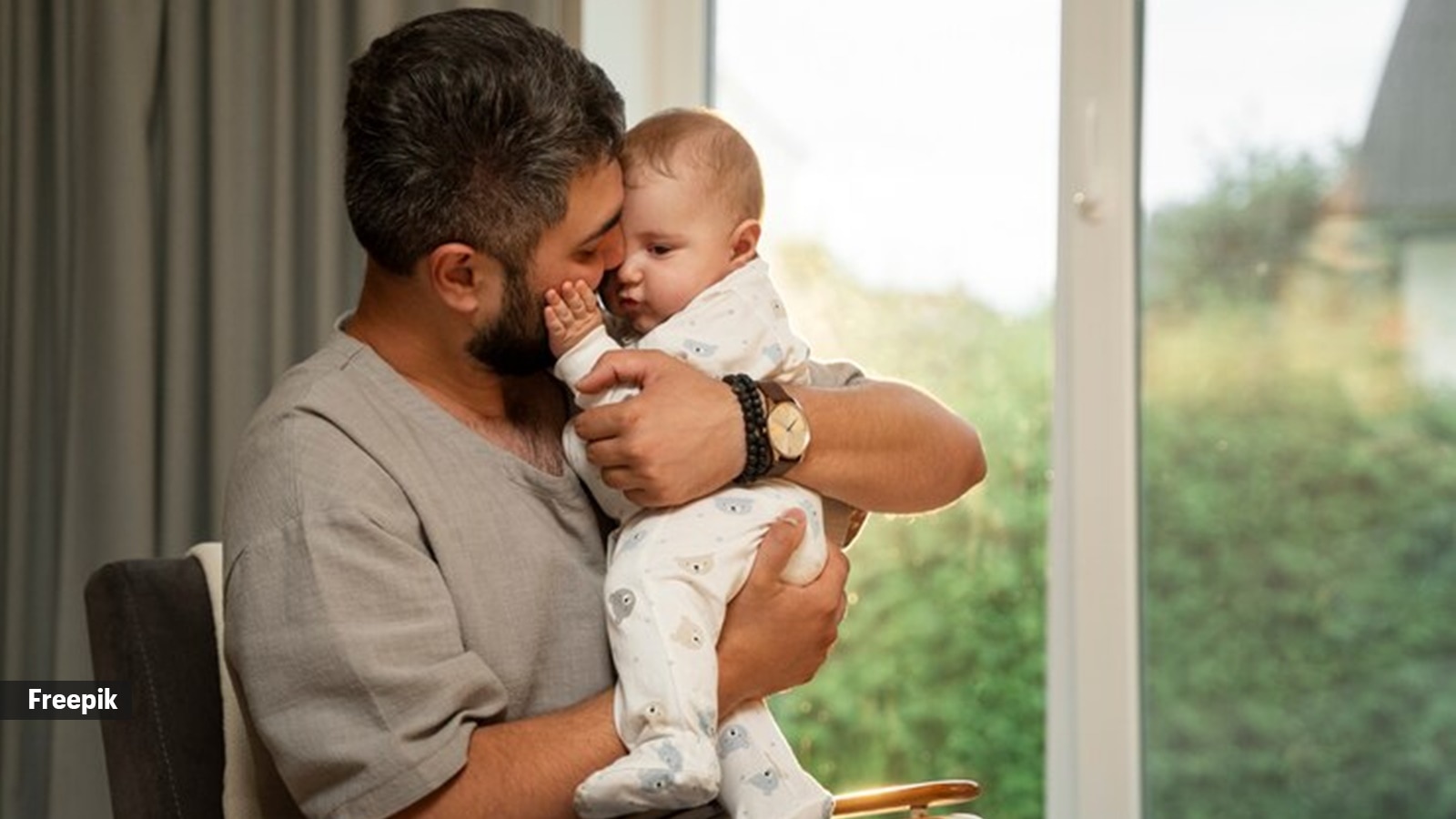
On the one hand, the judgment foregrounds recognition of the gendered nature of care work and domestic labour and the provision of maternity leave as a mode of gender equity. On the other hand, it also seeks to challenge this gendered division of care labour by creating “a meaningful opportunity” through paternity leave. It envisages that fathers can then participate “in the upbringing and caregiving of the child, assisting with household responsibilities, and [remain] emotionally present during this demanding phase”. It is a welcome change to emphasise men’s responsibilities within the household beyond the patriarchal imagination of their provider-protector role. It is in sharp contrast to a former minister’s much-quoted 2016 view that “for a man, it will be just a holiday, he won’t do anything”.
Between these extremes lie the gendered social realities of care labour — who is most likely to do this work, and do enabling policy measures contribute to gender norm change. The Time Use Survey 2024 showed that among respondents in the age group of 15-59 years, 41 per cent of women and 21.4 per cent of men reported participation in caregiving within households in India. Among them, it was not surprising that women spent almost double the time on such tasks as compared to their male counterparts. In countries where paternity leave or earmarked parental leave for fathers is available, the picture does look different. For example, among Scandinavian countries that have some of the most equitable parental leave provisions, Statistics Sweden reported a gradual closing of the gap between men and women, even when women continue to perform a greater share of unpaid care work. Moreover, a recent OECD report observes that “the average duration of fathers’ leave-taking may or may not broadly align with their earmarked entitlements,” and gender norms play a significant role in this context.
Thus, enabling policy measures such as paternity leave can indeed go a long way in promoting gender equality, but they need to be complemented by changes in social norms. The Supreme Court has opened an important door for policy intervention, and it remains to be seen if this significant opportunity is seized.
The writer is assistant professor, Department of Political Science, University of Hyderabad. Views are personal