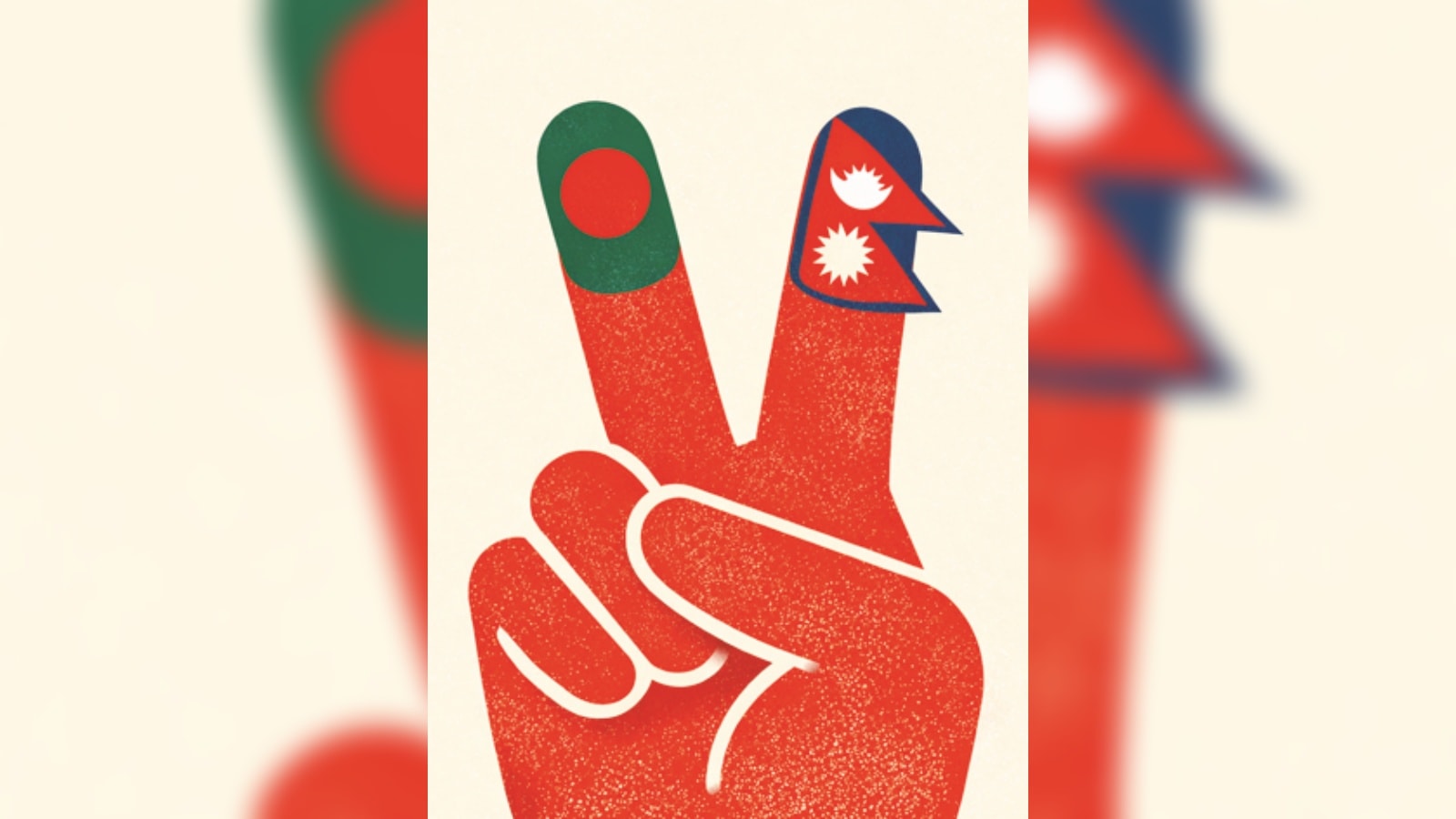


In Nepal and Bangladesh, the people have spoken
Given the historically strong people-to-people ties with its neighbours, India should proactively reach out to the new governments in Bangladesh and Nepal and rebuild relations that have suffered in the last few years
India is not only the world’s largest democracy but a successful one, too. It is a model for its South Asian neighbours to emulate. The last couple of months saw two important neighbours, Bangladesh and Nepal, successfully demonstrating their democratic credentials. Bangladesh held its elections on February 12, while Nepal went to the polls on March 5. Two things stood out: One, the peaceful manner in which they were conducted, and two, the commendable maturity that the electors in both countries displayed.
Bangladesh and Nepal witnessed popular revolts that led to the ouster of their respective heads of government: Sheikh Hasina in August 2024 and K P Oli in September 2025. These revolts were not peaceful. The abruptness and scale of violence in both cases prompted some observers to suspect the involvement of foreign agencies. But there were genuine reasons for popular unrest in both countries.
Bangladesh remained under an unelected government led by Nobel laureate Muhammad Yunus for an unusually long period. The Yunus government’s antics endeared it neither to its people nor to neighbours like India; India-Bangladesh relations touched a nadir. The National Citizen Party, backed by the student groups that spearheaded the agitation against Hasina, was seen as an important contender for power along with the fundamentalist Jamaat-e-Islami. In the run-up to the elections, many suspected that the two parties, with the backing of the interim government, would emerge as frontrunners.
But the voters in Bangladesh demonstrated utmost wisdom and maturity in offering a landslide majority to the Bangladesh Nationalist Party (BNP), a seasoned warhorse in the country’s politics. The BNP, under the leadership of Tarique Rahman, is best suited to provide a stable government with credibility and experience at this crucial juncture.
The BNP’s priorities include implementation of the constitutional and political reforms approved by the citizens in a referendum conducted by the Yunus administration in February 2025. The reform proposals include, among others, limiting the prime minister to two consecutive terms and creating an independent anti-corruption body. While Yunus followed an overtly anti-India policy, Rahman is expected to bring balance and bonhomie back into the relationship.
In Nepal, the voters chose a new party that came into the electoral scene just a few years ago. The Rastriya Swatantra Party, led by 50-year-old journalist-turned-politician Rabi Lamichhane, and 35-year-old rapper and youth sensation (also former mayor of Kathmandu) Balendra Shah, registered an unprecedented victory by winning more than two-thirds of the seats. Nepal opted for younger faces and new leaders, decisively rejecting the Nepali Congress and the Communist Party of Nepal (UML), led by septuagenarians like Sher Bahadur Deuba and K P Sharma Oli.
Although Nepal began its democratic journey in 1990, it never succeeded in establishing stable governments. There were more than a dozen prime ministerial tenures during the constitutional monarchy between 1990 and 2008, and 14 since the abolition of the monarchy in 2008. The 2026 election is a watershed moment because a single-party majority government is being formed. It will provide greater stability and allow for mature decision-making.
No democracy can be perfect, and no election will be complaint-free. But India has always been more comfortable dealing with fellow democracies, except for Pakistan, where a sham democracy prevails with the country’s military looming large. Earlier, the Maldives (in 2023) and Sri Lanka (in 2024) conducted elections peacefully. In Myanmar, elections were held in December 2025-January 2026. All these governments enjoy excellent relations with India. Given its historically strong people-to-people ties with neighbours, India should proactively reach out to the new governments in Bangladesh and Nepal and rebuild relations, which have suffered some setbacks in the last few years. After all, as Atal Bihari Vajpayee said, “We can change our friends but not neighbours.”
The writer, president, India Foundation, is with the BJP