

At a time when hate is a safe bet, ‘Main Vaapas Aaunga’ trusts our instinct to love
To watch such a film is a relief. A friend whose grandparents had to come to India from Lahore during the Partition wrote on social media that the film is like a balm
As Imtiaz Ali’s Main Vaapas Aaunga ended, many people around me stayed back to see the end credits song. The film had ended, but we were still in it, wiping away tears. The song was somehow soothing. The energy in the theatre is hard to describe. From other screenings, one hears of people, young and old, with some connection to Partition, being moved to tears. Someone commented on Instagram that it “looks more like a condolence meeting rather than a film show”.
What does it mean to leave a film having slightly grieved something you were holding on to for years, generations even? How does it change the space of the cinema hall, especially when recent films like Dhurandhar have worked on the opposite premise? They capture attention by inciting, by provoking. They end with a bait, and we all readily take it. There is no possibility of conversation. The theatre itself feels unsafe.
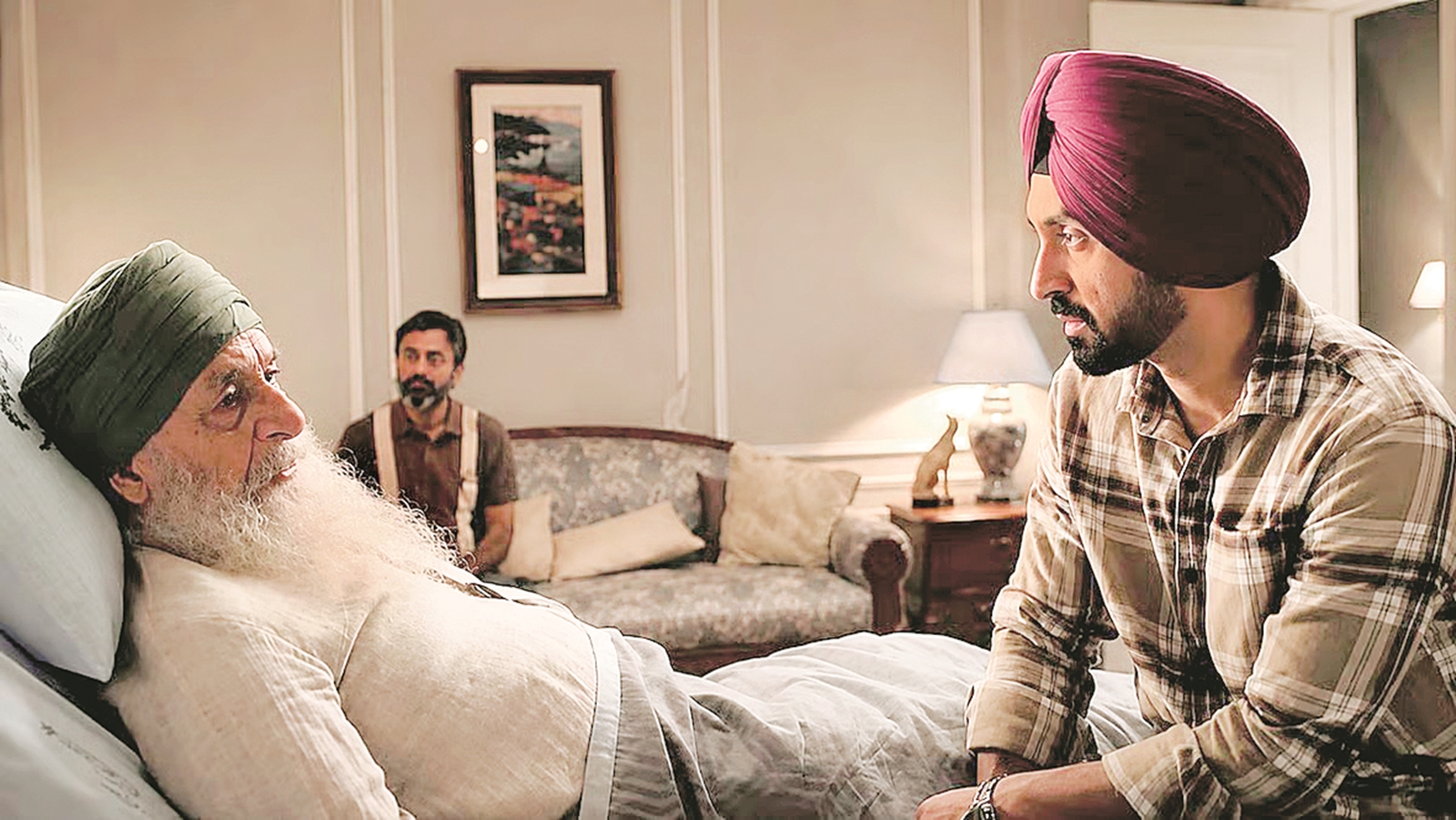
It is in this context that Main Vaapas Aaunga, centered on a Sikh refugee family from Pakistan, feels significant. It urges us not to “use” memory to right past wrongs, perceived or otherwise. A character tells the younger generation — we will not talk about what happened because you will see it as evidence of hatred, you will make it about one community against another.
Eventually, the film shows gendered violence inflicted by a Muslim mob. In today’s times, as a filmmaker pointed out, it is possible that, taken out of context, this sequence can be misrepresented by the right wing. There is also an inadequate addressing of notions of patriarchal honour that were crucial to this type of violence during Partition. And yet, the possibility of the film lies elsewhere. It is in the absence of any argument for retribution. The film trusts something else inside us.
Imtiaz Ali’s continuing interest in love as transcending the self is the thread that runs through the film. At the heart of the narrative is an understanding of the relationship between memory, grief, and forgetting. Like all displaced people, the protagonist, played by Naseeruddin Shah, whose monologues often have a Toba Tek Singh-like quality, has had to forget in order to build a new life. Outwardly, he has done this successfully. Inwardly, it is a different story. What he left behind haunts him. The insecurity of not belonging stays and gets passed on to successive generations. Because it is unexpressed, it takes a shape that is perhaps not even recognised as an aftereffect. That which was necessary for moving on is also the undoing. Forgetting saves us, but also destroys us. The poignancy of this will stay with me.
At a time of constant provocation, to watch such a film is a relief. A friend whose grandparents had to come to India from Lahore during Partition wrote on social media that the film is like a balm. It creates the possibility for other conversations to happen. This is a different kind of bait. Whether we take it or not is on us.
The writer is a film scholar and critic based in Delhi