

J&K’s Ranji Trophy triumph and the new vocabulary of pride
This Ranji victory is not merely about runs scored or wickets taken. It is about a region recognising itself differently, and, hopefully, being recognised differently
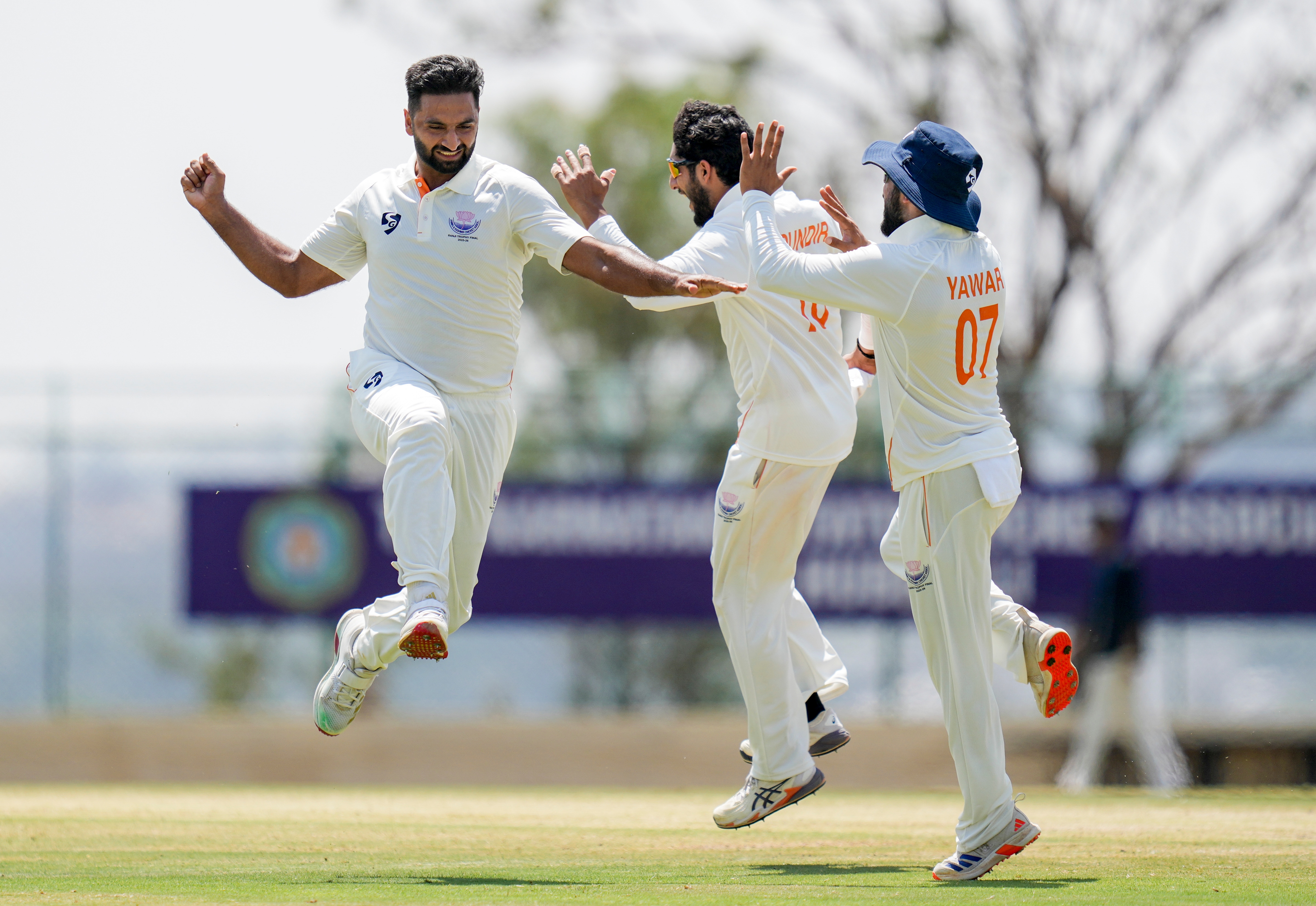
Jammu and Kashmir has just made history. Not through the language of conflict or the headlines of a crisis, but through the grammar of sporting excellence. It has won the Ranji Trophy — instituted in 1934 — for the first time since it began participating in the competition in 1959–60. The Ranji Trophy, as we know, has long been the proving ground of Indian cricket. And J&K, by defeating Karnataka, a side that fielded five Test players to J&K’s none, at the D R Bendre Cricket Stadium in Hubballi, has achieved something close to a miracle.
Not once in the last 66 years has J&K entered the final or even the semi-final of the tournament. Only twice before had they managed to reach the quarter-final. Otherwise, they were rarely mentioned in dispatches.
But at Hubballi, they did not merely compete; they defined the match, turning the final into a largely one-sided narrative. They amassed a formidable first-innings total of 584 and then bowled Karnataka out for 293. The huge lead in the first innings ensured victory in a match where the second innings would not be fully played out.
By winning, J&K has not only placed itself at the pinnacle of domestic cricket but also signalled something more profound and enduring. After decades of conflict and regional as well as religious polarisation, we encounter here a face of J&K that exemplifies what many of us have long held dear about the region: Its enormous talent, embedded in cultural pluralism and a deep-rooted syncretic identity. A region that has historically celebrated its diversity; a team that has demonstrated that pluralism can indeed be its greatest strength.
On cricketing matters, the first person I call is the legendary Sharda Ugra: One of the most distinguished observers of the game and, as it happens, a Kashmiri Pandit. This is what she said: “The Ranji Trophy victory for the cricketers of J&K, who live daily and sporting lives like no others in the country, is a joy and a triumph — of an enduring love and pursuit of their sport, and a determined quest for excellence over decades of conflict and turbulence.”
Indeed, the scale of this achievement becomes clearer when one looks back. One of my most unhappy cricketing memories is from October 1983, at Srinagar’s Amar Singh Club Ground, then recently rechristened the Sher-i-Kashmir Stadium. India, fresh from its World Cup victory at Lord’s, faced Clive Lloyd’s West Indies. Kapil Dev, the captain who had lifted a nation’s confidence, walked out with his squad to face what was, unmistakably, a hostile crowd. The cheers were reserved for the West Indians. It was not a simple act of dissent, nor merely political theatre. It was layered — part alienation, part defiance, part emotional distance.
Four decades later, to watch Jammu and Kashmir lift the Ranji Trophy is to witness a profound shift in emotional vocabulary — almost a moment of epiphany. The popular sentiment that once echoed with ambivalence now resonates with unambiguous pride. The arc from estrangement to ownership is as significant as the prize itself.
Consider this story, recounted by ESPNcricinfo’s Shashank Kishore: The distance from the tarmac at Hubballi airport to the exit is barely 100 metres. On Tuesday morning, Qamran Iqbal covered that distance as if he were running the final leg of an Olympic relay, before diving into a waiting car for a frantic 20-minute ride to the KSCA Stadium. An opportunity to play in J&K’s first-ever Ranji Trophy final did not seem even remotely likely until half past nine the previous evening. Then his phone rang. First-choice opener Shubham Khajuria had been injured and ruled out. Iqbal was told to pack immediately. He left Srinagar at 11:30 pm and landed in Hubballi at 7:35 am after a four-hour layover in Mumbai. By 8:15 am, he was on the ground. Less than twelve hours earlier, he had been curled up in Srinagar’s two-degree chill. A few hours later, he was padding up in baking early-summer heat to face Prasidh Krishna and company.
This is what being part of Team J&K means today for the youth of the Union Territory. It would be unforgivable not to build on this sentiment.
There are individual stories that the media will rightly celebrate. But what is equally striking is the team’s composition — reflecting both the diversity of the region and a shared steadiness of purpose. Abdul Samad from Kalakote in Rajouri; Auqib Nabi from Sheeri village in Baramulla; Yudhvir Singh Charak and Shubham Khajuria from Jammu; and, of course, Paras Dogra from neighbouring Himachal Pradesh, who captained the side with composure and experience. There is something quietly symbolic about the composition of the team: From Jammu’s plains and streets and the Valley’s towns, to districts often heard in national narratives only as zones of conflict. They speak different dialects, embody varied experiences. Yet, on the field, coordinated team spirit superseded difference. Cricket, in this sense, became an exercise in enacted pluralism. The championship was not built on flamboyance. It was constructed patiently — through the group stages and into the knockout matches. Five-day cricket is unforgiving. It exposes impatience and rewards endurance. Team J&K understood this clearly. Perhaps most importantly, this victory shows that narratives can shift without proclamation.
The team has demonstrated exemplary unity amidst deep diversity. This Ranji victory is not merely about runs scored or wickets taken. It is about a region recognising itself differently, and, hopefully, being recognised differently in return. That, to my mind, is its quiet power. Jammu and Kashmir deserves the restoration of its statehood as soon as possible. For in the end, this triumph should not be just about a season won, but of a confidence restored.
The writer is dean, School of International Studies, JNU, and former vice chancellor, University of Jammu