

A psychiatrist writes: The yoga mat might be the most underused tool in my clinic
Yoga is not a substitute for psychiatric care when illness is severe. But for the vast, under-served middle ground — people living with everyday stress, mild anxiety, the slow burn of overwork — it deserves to be treated as real treatment, not a feel-good sidebar to it
By Jitender Jakhar
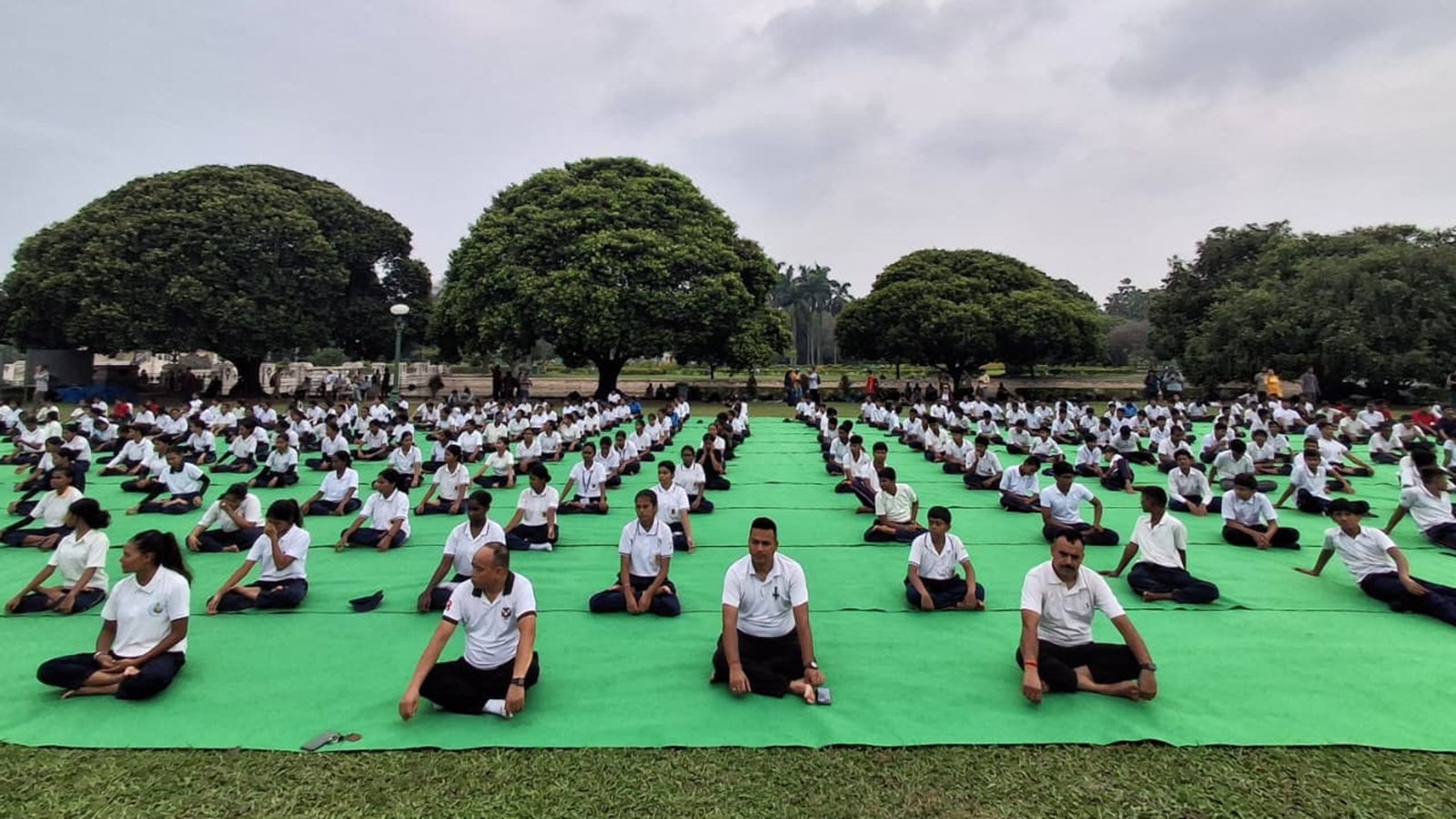
Every June 21, I watch the same scene play out — parks full of people stretching into Tadasana, television anchors demonstrating breathing exercises, a few frames of Baba Ramdev and then, by June 22, a quiet return to business as usual. I used to view Yoga Day with mild professional detachment. I don’t anymore.
In my years of practice, I have come to see yoga not as a wellness accessory but as something closer to a clinical intervention — one I now actively prescribe alongside, and sometimes instead of, medication.
The evidence has caught up with the intuition. Research from NIMHANS, India’s premier mental health institute, has shown that yoga therapy can ease symptoms of depression while measurably lowering stress hormones and raising GABA — a calming neurotransmitter — in the brain. Early intervention matters too: Started soon enough, yoga alone has shown real benefit in mild-to-moderate depression. Separately, structured breath-based yoga programmes for anxiety and depression have shown clinically meaningful improvement in roughly three out of four people who stick with them.
I think often of a patient — a software professional in her late twenties, sharp, successful, and quietly unravelling. Racing thoughts at night, dread most mornings, the kind of low-grade anxiety that doesn’t stop you from functioning but stops you from living well. She didn’t want medication, at least not yet. We agreed to try yoga first — structured, guided, consistent. Over about 30 sessions, something shifted. Her sleep returned. The morning dread faded. She still tells me it was the simplest decision she made that year.
Not every case resolves this way, and yoga is not a substitute for psychiatric care when illness is severe. But for the vast, under-served middle ground — people living with everyday stress, mild anxiety, the slow burn of overwork — it deserves to be treated as real treatment, not a feel-good sidebar to it.
This Yoga Day, my message to readers is simple: if you’ve been hesitating between “it’s probably nothing” and “I should see someone,” consider that the mat might be a reasonable place to start — and that asking for help, in whichever form, is never a sign of weakness.
The writer is consultant psychiatrist, Insight Mind Care and Sitaram Bhartia Institute of Science and Research, New Delhi