

India’s Myanmar dilemma: Engagement amid instability
For New Delhi, deeper engagement with Naypyidaw serves as a means of balancing Chinese influence in India's immediate neighbourhood. However, achieving either objective will be challenging
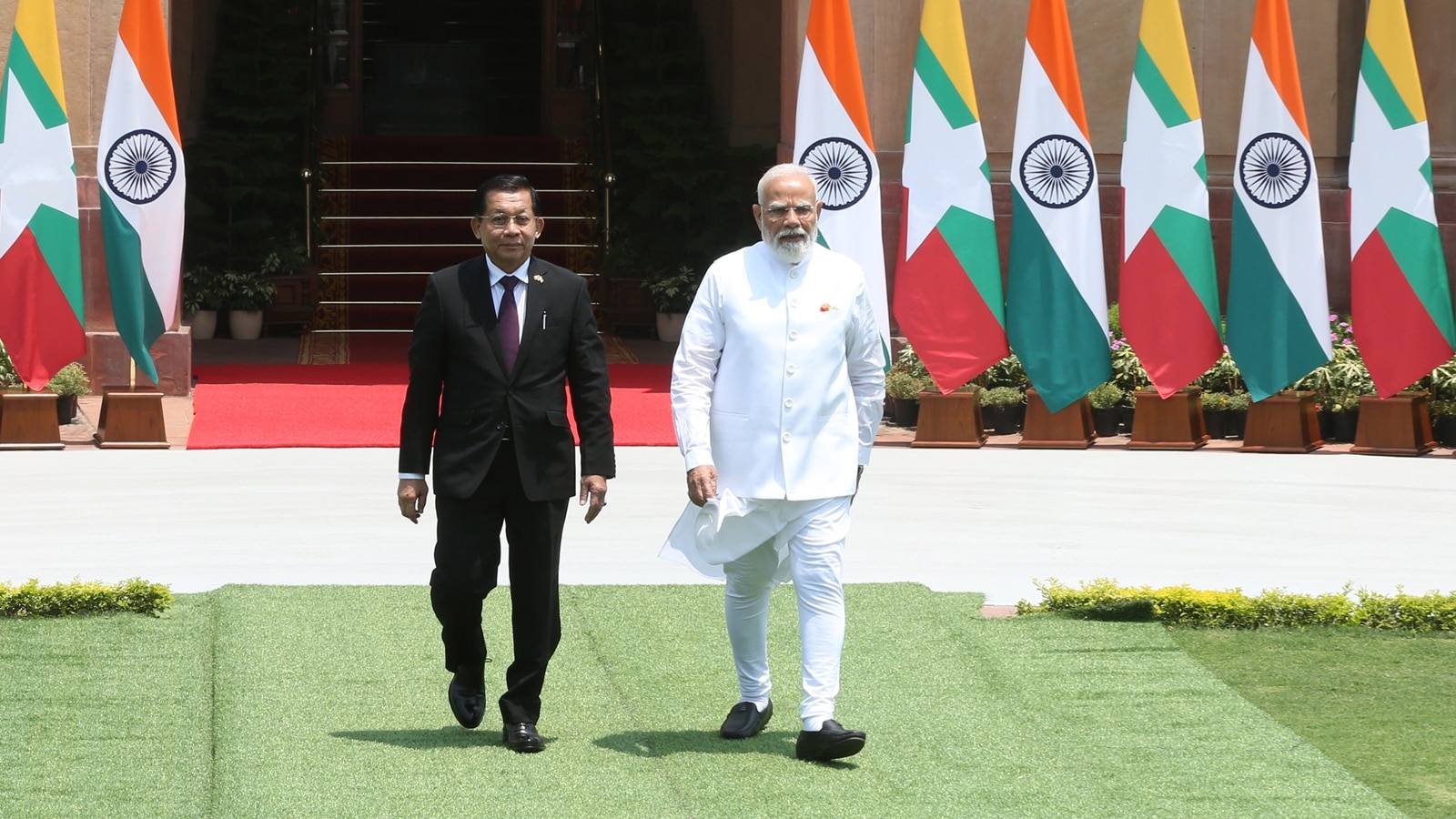
India’s decision to accord Min Aung Hlaing a high-profile reception a few days ago signals a notable shift in its approach toward Myanmar. Moving beyond its previous wait-and-watch approach, New Delhi appears increasingly willing to engage directly with the administration in Naypyidaw in pursuit of its strategic, security, and economic interests.
For Myanmar, India was a logical choice for the new administration’s first state visit. The outreach was driven by a combination of strategic, security and economic considerations. First, Naypyidaw is seeking to diversify its foreign policy and reduce its heavy reliance on China. For years, Beijing’s practice of playing both sides — engaging both the military regime and certain ethnic groups — has created unease within Myanmar’s leadership, which increasingly seeks greater diplomatic manoeuvrability. Second, the military’s control remains weakest in western and southwestern Myanmar along the Indian border, especially Rakhine State. This region is of particular importance to India as it hosts key Act East Policy (AEP) investments. Finally, economic considerations also appear to have been a major driver of the visit. Myanmar’s economy remains far below its pre-coup trajectory, with high inflation, weak growth, and nearly half of the population living in poverty.
India, however, has its own reasons for deepening engagement with Myanmar. The rise in refugee flows, cross-border insurgent activity, illicit trafficking networks and other non-traditional security threats has heightened India’s concerns. The prolonged delays in key connectivity projects under the AEP, particularly the Kaladan Multi-Modal Transit Transport Project and the India-Myanmar-Thailand Trilateral Highway, have added to the urgency. While demonstrating a willingness to engage with the new administration in Myanmar, India also underscored that its core national interests remain non-negotiable.
China is another important factor underpinning the visit. For Myanmar, closer engagement with India offers an opportunity to reduce excessive dependence on China. For New Delhi, deeper engagement with Naypyidaw serves as a means of balancing Chinese influence in India’s immediate neighbourhood. However, achieving either objective will be challenging. Over the past five years, while many countries limited their engagement with Myanmar’s junta, China continued to provide political, economic, and military support. Naypyidaw is unlikely to move away from its long-standing “Pauk-Phaw” relationship with China anytime soon. Unless alternative partners can offer comparable levels of political support, investment, and security cooperation, China will remain Myanmar’s most consequential external partner. Given the current political circumstances, India is neither willing nor positioned to match China’s scale of engagement.
The absence of major agreements, substantial new commitments, or significant MoUs during Min Aung Hlaing’s trip underscores that while India is prepared to engage the new administration, it remains reluctant to significantly expand cooperation as long as Myanmar’s internal conflict and political uncertainties persist. Ultimately, the long-term trajectory of the relationship will depend largely on how the new administration in Myanmar manages its own political and security challenges and proves its commitment to addressing India’s security concerns and safeguarding shared interests. Until the country’s political and security landscape becomes more stable, India-Myanmar ties are likely to remain pragmatic, cautious, and limited in scope.
The writer is a Research Associate at the Organisation for Research on China and Asia