

Why India is chasing the wrong trade deals
For the period 2020-25, India’s annual goods trade surplus with America averaged approximately $42 billion. India’s combined goods trade surplus with the EU, the UK, and Japan together was approximately $12 billion. One country, no trade agreement, nearly four times the commercial benefit of three large partners and three ‘celebrated’ trade deals
In Casablanca, Humphrey Bogart observes that the problems of “three little people don’t amount to a hill of beans in this crazy world”. Trade policy is not cinema, but the line applies with some precision to India’s current diplomatic enthusiasm for free trade agreements. Its recent trade deals with the EU and the UK and an earlier one with Japan have been widely celebrated, underlining the openness to global commerce. The celebrations are not entirely misplaced. But the arithmetic suggests India may be cheering for the hill of beans while the mountain stands unclimbed.
The mountain is the United States. For the period 2020-25, India’s annual goods trade surplus with America averaged approximately $42 billion. India’s combined goods trade surplus with the EU, the UK, and Japan together was approximately $12 billion. The ratio is roughly 4 to 1 in favour of the US. One country, no trade agreement, nearly four times the commercial benefit of three large partners and three “celebrated” trade deals. This is the number that should be at the centre of India’s trade strategy conversation. It is emphatically not.
The US surplus is not an accident. It reflects India’s genuine comparative advantages in pharma generics, software-adjacent electronics assembly, and skilled labour-intensive goods. An India-US FTA that zeroes remaining tariffs on these categories would cement demand for Indian exports. A full deal cuts both ways too, opening India’s market wider to American agriculture, energy, and defence goods, so the $42 billion surplus will not simply hold. But even a partial narrowing of it would dwarf anything on offer from the EU, UK, or Japan deals combined. And the bigger prize is not goods at all: It is market access for Indian IT and professional services — a services negotiation, not a merchandise one.
These numbers cover only merchandise goods trade. India exports $79 billion in goods to the US annually and imports $37 billion, generating the $42 billion surplus. These are not raw commodities but generic pharmaceuticals (India supplies roughly 40 per cent of US generic drug volumes), electronics including Apple’s iPhone assemblies now made in India, gems and jewellery, engineering goods, and chemicals. The US is India’s most important destination for high-value, knowledge-intensive manufactured exports.
The EU is India’s second-largest goods trading partner. The country runs a surplus of around $18 billion annually with the bloc — real and growing, driven partly by petroleum re-exports after Russia’s invasion of Ukraine, and partly by pharmaceuticals and engineering goods. The EU-India FTA matters: India pays 9-12 per cent tariffs on textiles and garments entering Europe, while Vietnam, which signed an EU deal in 2020, pays nothing — a legitimate grievance and real opportunity. But even a generous estimate of what the EU FTA adds to India’s goods balance — perhaps $8-10 billion annually at full implementation — leaves the US surplus in a categorically different league.
The UK deal is the one furthest along: India and the UK signed the Comprehensive Economic and Trade Agreement (CETA) in July 2025. It delivers duty-free access for 99 per cent of India’s exports to the UK by value — but India’s current goods surplus with the UK is only around $5 billion, a rounding error next to the American number.
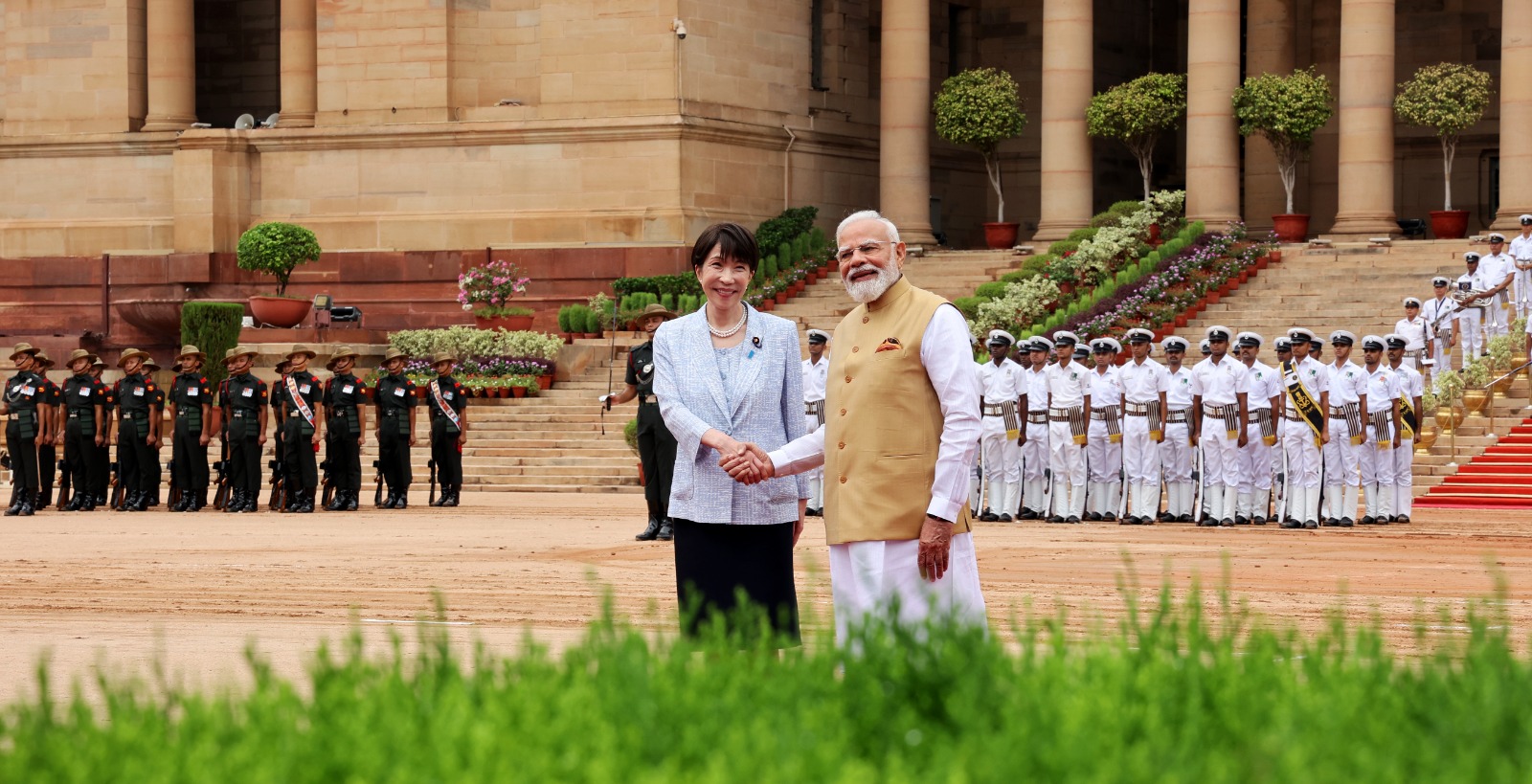
The Japan story is more cautionary. India and Japan signed the Comprehensive Economic Partnership Agreement (CEPA) in 2011, with a trade target of $25 billion by 2014. India’s goods exports to Japan today — 15 years on — are approximately $6 billion, and the trade balance has swung from a small deficit at signing to a deficit of roughly $11 billion now. The CEPA removed most tariffs; what it could not remove were Japan’s formidable non-tariff barriers. At the July 2026 Modi-Takaichi summit, the two sides agreed only to review and negotiate a CEPA upgrade — a commitment to talk, not a negotiated reduction in non-tariff barriers.
There is also the China question, which none of these deals addresses but which no serious discussion of Indian trade policy can ignore. India’s goods trade deficit with China reached approximately $99 billion in 2024-25 — a record, on imports of $113 billion against exports of just $14 billion. The combined surplus from all three of India’s agreements with EU, UK and Japan would not cover an eighth of that deficit.
Which brings us back to the United States. The India-US goods relationship has strengthened every decade since 2000 — a surplus of roughly $7 billion in the 2000s, $22 billion in the 2010s, $42 billion now — without a single formal trade agreement, a sign of how much more could be achieved with one. An India-US agreement covering goods and services — with stable, near-zero tariffs across pharmaceuticals, electronics, gems, and engineering goods, plus provisions on IT services and professional mobility — would be the most consequential trade agreement India has ever signed, serving its broader ambitions: An economy more reliant on markets than bureaucrats, on the growth path Viksit Bharat requires. In India’s trade policy universe, the US relationship is not one deal among several. It is the deal. The others are useful increments; this one a structural shift.
Given this, it’s worth asking why the US deal is so difficult to achieve. Political economy supplies part of the answer: The likely losers are inefficient Indian producers who currently enjoy protection, and China, since deeper US-India integration would reinforce the global shift away from Chinese manufacturing dominance.
In the end, Bogart gave up the hill of beans and chose the larger cause. India’s trade negotiators face a version of the same choice: Keep celebrating agreements that improve the margin, or muster the political will for the one that changes the game. The arithmetic has been clear for some time. The question is whether the strategy has caught up with it.
The writer is chairperson of the Technical Expert Group for the first official Household Income Survey for India. Views are personal