

Forever rising, never arriving? India’s great-power quest
Deepening political polarisation, the resurgence of feudal and pre-modern forces, and growing strains on democratic institutions at home will weaken India’s ability to deal with a rapidly changing world marked by sharpening geopolitical rivalry, less open markets, and the rise of disruptive technologies
Since Canadian Prime Minister Mark Carney called on the world’s “middle powers” to collaborate amid growing turbulence in the international order, the idea has animated India’s strategic debate. Official Delhi, however, has been less than enthusiastic.
Asked about Carney’s formulation, External Affairs Minister S Jaishankar argued that it may be more relevant to America’s treaty allies in coping with President Donald Trump’s unpredictable policies than to India. The middle-power label, he implied, understates India’s geopolitical weight and its potential to emerge as a great power.
Yet scepticism about India’s great-power prospects is growing. In his new book, The Return of the Great Powers, the Cambridge historian Brendan Simms places India in the category of “almost great powers”, alongside France, Germany and Japan. They possess several great-power attributes, but not enough of them to be the world’s system-shapers.
Whether or not one accepts Simms’s classification, his larger argument deserves attention. He reminds us that international politics has always been driven by the interaction among great powers — through rivalry as much as cooperation. The post-Cold War hope that globalisation, markets and international institutions would tame geopolitics has proved to be short-lived. The wars in Ukraine and the Middle East, the sharpening US-China rivalry, and the weaponisation of trade, finance and technology all point to the return of hard power as the organising principle of world politics.
What, then, defines a great power? Simms offers an unapologetically material answer. Industrial strength, technological leadership, military capability, including nuclear weapons, the capacity to project force beyond one’s borders, and the ability to influence war and peace in multiple theatres remain the essential attributes of great-power status.
Measured against these standards, India is clearly a power in transition rather than a completed one. It has continental scale, the world’s largest population, nuclear weapons and one of the world’s largest economies. Yet it still trails the US and China by a wide margin in per capita income, technological capability, manufacturing depth, military-industrial capacity and global military reach. India’s economy, at around $4 trillion, is impressive, but it remains far behind those of the US and China (at $31 and $20 trillion respectively).
Even if India overtakes Britain, Japan and Germany in aggregate GDP over the next decade, it will still be a distant third to America and China. Its per capita income remains below $3,000, it continues to depend heavily on imported military technologies, and its investment in research and development remains modest compared to the world’s technological leaders.
Simms is not alone in questioning whether that transition will happen. Michael Beckley of Tufts University advances an even more sobering argument in a recent Foreign Affairs essay, ‘The Stagnant Order’. He suggests that China may well be the last country to have made the leap into the front rank of global powers. Demographic ageing, slowing productivity and the concentration of economic power and advanced technologies in the US and China are making it progressively harder for latecomers from the Global South to catch up. India will remain an important global actor in world politics, Beckley argues, but is unlikely to become a true great power given its many domestic weaknesses, including a lack of necessary skills among its young demographic.
India’s aspiration to great-power status, however, is hardly new. Long before Independence, Indian nationalists, including Jawaharlal Nehru, imagined India reclaiming a special place in world affairs. At Independence, despite widespread poverty, India was among the world’s largest economies and possessed political institutions and human capital that suggested considerable promise. But India slowed as the East Asian tigers and China surged ahead. India’s geopolitical drift in the second half of the 20th century towards the Soviet Union put Delhi on the losing side of the Cold War.
The reforms launched by P V Narasimha Rao and Manmohan Singh 35 years ago reversed that trajectory. Rapid economic growth and a diversification of India’s great-power relations transformed international perceptions of India. Washington began to see Delhi not merely as a developing country but as a rising power capable of contributing to the Asian balance and the wider international order.
That optimism is now under a cloud. Global headwinds have played a role, but so have domestic policy choices. India has not built on the momentum generated by the growth in the first decade of the 21st century. Productivity growth has slowed, manufacturing has underperformed, investment in science and technology remains inadequate, and the next wave of structural reforms has stalled. The gap between India’s geopolitical ambitions and its economic foundations has therefore widened.
The challenge is larger than economics. Deepening political polarisation, the resurgence of feudal and pre-modern forces, and growing strains on democratic institutions at home will weaken India’s ability to deal with a rapidly changing world marked by sharpening geopolitical rivalry, less open markets, and the rise of disruptive technologies.
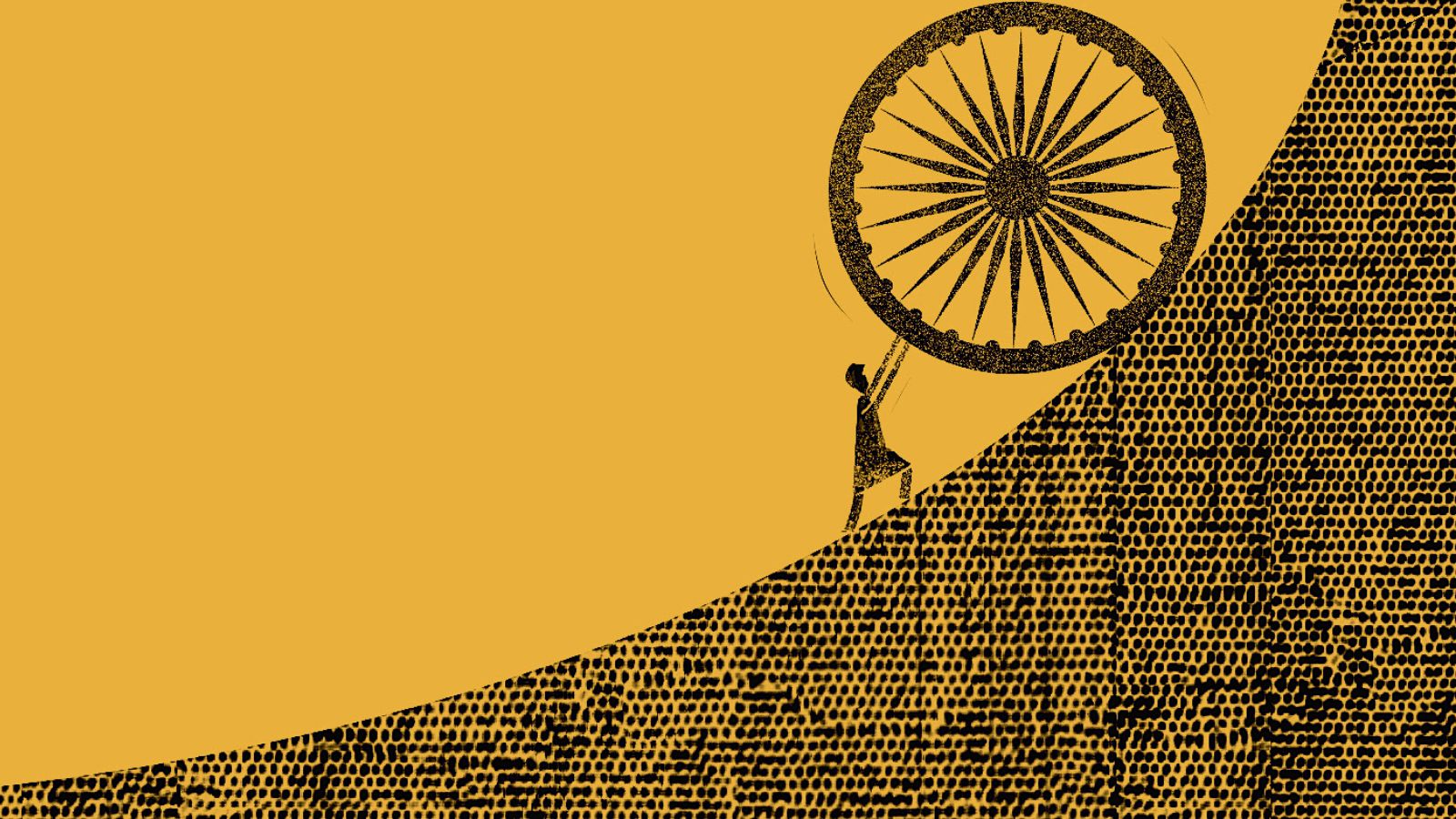
Pessimists worry that India may have missed its moment of opportunity in the early 21st century and will remain forever an emerging power — at odds with itself politically and growing at a suboptimal pace. Optimists are not ready to give up. They believe India’s natural advantages and its people’s talents can still be mobilised to accelerate its rise on the world stage. Such an outcome will depend on whether India can return to the unfinished business of economic, technological and social modernisation and boosting national unity and political cohesion. Only then can India move from being an “almost great power” to becoming one.
The writer is a contributing editor on international affairs for The Indian Express. He is a distinguished professor at the Motwani Jadeja Institute of American Studies, Jindal Global University and holds the Korea Foundation Chair in Asian geopolitics at the Council on Strategic and Defence Research