

In China, there are alternate histories. In ‘Dhurandhar’, there’s an alternate present
In India and China, across online communities and cinema, narratives that make things appear simple have been gaining popularity in an age of geopolitical uncertainty and information overload
Rongbin Han’s recently released Make China Great Again: Online Alt-History Fiction and Popular Authoritarianism is an excellent book that examines the workings of historical imagination in China’s present-day digital landscape.
After carefully analysing web novels, he demonstrates that alternate history has become one of the most popular genres in China’s online fiction landscape, in which protagonists travel back in time to intervene at pivotal moments in Chinese history. Narratives in these novels are not just imaginative entertainment but a unique cultural field in which one can feel the constant reinvention of the Chinese nation and its collective aspirations.
Han argues that the alt-history fiction in Chinese culture operates through a process of explicit historical divergence in that the characters go back in time and change key outcomes in history, creating alternative trajectories for the Chinese nation. However, the underlying narrative structure remains similar whether in the form of imperial China’s imagined industrial modernisation, the occurrence of a communist revolution in a much earlier period, or the making of China into a capitalist country.
In such a retelling, history is treated as malleable and national decline is reconfigured into a problem that could and should be technically and politically fixed. There is a desire for “counterfactual repair” of history, which also resonates with the dominant state narratives of national rejuvenation and with widespread yearning for China’s greater global visibility and power.
What stands out in this emerging genre is that it is not blatantly propagandist in nature, yet finds common ground with state-sponsored nationalist discourses. Han shows that even the most radical and institutionally challenging aspects of these narratives echo official accounts of national rejuvenation. The legitimacy of the Communist Party is hardly ever contested. On the contrary, it gets strengthened by imaginative enactment of alternative routes to Chinese greatness. In this sense, this alt-history fiction is a site of popular creativity interspersed with state-defined nationalism. Han stresses that these stories are not subversive or anti-establishment. Instead, they often stabilise political imagination by reducing historical complexity into actionable clarity. The intelligible causal chains take the place of structural failures, contingency and randomness, with informed agents able to alter the course of history.
Since many Chinese believe that national revival is imminent under the leadership of the Communist Party, they willingly tolerate authoritarian rule. Entertainment and popular culture foster public consent or “pop hegemony” by making authoritarian rule appear appealing through narratives of national revival.
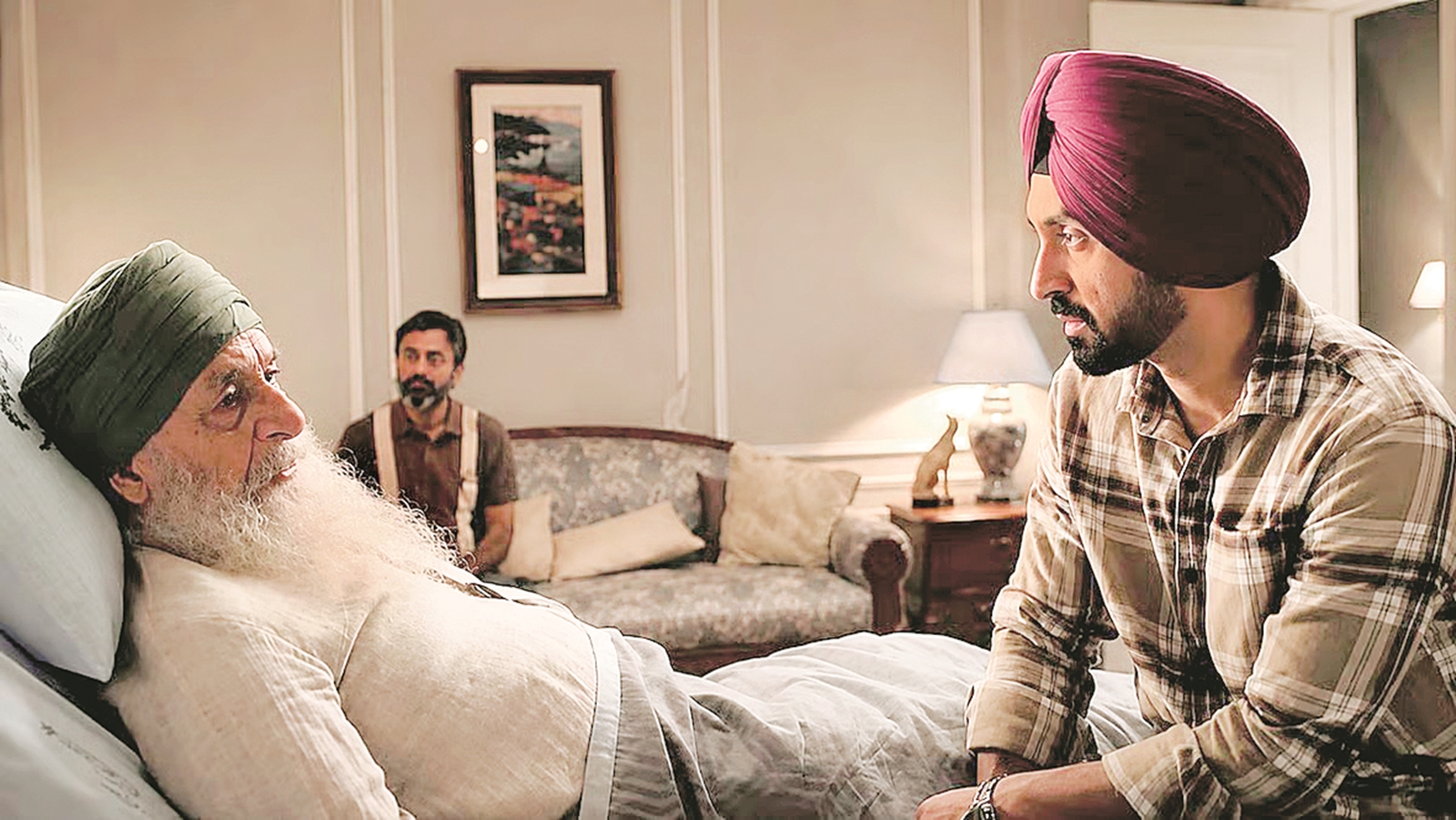
At this level, one may find an interesting parallel with the recent two-part Hindi blockbuster Dhurandhar. While the political and cultural contexts are certainly different, there still lies in Dhurandhar a version of a similar narrative. It does not seek any displacement in time or a literal alternate history. Instead, it creates what can be termed “the parallel present,” a re-imagination of what happens in the present world, but in a far more strategic fashion than the actual world out there.
Unlike standard alt-history narratives, which have an obvious departure from known histories, the divergence in Dhurandhar is implicit and structural. A shift in the past does not change the present; rather, it is a reorganisation of the presentation of causality itself. Geopolitical situations, which include intelligence operations, tensions with neighbouring countries and internal bureaucratic bargaining, are streamlined into linear and legible sequences. This creates a compressed picture featuring more causal agency and predictability than is actually the case. After all, some James Bond movies contested Britain’s post-1945 decline in global power and influence, as well as unsettling the rigid binary logic of Cold War geopolitics, with Bond often being viewed as a late imperial fantasy.
Dhurandhar, like many other movies in this vein, tends to depict contemporary state institutions as more focused and more strategically aligned than in the real world. Hesitation in the political sphere is either downplayed or entirely ignored. This gives a sense of institutional consistency under a vision of governance in which the leadership is fully capable of acting with absolute operational clarity at all levels of decision-making.
Another parallel with Han’s depiction is the shift from moral ambiguity to narrative certainty. In actual geopolitical practices, the legitimacy of any state action is often contested and also subject to retrospective debates. However, in Chinese alt-history fiction, the narrative of national revival functions as a powerful device in resolving all moral and political ambiguities associated with state power. Likewise, in Dhurandhar, geopolitical actions are presented in the context of a framework whereby such acts are justified in terms of necessity for attaining national objectives. Although this may not eliminate moral tensions, it substantially reduces the space available for competing understandings of moral and political logic.
Nevertheless, one should not overstate equivalence here. The Chinese alternate history universe that Han describes is large and interactive, with a structural basis in online forums and communities that exist because of censorship, economic motives and a nationalistic educational system. In comparison, in Dhurandhar, one can see a conventional approach to storytelling, in which narrative coherence is produced through the central plot creation process rather than interactive processes. Yet the comparison remains analytically useful at the level of narrative structure. Narratives that can make things appear simple have been gaining in popularity in an age of geopolitical uncertainty and information overload.
This does not mean that the two narratives serve the same purpose or achieve the same results. Neither does it imply that these narratives are rooted in the same ideological motivations. What this reveals is a particular cognitive and cultural phenomenon: The inclination to use the device of structured storytelling in order to deal with uncertainty in political imagination.
Alt-history does not necessarily revolve around the “what ifs,” and is not confined to the authoritarian states alone. It may also exist in subtle ways within a democratic setting, especially where nationalist imagination intersects with geopolitical complexities.
Kaura is assistant professor at the Sardar Patel University of Police, Security and Criminal Justice, Jodhpur (Rajasthan), and non-resident fellow at the Institute of South Asian Studies (ISAS), NUS