

In Bengal, TMC and BJP’s vote-bank politics undermine genuine engagement with minority concerns
Both the BJP and TMC have indulged in religious polarisation politics. The BJP consolidates the Hindu electorate using Islamophobia, and the TMC uses Muslims as a 'captive vote bank' by using the fear of the BJP
West Bengal has been witnessing a spurt of religion-based identitarian politics since the dissolution of the Left Front government, which gave way to the Mamata Banerjee-led Trinamool Congress in 2011. The 2019 Lok Sabha polls, followed by the 2021 assembly elections, saw a massive growth of the BJP in the state.
The vote percentages of the TMC and BJP were at 40.6 per cent and 38.5 per cent, respectively, which were all-time highs for the latter in the state. In the last decade, the politics of West Bengal has revolved around the narrative of Hindu-Muslim religious polarisation, illustrated through the TMC-BJP bipolar politics and so-called secular-communal binary.
The BJP’s agenda of aggressive Hindutva stigmatises Bengali Muslims as Bangladeshi ghuspethia (infiltrators), Rohingya, “jihadi”, “lungi bahini” and other derogatory remarks. The BJP has also successfully invoked the scars of Partition, forced migration and violence among the Hindu refugees in the border districts of North 24 Parganas, Nadia, Murshidabad, Malda, Uttar and Dakshin Dinajpur, Jalpaiguri and Cooch Behar.
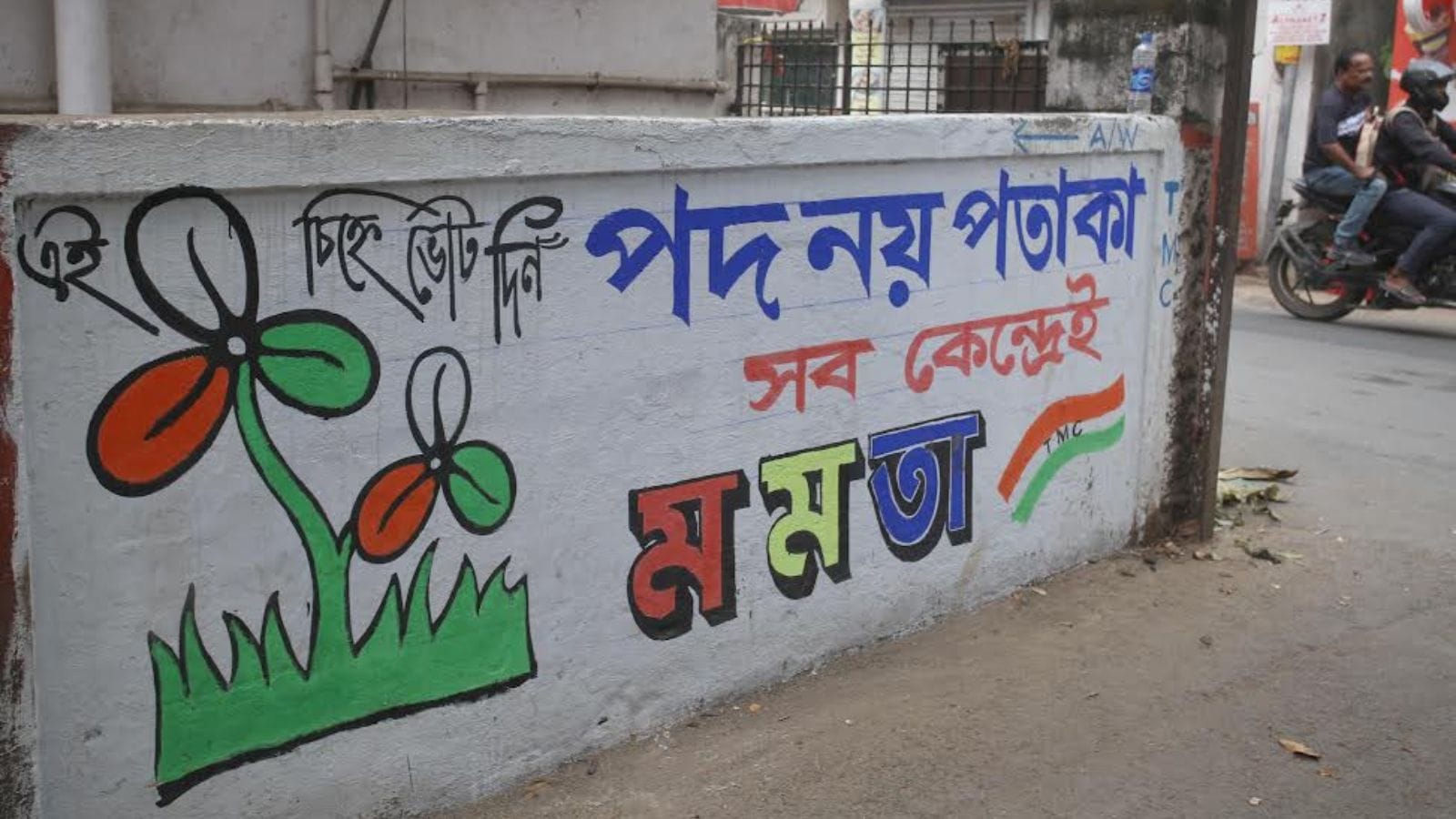
On the other hand, TMC has extensively used Muslim religious identity – the community comprises about 30 per cent of the state’s electorate – and networks for its electoral success without engaging with the questions of social justice, representation and socio-economic and educational empowerment.
The TMC government’s scheme of Imam and Muazzin Bhata (allowance for clergy in mosques) through the state Waqf Board, along with political hobnobbing with the clergy of different sects and denominations, including Deobandis, Jamaat-e-Islami, Ahle-Hadees and Tablighi Jamaat, has been divisive. The TMC’s engagements with Muslim religious groups are deeply entrenched, and it has co-opted almost all major sects, institutions and networks, leaving little space for dissent.
Muslim community organisations were unable to lodge any sustained protest, either against the BJP or the TMC government, on issues such as the recently amended Waqf Act by the Union government and dilution of OBC reservation for backward caste Muslims by the state government.
The bonhomie between the clergy and corrupt politicians has pushed the already backward Muslim community into limbo by obliterating the question of socio-economic empowerment, social justice, dignity and substantive representation as recommended by the Sachar Committee Report in 2006.
In the midst of this TMC-BJP binary, the Indian Secular Front (ISF) was formed on the eve of the 2021 Assembly Election by Pirzada Abbas Siddique of Furfura Sharif, a Sufi shrine popular in rural West Bengal. In alliance with the Left Front, the ISF managed to win the Bhangar assembly constituency in the South 24 Parganas district, and Pirzada Naushad Siddique (Abbas Siddique’s sibling) became the lone non-BJP, non-TMC MLA in the state.
Naushad Siddique’s success has generated a new imagination of vernacular community politics rooted in the idea of constitutional democracy and dignity. There are a dozen assembly constituencies in South and North 24 Parganas where the TMC faced a challenge from ISF despite its consolidation of Muslim votes.
Recently, former TMC MLA Humayun Kabir floated a new political party called Aam Janata Unnayan Party (AJUP) and mobilised Muslims around the foundation of a replica of Babri Masjid at Beldanga in Murshidabad. This has brought the North Indian mandir-masjid politics to Bengal. The Mamata Banerjee government has used public money to build a Jagannath temple in Digha, a Mahakal Temple in Siliguri, and a Durgarangan in Newtown, Kolkata. The TMC government also provided financial aid of Rs 50,000 – 1.10 lakh to Durga Puja clubs to organise puja and for honoraria to Hindu priests.
Hence, both the BJP and TMC have indulged in religious polarisation politics. The BJP consolidates the Hindu electorate using Islamophobia, and the TMC uses Muslims as a “captive vote bank” by using the fear of the BJP. In the 2021 assembly election, the TMC consolidated Muslim votes using the NRC and CAA threats, and in the upcoming 2026 Assembly election, it is the SIR (Special Intensive Revision) that serves the same purpose. It is using the SIR as a tool to generate fear among Muslims without actually engaging with this allegedly dangerous exercise of disenfranchising Muslim voters.
The ISF poses a genuine threat to the TMC’s politics among Muslims. The emergence of the AJUP and its recently announced alliance with Asaduddin Owaisi’s AIMIM will further polarise the electorate. The AIMIM-AJUP alliance is not only going to strengthen bipolar politics but will also weaken the ISF-Left Alliance, which has the potential to counter this religious binary.
Subaltern politics is rooted in the idea of social justice, substantive equality and dignity. Both the Hindutva discourse and the consolidation of Muslim identity politics weaken the emancipatory politics of social justice.
The writer is Assistant Professor of Political Science at Jadavpur University in Kolkata