

How an IMD discovery in 1920s changed monsoon forecasts
It was only in 1988 that IMD restarted all-India forecasts and reintroduced the quantitative element into its predictions.
The El Niño phenomenon is fairly well known in India, thanks to widespread discussion in the media in connection with its impact on the Indian monsoon. El Niño Southern Oscillation, or ENSO, is a large-scale ocean-atmosphere interaction playing out in the Pacific Ocean region that happens to be the biggest cause of year-on-year variations in global climate. It has profound impacts on weather events everywhere, including the Indian monsoon.
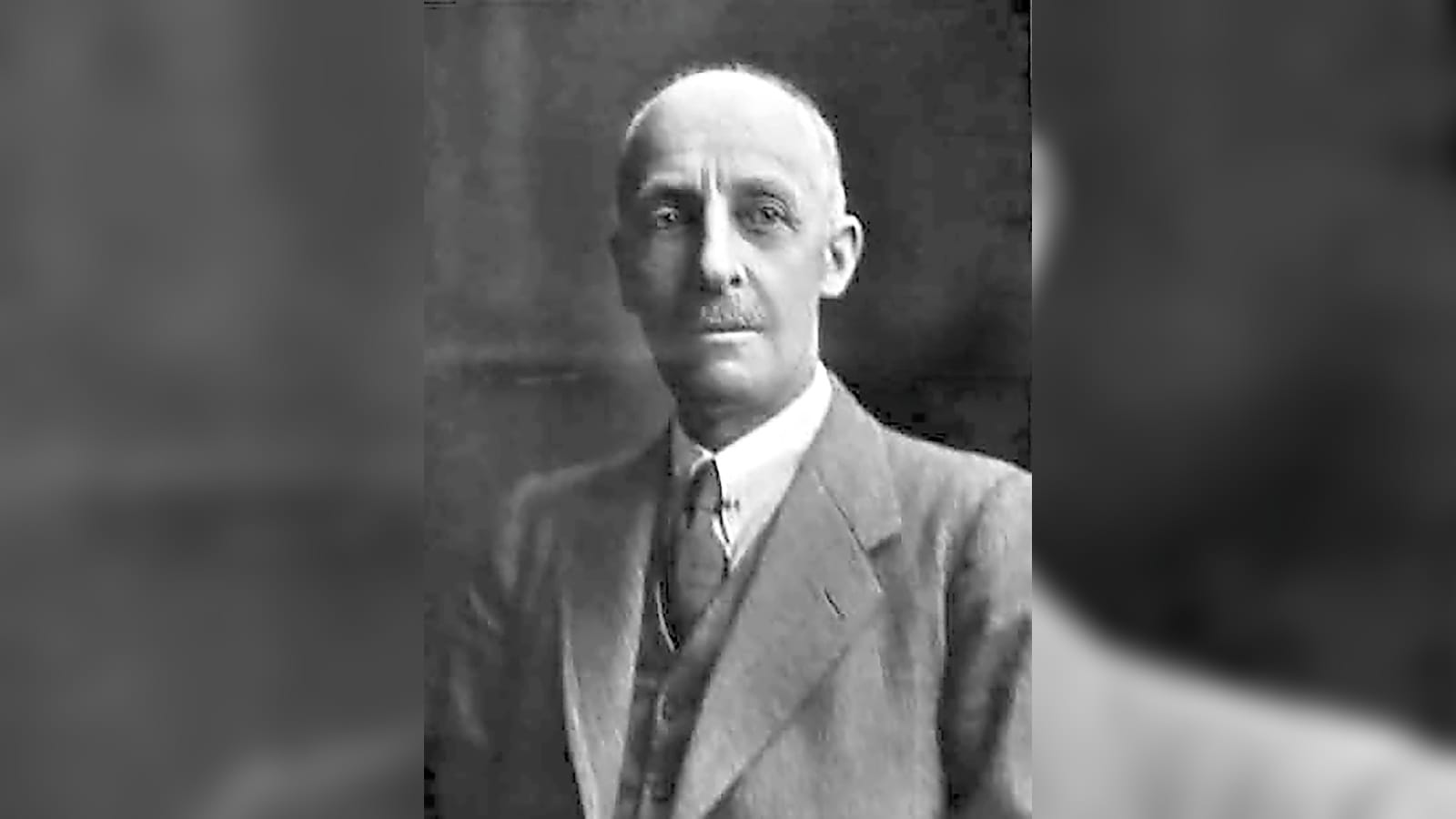
What is much less known is that this global phenomenon, at least the atmospheric component of this ocean-atmosphere interaction, was first discovered by the India Meteorological Department (IMD) in the early 1920s. It was British mathematician Sir Gilbert Walker, working as head of IMD, a position that was at that time described as Director General of Observatories, who had noticed the see-saw behaviour of air pressure between the east and west Pacific Ocean, something that became known as the Southern Oscillation, or SO.
While working to develop a reliable forecast model for the Indian monsoon, Walker, who had a nearly 21-year tenure at IMD from 1904 to 1924,had decided to look at external influences, having realised that the monsoon was not an isolated phenomenon over the Indian region. Meticulously going through all the weather observation data that used to be collected at the time, Walker noticed three large systems, two in the Pacific and one in the Atlantic Ocean, in which the atmospheric pressures periodically oscillated between being very high and very low at the opposite ends. The Southern Oscillation was so named because it was relatively south of the other two, which were called the North Atlantic Oscillation and North Pacific Oscillation.
He found the Southern Oscillation to be the most persistent and also the most likely to have an impact on the Indian monsoon.
Decades later, Norwegian-American meteorologist Jacob Bjerknes linked the Southern Oscillation to the periodic warming and cooling of the equatorial Pacific Ocean, or El Niño. Natives of the western coastline of South America, in the countries of Peru and Ecuador, were aware of this periodic change in sea surface temperatures for centuries. But it was Bjerknes who showed in the late 1960s that the two processes, the ocean phenomenon of El Niño and the atmospheric phenomenon of Southern Oscillation, formed a feedback loop in which one reinforced the other.
This discovery gave the scientists their first understanding of this complete process. El Niño and La Niña, the two opposite phases of ENSO, are now known to influence every large-scale weather phenomenon in the world. In the El Niño phase, the equatorial Pacific Ocean, off the coast of South America, gets warmer than normal, while in the La Niña phase, it gets cooler. El Niño has a general warming impact on the planet. It is known to suppress rainfall over the Indian and Australian region, including southeast Asia, but causes bountiful rains to happen over the North Americas. La Niña has opposing impacts.
Walker’s discovery of the southern oscillation marked a major improvement in the scientific understanding of monsoon and resulted in greater scientific grounding of its forecasts. Before that, forecasts, issued since the establishment of IMD in the 1870s, relied heavily on statistical correlations.
However, monsoon forecasts did not suddenly become accurate. Even decades after discovering the ENSO link, IMD struggled to provide reliable forecasts. That is because the monsoon is a highly complex system, and its relationship with ENSO is not causal. In fact, because of the lack of reliable predictors, the IMD, for a very long time, between 1932 and 1988, had stopped providing monsoon forecasts for the entire country. Its forecasts used to be limited only to northwest India and the peninsular region. And even this was not quantitative. Instead of mentioning the percentage of normal rainfall expected during the season, as it does now, IMD then used terms like “slightly above normal” or “not far from normal”.
It was only in 1988 that IMD restarted all-India forecasts and reintroduced the quantitative element into its predictions. Over the years, IMD has significantly upgraded its computational abilities, observational network, and prediction models, resulting in remarkable improvements in long-range forecasts. But new challenges have arisen, particularly those related to extreme weather events.
The writer is Deputy Editor, Climate & Science, The Indian Express