

How a two-pronged approach overcame the Maoist challenge
Meeting the deadline was made possible not only by acceding to the logistical and infrastructural demands of the security forces to counter the Maoists but also by focusing simultaneously on the development of the region
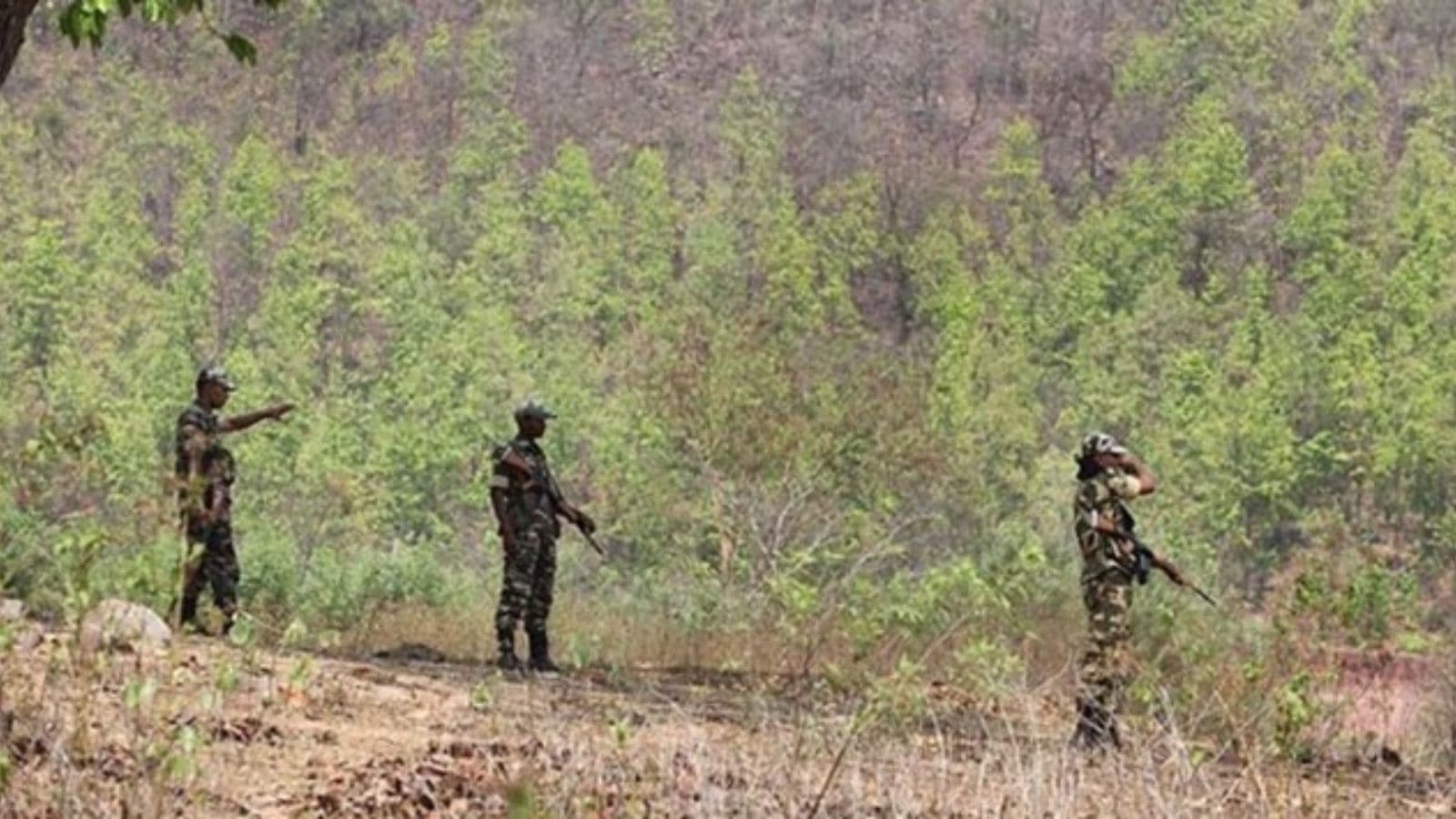
With the deadline of March 31 met, Union Home Minister Amit Shah was exuberant in declaring in the Lok Sabha on March 30 that “Naxalism has been more or less wiped out from Bastar” and with that, from the country, too. He reminded the House that when he visited Chhattisgarh in August 2024, he had announced that Naxalism would be wiped out from the country once and for all by March 31, 2026. The decision was unique in its own way — though insurgencies were crushed and normalcy restored in the northeastern states of Mizoram, Tripura, Assam and Nagaland, as well as in Punjab, no deadlines were ever set by a home minister. But this caused the security forces to ramp up their efforts, especially the Central Reserve Police Force (CRPF) — designated as the primary internal security force of the country by a Group of Ministers in 2001 — as well as the police forces of the Maoist-affected states and other Central Armed Police Forces (CAPF), comprising the Border Security Force, the Central Industrial Security Force, the Indo-Tibetan Border Police and the Sashastra Seema Bal.
Meeting the deadline was made possible not only by acceding to the logistical and infrastructural demands of the security forces to counter the Maoists but also by focusing simultaneously on the development of the region.
What appeared to be an insurmountable task was the road connectivity in Abujhmarh area, which was a bastion of the Maoists where their writ ran large. Efforts to construct roads were thwarted by the Maoists as it would facilitate the forces to rush anywhere in the region in a short time.
The onerous task of constructing roads was initially entrusted to the Border Roads Organisation under the security umbrella of the CRPF as private contractors feared to tread in the area. Once the construction of roads began, the private contractors came forward.
Despite attacks on the CRPF personnel guarding the manpower and on machines involved in road construction, the work continued in full swing over the last few years and a stretch of 12,000 kilometers was completed, thus paving the way for development to penetrate into villages that had been cut off from the world.
With more than 5,000 mobile towers installed in Abujhmarh and neighbouring areas and thousands of mobile sets given to the villagers, access to the outside world was wide open. Over a hundred forward operating bases were established by the Central Reserve Police Force right in the heart of Abujhmarh, instilling confidence and fearlessness among the villagers.
Hard intelligence began to flow while the Maoists were cut off from the villagers. The combination of human intelligence and technical intelligence led to the security forces gaining an upper hand, with relentless operations yielding the desired results.
The 21-day operations conducted by the Commando Battalion for Resolute Action (CoBRA) and the Central Reserve Police Force in the Karregutta hills on the Telangana-Chhattisgarh border in May last year proved to be a turning point. Over 31 Maoists were killed while others escaped by dispersing in small groups into Telangana and Andhra Pradesh.
The elimination of top Maoist leaders like Madvi Hidma, Nambala Keshava Rao (Basavaraju), Ganesh Uike (Paka Hanumanthu), Satyanarayana Reddy (Kosa) and Ramchandra Reddy (Chalapati) in encounters, and the surrender of leaders like Mallojula Venugopal Rao (Bhupati), Deva Barse (Barse Sukka) and Thippiri Tirupathi (Devuji), served a big blow to the Maoist movement.
Left rudderless, those who are still wandering in jungles may soon join the mainstream to enjoy the alluring rehabilitation schemes being implemented by the affected states.
Rather than stating that Naxalism has been completely wiped out, the Home Minister chose to say that it has “been more or less wiped out” as two top leaders — Mupalla Lakshmana Rao (Ganapathy) and Misir Besra (Sagar) — are yet to surrender. Their surrender would mark the end of Naxalism in India.
The writer is former IG, CRPF