Sinking of the Dena exposes the limits of international law
Most of the interpretations involving wars in the maritime domain rely on customary international law, UNCLOS, the Geneva Conventions, and the Hague Conventions
By N Manoharan and Judith Blessy
The ongoing war in West Asia aptly reflects what Hugo Grotius, regarded as the father of international law, once observed: “Men rush to arms for slight causes, or no cause at all, and once taken up, there is no longer any respect for law, divine or human.” A particular concern is the spillover of the war beyond West Asia, involving “neutral states” as well. In international law, maritime waters are broadly divided into three categories: Belligerent, neutral, and international.
Belligerent waters include internal and territorial waters (up to 12 nautical miles of the baseline) of conflicting parties and the maritime arena other than the internal and territorial waters of neutral states (which are called neutral waters). International waters refer to the high seas, the Exclusive Economic Zones (EEZ), and the contiguous zones beyond territorial waters.
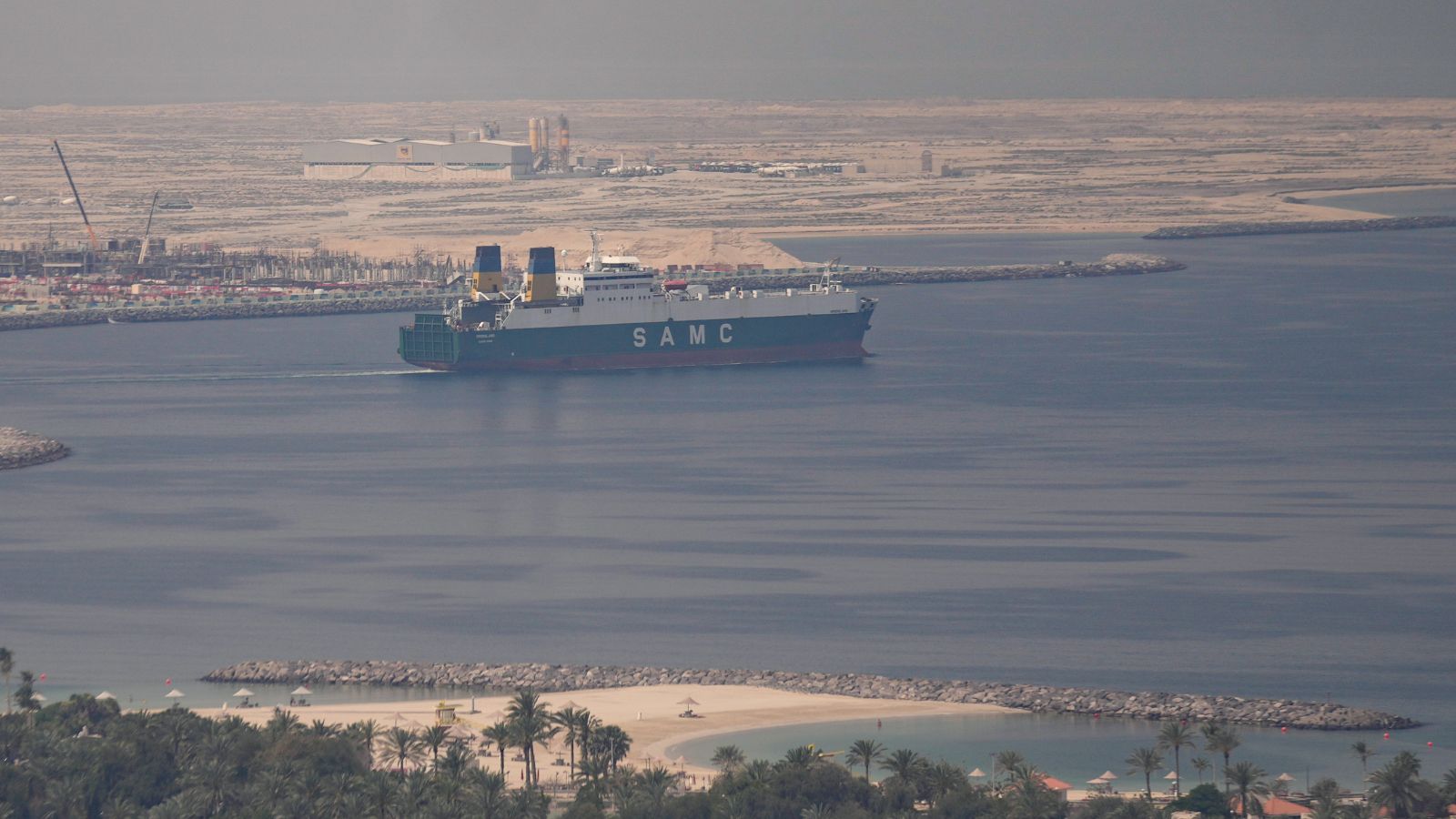
All this is relevant in the context of recent incidents concerning three Iranian ships, and involving Sri Lanka and India. In the first incident, an Iranian frigate, IRIS Dena, was sunk by the US submarine USS Charlotte, the first such attack in the Indian Ocean since World War II. The attack caused the deaths of around 87 Iranian sailors and wounded many others. The strike, though not in the territorial waters of Sri Lanka, was within the island state’s EEZ (40 nautical miles off Galle).
Was the attack legal? According to the US, it is legal to destroy enemy ships as long as they are not in the territorial waters (12 nautical miles) of neutral states. The US cited the Newport Manual on the Law of Naval Warfare (Chapter 4.1.2.1) that says, “A neutral state’s contiguous zone, EEZ, and continental shelf do not constitute neutral sea areas.”
Though technically legal, the attack, seen in a larger global context, poses three issues. One, the IRIS Dena was on its way back from an International Fleet Review organised by India, a strategic partner of the US and a fellow member of the Quad. The attack was an embarrassment for New Delhi.
Two, the Iranian ship did not pose any “immediate offensive posture” and was far from the theatre of the ongoing war. But viewed from Washington’s strategic anxiety, any Iranian naval ship was a threat and hence a legitimate target. If at all, the strike could have been conducted when the Iranian frigate was outside India’s strategic arena and closer to the war zone.
Three, according to Article 301 of the United Nations Convention on the Law of the Sea (UNCLOS), “States parties shall refrain from any threat or use of force against the territorial integrity or political independence of any state, or in any other manner inconsistent with the principles of international law embodied in the Charter of the United Nations.” Interestingly, while Sri Lanka has ratified UNCLOS, Iran has signed but not ratified it. The US and Israel have not even signed the Convention. But all three countries are UN members and bound by the UN Charter.
Further, according to San Remo Manual on International Law Applicable to Armed Conflicts at Sea (Article 34), “If hostile actions are conducted within the exclusive economic zone or on the continental shelf of a neutral state, belligerent states shall, in addition to observing the other applicable rules of the law of armed conflict at sea, have due regard for the rights and duties of the coastal state…”
It appears that the United States did not abide by these provisions.
What about the legal dimension of the rescue of survivors of the IRIS Dena by Sri Lanka? The Sri Lankan president stated, “No civilian should die in wars. Our approach is that every single life is as precious as our own.” Given the extraordinary situation, Sri Lanka considered Iran’s request “according to the international treaties and conventions”. What are those treaties and conventions?
According to the Second Geneva Convention of 1949, “wounded, sick and shipwrecked shall be collected and cared for” by belligerents [Article (3)(2)] and neutral parties (Article 5). Article 12 of the same reiterates this: “Members of the armed forces and other persons… who are at sea and who are wounded, sick or shipwrecked, shall be respected and protected in all circumstances.” Sri Lanka exercised its obligation by rescuing the sailors by donning the role of the “protecting power” as outlined in Article 8 of the Convention.
In the second and third incidents, two Iranian naval logistics ships — IRIS Bushehr and IRIS Lavan — were given permission to dock respectively by Sri Lanka and India in their ports. Both countries gave asylum to the ships upon Iran’s request due to the considerable risk of attacks by the US if they had continued their journey. This was done on humanitarian grounds under the provisions of the Hague Convention Concerning the Rights and Duties of Neutral Powers in Naval War (1907). Providing port facilities for Iranian ships temporarily does not constitute a violation of neutrality by Sri Lanka and India (Article 10 of the Convention). The repatriation of crew and ships had to be done as per international law. If not for Sri Lanka and India, the other two Iranian ships would have been easy targets for US submarines lurking in the Indian Ocean. Both the ships and the crew are safe.
Ironically, there are no clear-cut international treaties or conventions on naval warfare. Most of the interpretations involving wars in the maritime domain rely on customary international law, UNCLOS, the Geneva Conventions and the Hague Conventions. Enabling legislation or local regulations for the seamless implementation of international law are also not available in several countries. The law of naval warfare is still at the stage of what Hugo Grotius — himself a shipwreck victim — remarked in a different context: “By understanding many things, I have accomplished nothing.” This vacuum should be addressed.
Manoharan is professor and director and Blessy is senior research affiliate at the Centre for East Asian Studies, Christ University, Bengaluru