

Beyond Curry, Cricket and Commonwealth: What I learnt about the depth of India-Australia partnership on Australian soil
When a young student from Patna or Pune chooses Australia, they carry India with them. Their experience in Australia shapes the next generation’s image of both countries. If this does not constitute a strategic asset worth protecting with deliberate policy, then what does?
The suburb of Harris Park in western Sydney carries a history that most Australians walk past without knowing. Its founder, John Harris, arrived in Australia in the 1790s after years as a naval surgeon in Bengal. Australia’s first sustained encounter with India, in other words, was not diplomatic. It was human. Standing at a community dinner in Harris Park in March this year, surrounded by first and second-generation Indians who have built their lives, livelihoods, and futures on Australian soil, I thought, “this is where the bilateral relationship actually lives”. Not in joint statements. Not in ministerial communiqués. Here.
I was in Australia as part of the Special Visitors Programme of the Department of Foreign Affairs and Trade, a programme that took me across Canberra and Sydney for conversations with parliamentarians, diplomats, think tanks, business councils, and diaspora communities whose daily lives are the living evidence of everything both governments claim on paper. What I came back with was not merely optimism. It was conviction.
For too long, the India-Australia relationship was reduced to three words: Curry, cricket, Commonwealth. Warm, familiar, and ultimately insufficient. That shorthand cannot contain what is being built today, a partnership anchored in strategic necessity, economic complementarity, and deepening institutional architecture. The three Cs were a description of what both nations shared in passing. What is emerging now is a description of what they need from each other to survive.
The Indian Ocean is a strategic imperative for both countries. At Parliament House in Canberra, Tim Watts, Australia’s Special Envoy for Indian Ocean Affairs and a minister who had personally overseen the opening of Australian consulates in Kolkata and Bengaluru, spoke about the region with a seriousness that went well beyond the briefing notes. Australia, he made clear, is not observing India’s rise from a respectful distance. It is orienting itself toward India, deliberately and at pace.
The Malabar naval exercises, which now permanently include Australia, are one signal of this. The critical minerals cooperation frameworks being developed, matching Australia’s reserves of lithium, cobalt and rare earths against India’s manufacturing ambitions under Make in India, are another. At the Australian National University in Canberra, scholars working on strategic supply chain resilience made the point plainly: The world’s democracies need alternative architectures, and the India-Australia partnership is among the most credible candidates on offer. This is not aspiration. It is policy already in motion.
What separates a mature bilateral relationship from a merely cordial one is institutional density, the accumulation of frameworks and organisations that survive elections and outlast individual leaders. On this count, Australia has demonstrated serious intent. The Lowy Institute’s India Chair, the Australia India Institute, the Centre for Australia-India Relations under DFAT, and the Australia India Business Council together form an ecosystem that gives the relationship structural permanence. These are not ornamental. They are load-bearing.
University partnerships are perhaps the most consequential expression of this. The University of Melbourne and Deakin University now have physical campuses in India. Students follow opportunity, and the numbers are unambiguous: the Indian student community in Australia is among the largest in the world. Julian Hill, Australia’s Assistant Minister for International Education, spoke during our meeting with genuine care about the Indian student experience, not as an economic variable to be managed, but as a human responsibility to be honoured. He is right to see it that way. When a young student from Patna or Pune chooses Australia, they carry India with them. Their experience in Australia shapes the next generation’s image of both countries. If this does not constitute a strategic asset worth protecting with deliberate policy, then what does?
Prime Minister Modi called the Indian diaspora RashtraDoots, living ambassadors. In Parramatta, Andrew Charlton, Chair of the Parliamentary Friends of India, Cabinet Secretary and author of Australia’s Pivot to India, represents one of the country’s most Indian-origin constituencies. He launched that book alongside Prime Minister Albanese, who called it “a scholarly work” and promised Charlton he was already “helping write the sequel.” That sequel is being written every day, in Harris Park and Dandenong, in Melbourne’s western suburbs and Sydney’s inner west, by a million Indians who have chosen Australia and are making it their own.
When Albanese publicly referred to Prime Minister Modi as “boss” at an event in Sydney, it was more than a moment of personal warmth. It reflected a relationship in which candour has replaced courtesy, where both sides have accumulated enough shared experience to speak plainly because trust, slowly and seriously, has been earned.
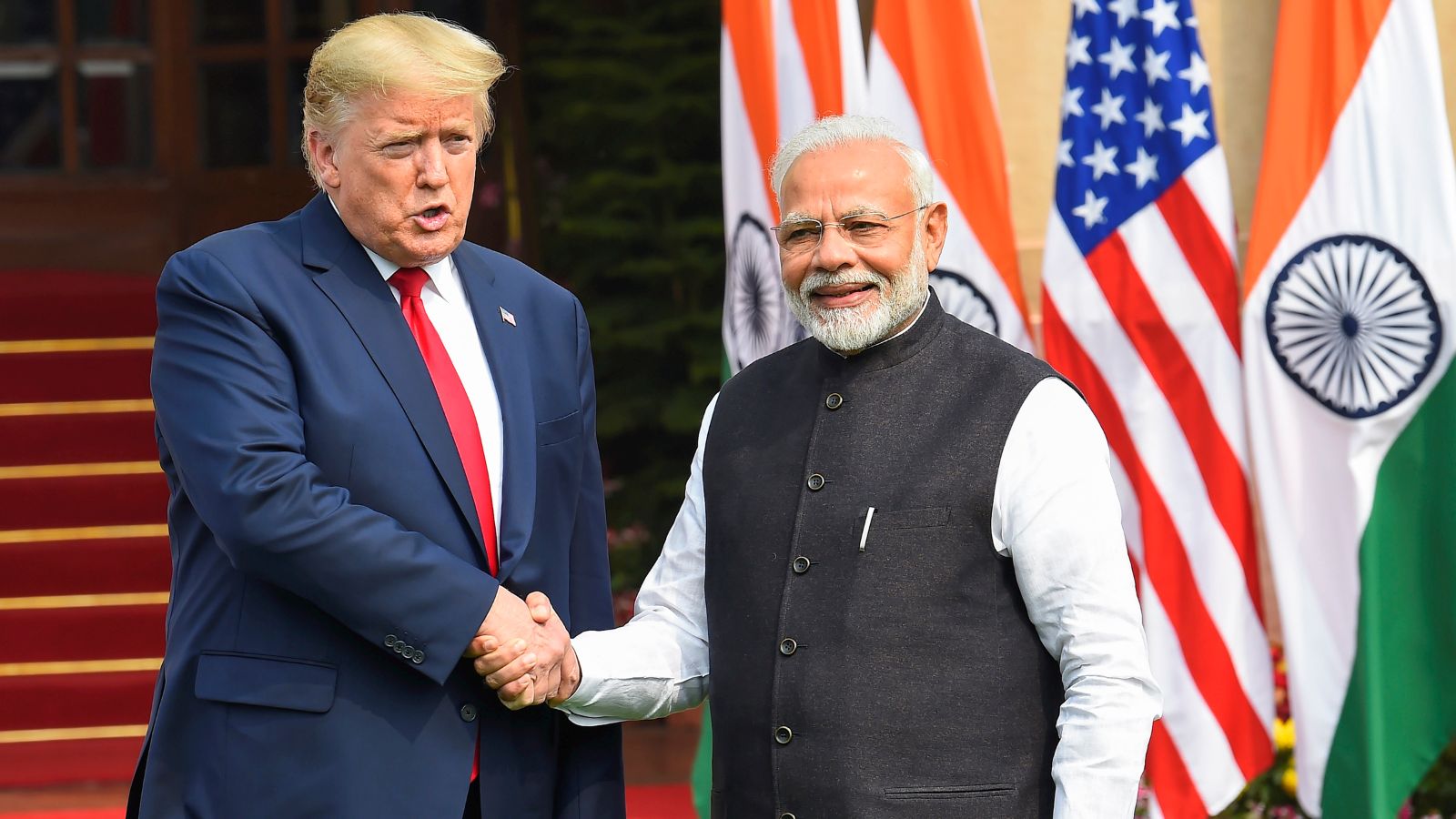
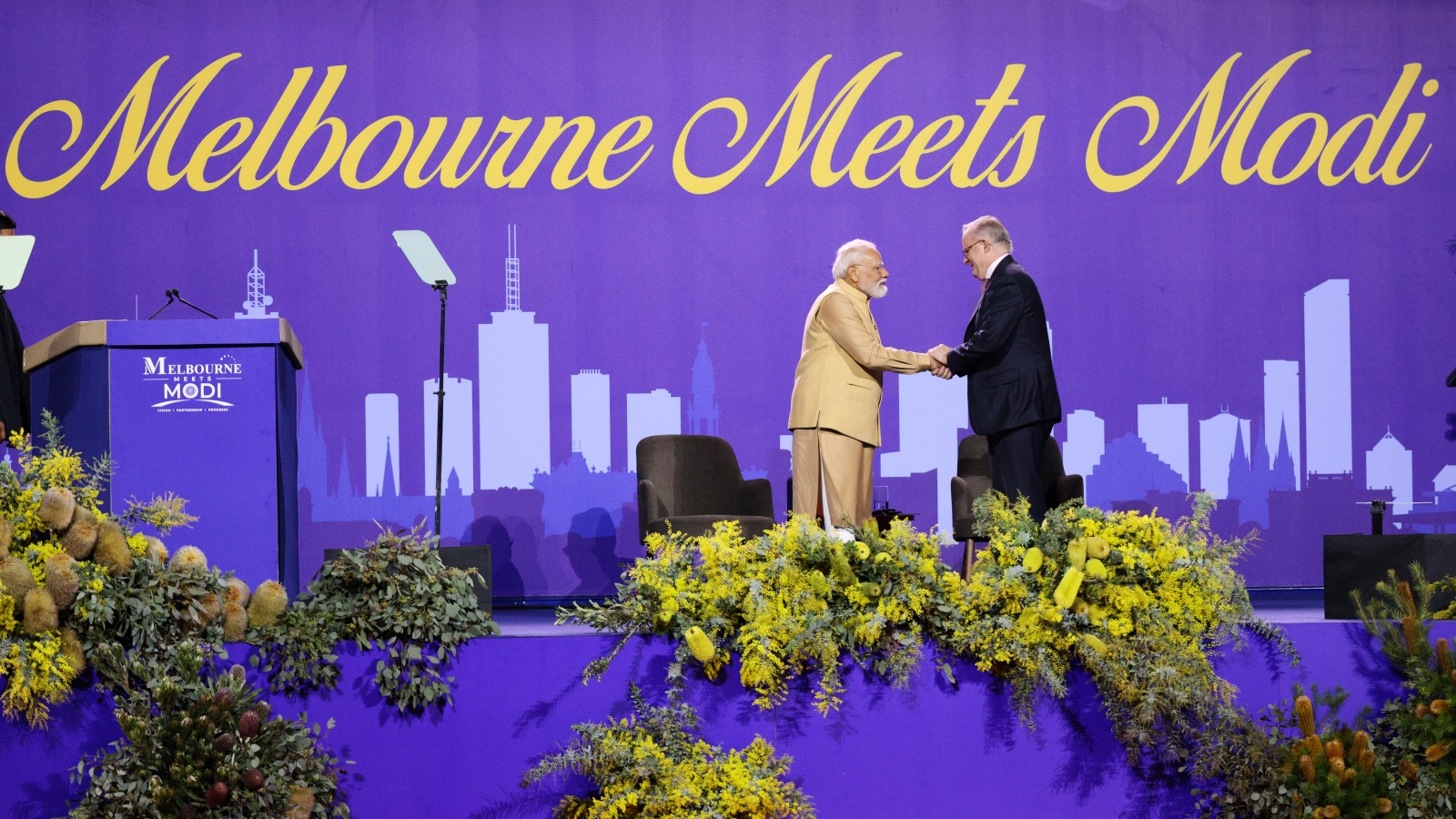
That trust is now being tested and deepened in real time. Prime Minister Modi is in Melbourne for his third visit to Australia, part of a landmark three-nation Indo-Pacific tour covering Indonesia, New Zealand and Australia. It is the third India-Australia Annual Leaders’ Summit under the Comprehensive Strategic Partnership, and its agenda covers the full arc of what the relationship has become: defence and security cooperation, CECA negotiations that could transform bilateral trade well beyond the AUD 54 billion it has already reached since ECTA, critical minerals, clean technologies and a diaspora event at Marvel Arena where 25,000 to 30,000 Indian-Australians will gather alongside both Prime Ministers. Australia’s Prime Minister Albanese has said the relationship “has never been more consequential.” He is not wrong. A Prime Minister who visits a country three times, who brings defence, trade, technology and people-to-people ties into a single summit, is not managing a relationship. He is building one.
India’s foreign policy under PM Modi has been purposeful and globally consequential. The inclusion of the African Union as a full member of the G20 during India’s presidency was a diplomatic achievement of historic significance, giving voice to a continent that had long been marginalised from the governance tables that determine its future. The International Solar Alliance, the Coalition for Disaster Resilient Infrastructure, and India’s Covid vaccine diplomacy to over a hundred nations all speak to the same truth: India is no longer simply participating in the global order. It is shaping it.
Australia has understood this earlier and more clearly than most. The relationship has grown up. What is required now is the political will on both sides to govern it with the seriousness it deserves, not through the nostalgia of three Cs, but through the rigour that this new chapter demands.
The writer is national spokesperson, BJP, and assistant professor of law, Patna University