

Curing India of a disease called capital-itis
To achieve conviviality, even with AI to help, we should first cure ourselves of capitalitis. One step towards that is to see it for what it is
In a talk at CMC Vellore some years ago, the veteran public health expert John Oommen referred to what he called “capitalitis”. Among its symptoms was the tendency, most prominently of those based in Delhi, to believe that policies devised in the national capital could be transplanted without change to the rest of the country.
Capitalitis is a disease with diffuse symptoms. It shows itself, for example, in how input is taken to inform decisions at a national level. An instructive example is that of the On-Screen Marking system, or OSM, instituted this year by the CBSE in its Class XII examinations. The CBSE did not hold pilot projects across its 22 regional centres, even though this was reportedly suggested by its advisory committee in the previous year. Only about 100 teachers, all from Delhi-based schools, participated in the exercise. It is understood that even those teachers advised the CBSE not to go ahead with the OSM rollout, citing the need for better features, training and more time to adapt. The total number of city schools that participated was just five, a tiny, non-representative fraction of the approximately 33,000 CBSE schools across the country.
A broader pilot project might have led to a better understanding of the problems faced by teachers in areas far from the capital. These are problems of erratic power supplies, intermittent internet availability, quality of scans, a lack of appropriate devices, and the availability of time, given the many other civic duties often assigned to schoolteachers. The idea that the national capital, with its relatively stable power supply, 5G internet, and relatively better-off schools might serve as a template for the rest of the country is a clear example of capitalitis.
More than a decade ago, I served on a committee tasked with devising a national-level graduate examination. For the two days that it took to complete the paper, we were effectively secluded. Cell phones were not allowed and no papers could be taken out of the room in which we worked.
The committee was composed of academics from all over India. All of them were committed to creating an examination that would help identify those who would benefit most from advanced training. The questions had to be appropriate to the level at which students were trained, across India. But they also needed to be able to identify an additional layer of creativity and out-of-the-box thinking.
What strikes me now, looking back, is the collegiality, sociability and joyfulness with which we worked together to this end. We were, in a single word, convivial.
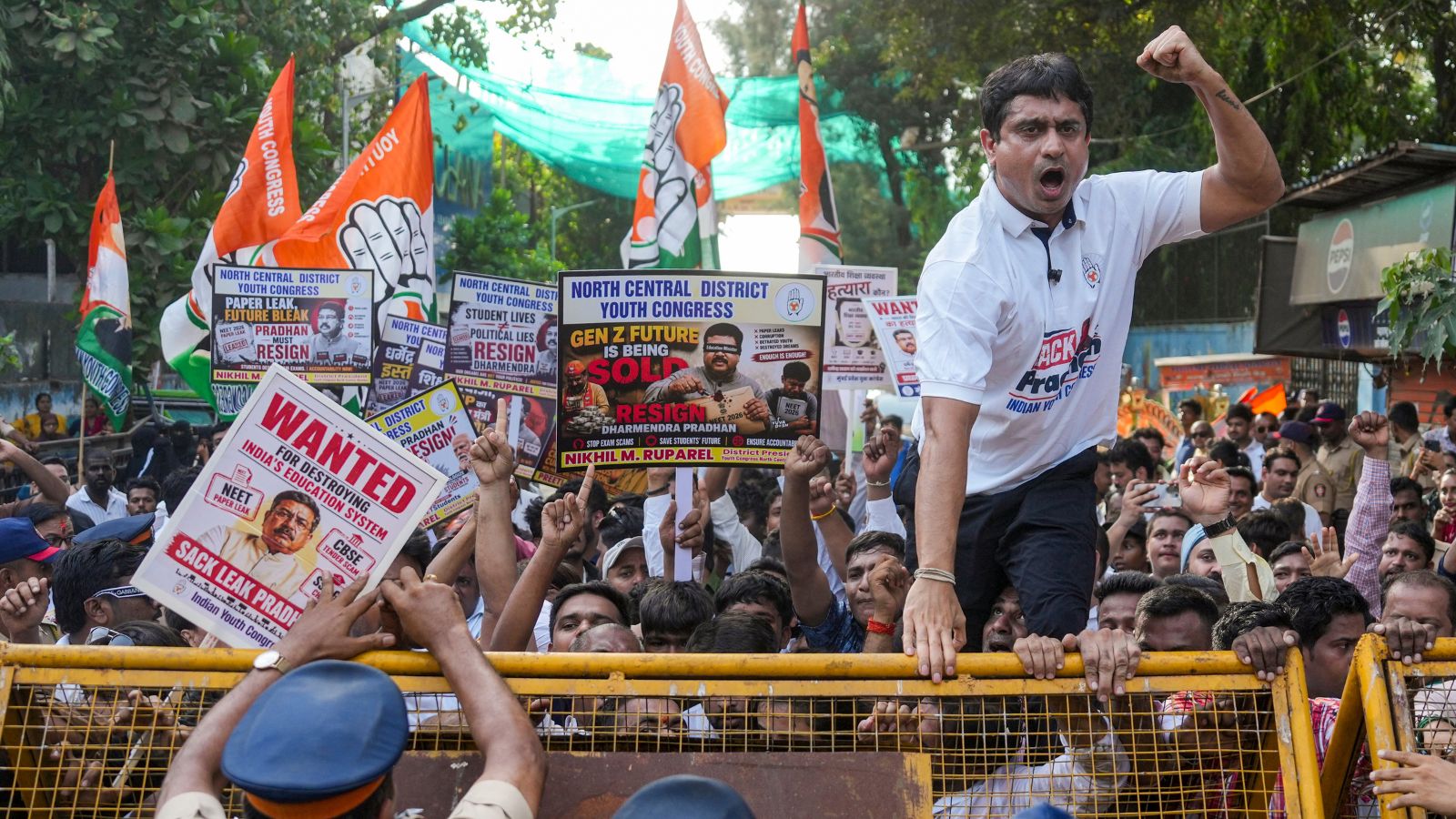
Many things have changed since then. One major change is that the National Testing Agency has taken over administering the same examination, in addition to others. While there were no serious complaints about the older system, the same cannot be said of the NTA more recently. Several academics of repute have simply not agreed to work with the NTA in forthcoming rounds of exam setting.
There are many reasons for this, but chief among them seems to be the structure of the NTA itself. It is largely staffed by contractual employees. They are overworked and susceptible to multiple pressures, including deadlines imposed on them at short notice. Administrative requirements and the call of efficiency have taken centre stage, replacing the passionate involvement of convivial individuals. The idea of “one agency to rule them all”, located in the capital city, manned by staff with no intrinsic attachment to a larger purpose, subverts the true strength of our federal system. The architecture of the past was diffuse, flexible, consensus-based, and diverse.
The combination of capitalitis and AI is worse than these on their own. Any reasonable AI model can now generate questions at an appropriate level, with suggested answers and partial scores. One could go further and have all evaluations done by machine. A further advantage would be to have multiple versions of the papers, again an easy task for any AI. Such a model would be an efficient one and could be administered completely in the national capital. But would it be a convivial one?
A convivial society is one where no centre holds absolutely, where diversity is accommodated, and where industrial-level efficiency is not the chief metric that measures performance. The project of building a social nation requires, at a deep level, conviviality. A Viksit Bharat should also be a convivial Bharat.
To achieve conviviality, even with AI to help, we should first cure ourselves of capitalitis. One step towards that is to see it for what it is.
The writer is a professor at Ashoka University. Views expressed here are his own and do not represent those of his institution