

Why the CDS appointment procedure demands scrutiny
While the government created the legal basis in June 2022 by amending the service rules to allow serving or retired Lt Generals (and equivalents) below the age of 62 to be appointed as CDS, it created an anomalous disruption in India’s hallowed military traditions
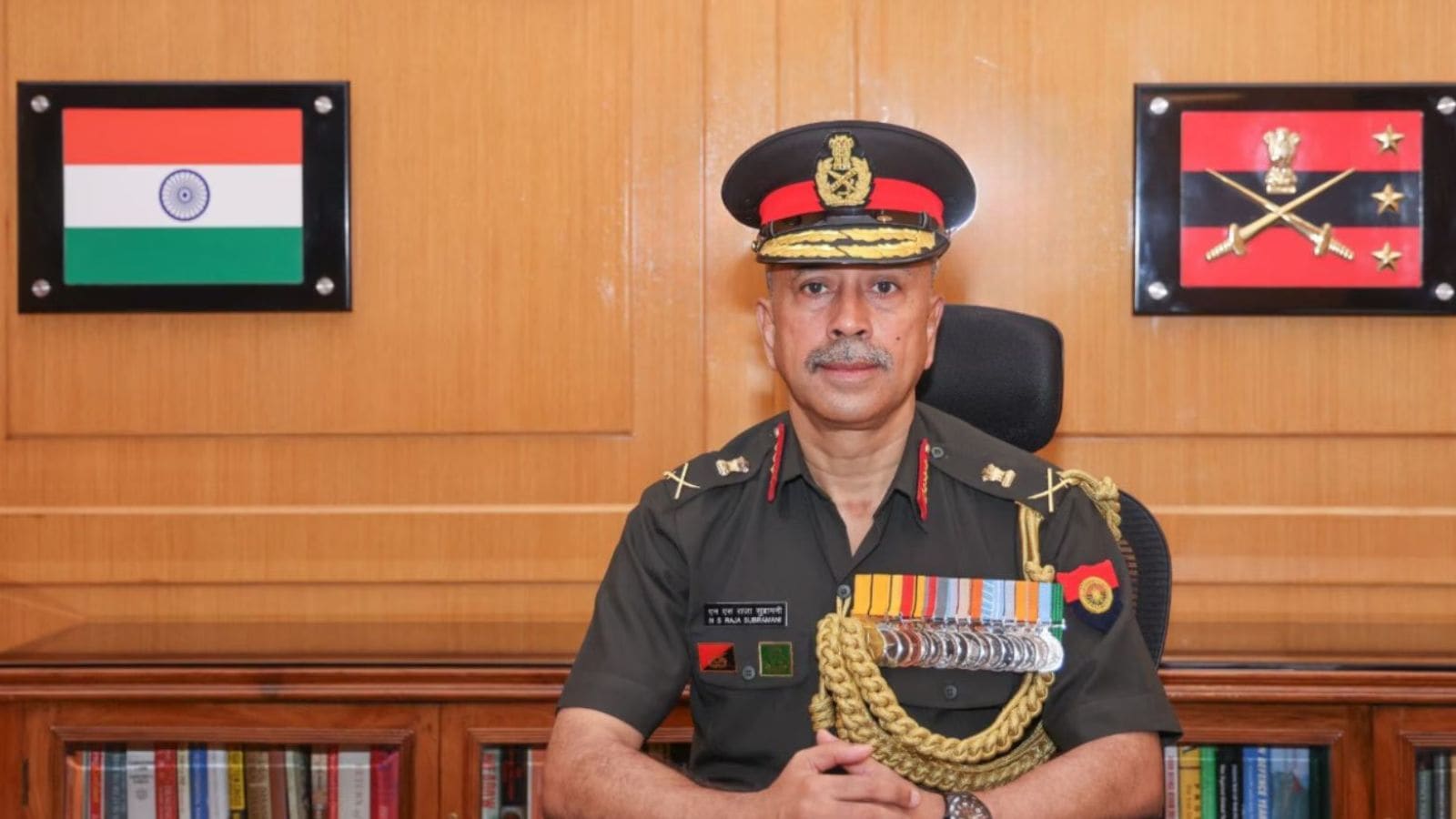
Lt Gen N S Raja Subramani (retd) has been appointed as India’s next Chief of Defence Staff (CDS) and Secretary, Department of Military Affairs (DMA), and he will assume office on May 31. He will be India’s third CDS after the late Gen Bipin Rawat and Gen Anil Chauhan, who assumed office in September 2022 and whose three-year term was extended until the end of May.
The post of the CDS was created during Modi 2.0 in December 2019, and the then army chief, General Rawat, was appointed as the first incumbent in January 2020, after he had completed his tenure as chief. Tragically, Gen Rawat died in a helicopter crash in December 2021, and many of the structural changes that had been envisioned (nurturing jointness, creating theatre commands, and scaling up self-reliance in military inventory) remained incomplete. Even in 2026, they are yet to be implemented. For reasons that remain inexplicable, the government did not appoint a CDS for almost a year, and it was only at the end of September 2022 that the second CDS was appointed.
The choice was a surprise, in that the Modi government decided to appoint a retired three-star officer, then Lt General Anil Chauhan, and promote him to four-star.
This was unprecedented, and while the government created the legal basis in June 2022 by amending the service rules to allow serving or retired Lt Generals (and equivalents) below the age of 62 to be appointed as CDS, it created an anomalous disruption in India’s hallowed military traditions.
Promotions to higher ranks in the military have a deeply ingrained sanctity; an incongruous precedent was set wherein a retired officer was brought back into uniform and promoted. While the service rules were no doubt tweaked to induct a retired officer to assume the post of the CDS, the spirit of the military rule book does not have any provision to “promote” officers who have retired (except for honorary ranks) and bring them back into active duty.
To that extent, the Chauhan appointment as CDS was anomalous, but the precedent had been set. While it is gratifying that the government has not delayed the announcement of appointing Lt Gen Subramani as the next CDS, it is evident that the same pattern is being repeated: To select a retired three-star officer and “promote” him to four-star.
The inferences that follow are that the government was unable to identify a serving officer, three- or four-star, to be appointed as the CDS and that the net had to be cast wide, to include some three-stars among the retired community.
Lt Gen Subramani is an officer of proven competence and has held the highest appointments for a three-star army officer, namely army commander and vice chief of the army. There would be a large number of retired military officers with a similar profile and who could have been considered for the CDS post.
However, the one entry in the Subramani CV that may have tipped the scales in his favour is that he has been serving as the Military Adviser to the National Security Council Secretariat (NSCS) since September 2025. This is similar to the career path of Gen Anil Chauhan, who had also served in the NSCS from October 2021 till his appointment as the CDS in September 2022.
Thus, the first inference is that an appointment in the NSCS is the route for an aspiring CDS and that a deep selection process among retired military top brass, particularly the army, is carried out by the government.
A formulation being advanced is that the Modi government has retained the seniority principle in appointing service chiefs but has adopted the merit yardstick in selecting the CDS. But the metric in assessing merit is opaque, and the question that arises: What are the criteria for this critical CDS selection? This post has a consequential bearing on national military security. How is merit adjudged, and amongst which cohort of retired officers?
On current evidence, the related inference is that only retired army officers have been considered for CDS. This reflects a deeply ingrained policy orientation in South Block that the army, as the largest among the three services, is best suited for the CDS post.
As the ongoing regional wars emphatically demonstrate, the scope and ambit of conflict is now multidimensional and calls for appropriate experience and background at higher military echelons. Acquiring and harnessing transborder military capability in the larger national interest is the new challenge for major nations, and restricting the CDS choice to the retired army gene pool would have excluded equally deserving officers from the other two services.
The choice of selecting a service chief from a panel of serving three-star officers is the prerogative of the elected government, and this is an inviolable principle of democratic governance. But in sticking to the incongruous practice of first identifying a retired three-star general and then grooming the individual to assume office as the CDS, and further, “promoting” the veteran to four-star (when there is no such provision) introduces a political filter that is better avoided.
It is anomalous and disheartening for the “fauj” that the government does not consider any serving three- or four-star military officer as being fit to be the CDS. There are many daunting challenges ahead for the new CDS, and one wishes him the very best as he prepares to don the thorny cap. Fair winds and following seas, General Subramani.
The writer is director, Society for Policy Studies, New Delhi