

CBSE’s AI curriculum — lofty goals, little clarity
Understanding the characteristics of human intelligence calls for considerable maturity. Understanding the characteristics of machine intelligence is difficult even for undergraduates.
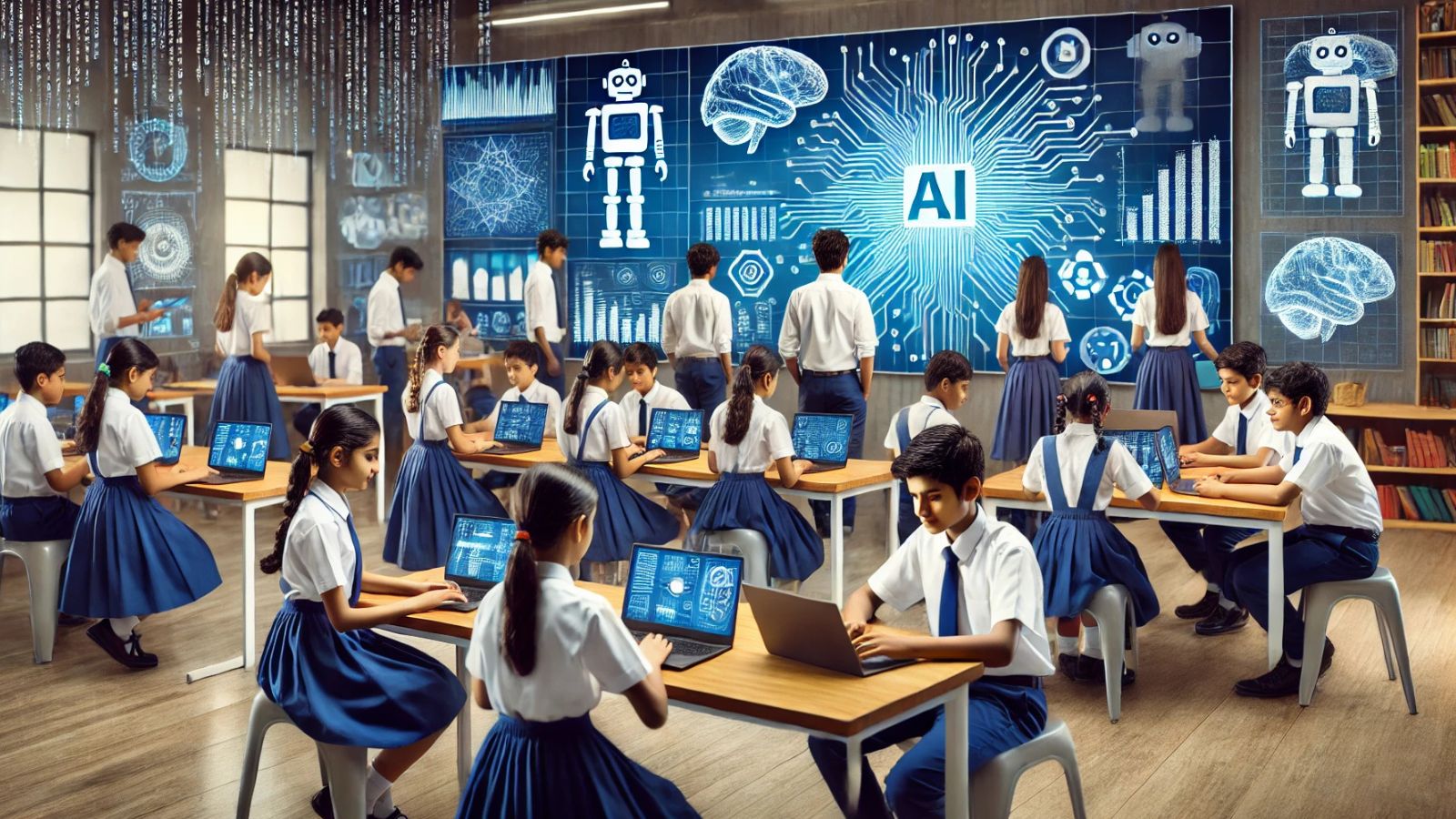
The Central Board of Secondary Education (CBSE) has announced a new curriculum for Computational Thinking (CT) and Artificial Intelligence (AI) from classes III to VIII, to be implemented during the 2026-27 academic session. It aims to “develop the capacities of learners to use computational thinking, such as logical thinking, problem solving, pattern recognition, and so on, and understand the role and use of Artificial Intelligence in daily life”. The use of an ellipsis — “and so on” — in stating curricular aims notwithstanding, this is an objective to be lauded. What is unclear is how the former list is related to the latter goal. Or, what does the curriculum really achieve?
Schoolchildren interact with AI tools and use social media routinely now, and this has led to a worry among parents and educators about safety and privacy on the one hand, and what it does to their ability to learn and think critically and independently on the other. The AI literacy curriculum can be seen as a welcome opportunity to address these concerns. But does it address them?
The curriculum advocates CT in classes III to V. In classes VI to VIII, “advanced CT” and “foundational knowledge of AI” are provided, along with “AI ethics”. The learning outcomes for Class VI speak of describing “key differences between machine intelligence and human intelligence”, explaining “the difference between automation and
AI using practical, real-world cases”, differentiating “the three fundamental AI methodologies, namely supervised, unsupervised and reinforcement learning”. What can we teach 11-year olds to help them achieve these capabilities? Understanding the characteristics of human intelligence calls for considerable maturity. Understanding the characteristics of machine intelligence is difficult even for undergraduates. Children experience supervised learning, but can they introspect on it? How would they distinguish between supervised and reinforcement learning? More importantly, why should they?
The learning outcomes for Class VII ask children to distinguish between “key predicative techniques such as regression, classification and clustering”. These are techniques taught in Data Science at the undergraduate level. While the terms can perhaps be explained to 12-year olds, how are they to understand these in the context of AI? The learning outcomes for Class VIII include applying “no-code tools to tackle real-world problems and reflect on their utility”.
The syllabus and learning outcomes do speak of bias in AI but simply do not address the concern of how to change the perception of vulnerable children with regard to AI, the fact that they tend to see AI as an all-knowing human-like companion, who answers questions “without judging” them.
The discussion of computational thinking is on an entirely different plane, and relates to abstraction, decomposition, pattern recognition and algorithmic thinking. This is already meant to be integrated into the Mathematics curriculum for classes III to VIII. Whether they can be integrated across the curriculum, with Science and Social Studies, is currently under review across the world. Until research shows how such integration can be carried out effectively, any educator would hesitate to advocate it in a national curriculum.
The disconnect between the discussion on CT and AI literacy in the curriculum document is striking. How does the development of CT, as advocated in the document, connect to AI? It is claimed that CT is the “underlying foundation for AI” and that the processes involved in CT are “the same reasoning processes that power AI and ML systems”. This is puzzling, since the symbolic processes of algorithmic thinking are entirely different from the neural network-based learning algorithms that power AI and ML systems. There is also very little research on AI education at the primary and middle-school levels to merit any clear curricular recommendations.
The digital divide in the country is vast, and our teachers are ill-prepared and undereducated on AI and digital tools. Our system has had little success in weaning children away from rote learning and connecting closely related disciplines, such as Mathematics and Science, let alone integrating CT and AI. The proposed curriculum could add to the information overload, without addressing the central concern relating to middle-school children using AI.
The writer is professor, Azim Premji University, Bengaluru, and faculty (retired), Institute of Mathematical Sciences, Chennai. Views are personal