

Is training an AI model ‘public interest’? Delhi HC verdict goes to heart of copyright debate
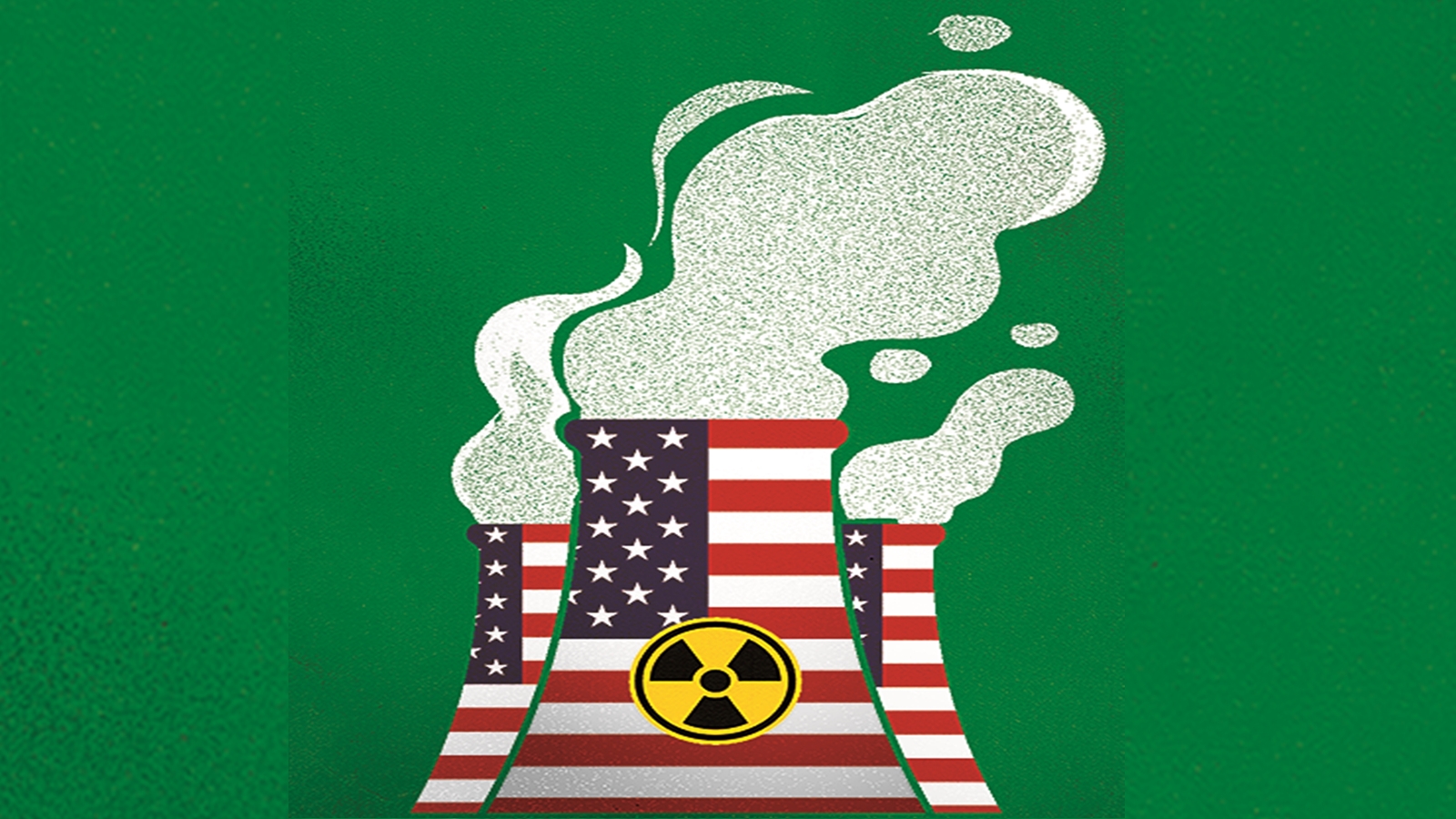
India has two competing visions before it. One sees fair dealing and public interest as capable of permitting AI training under the existing law. The other assumes that lasting certainty and fairness require a statutory licence and a payment mechanism
By Shivam Kaushik
On July 24, a single judge of the Delhi High Court delivered a judgment holding that OpenAI can use copyrighted content to train ChatGPT. The judgment was passed in an interim application filed by ANI in a suit alleging that OpenAI used its copyrighted content without its consent to train its AI chatbot. Justice Amit Bansal held that OpenAI’s use of ANI’s works was prima facie protected under the fair dealing provision of the Indian Copyright Act, 1957.
The 135-page-long judgment is on an interim application. Formally, it is meant to govern the parties only until the suit is finally decided after trial, if the trial ever takes place. But intellectual property (IP) litigation has a peculiar relationship with interim orders. It wouldn’t be a stretch to describe much of Indian IP jurisprudence as “interim-order jurisprudence”.
The Supreme Court recognised this problem as early as 2009 in Bajaj Auto Ltd vs TVS Motor Company Ltd, when it observed that a final decision, and not temporary injunctions, should be the primary focus of courts in IP cases. Yet, little has changed since.
A senior in the profession recently told me that when he was writing a commentary on patent law in India, he initially decided to not use judgments given on interim applications. But realising that not much was left to discuss in the book after excluding them, he eventually decided to cite the interim decisions as well. Thus, this decision, despite being an interim judgment, is likely to have great influence on the development of Indian copyright law.
Underlying the 135 pages of the court’s interpretation of fair dealing, its assessment of market harm, and the test of interim injunction is a broader proposition: The development and wide availability of AI serves the public interest, and copyright law must be interpreted with that interest in view. The judgment invokes public interest in three distinct ways.
First, it treats fair dealing as part of copyright law’s internal balance, rather than as a grudging exception to authors’ rights. Second, it regards the social benefits of trained AI systems as relevant to whether the underlying use is fair. Third, it holds that an interim injunction would harm not only OpenAI, but also Indian users and the development of domestic AI systems.
One of the judgment’s most striking passages arises while interpreting “research” under Section 52, which protects reproduction of copyrighted works for research purposes as well as reproduction by a teacher in the course of instruction. Taking a futuristic view, the court observes that if human teachers are replaced, in the future, by an “AI bot” or “robot”, it would be artificial to hold that the statutory protection disappears merely because the instructions are provided by a machine. Such an interpretation, the court says, would be “regressive” and would “limit societal progress”. The judgment describes this approach as the doctrine of “updating construction”. The expression seems technical; the idea is not. The law must remain faithful to its purpose without being frozen in the technological conditions that existed when it was enacted.
The Delhi High Court’s judgment arrives amidst an ongoing policy exercise. In December 2025, the Department for Promotion of Industry and Internal Trade (DPIIT) released a Working Paper on generative AI and copyright titled “One Nation, One Licence, One Payment: Balancing AI Innovation and Copyright.” It proposed a mandatory blanket licence for the use of copyrighted works in AI training, coupled with a statutory right to remuneration. The Working Paper proceeded on the assumption that using copyrighted works for AI training infringed copyright and that such use gives rise to infringement concerns.
The Delhi High Court’s judgment has materially altered that premise. It holds that the existing fair-dealing provision is wide enough to protect the use where the material is employed for the private process of training, the purpose is research, and no substantial market prejudice is shown. On that reasoning, the law does not necessarily require either prior consent or payment merely because copyrighted material has been used.
The question now before Indian policymakers is whether to impose a payment obligation on uses that the court has treated as fair, non-substitutive and beneficial to the public. Conversely, the judgment does not answer every concern raised by the Working Paper. It does not settle the position for all classes of works, all training methods, pirated datasets, where memorisation actually happens, or where there is proof of substantively similar output, or proven loss of licensing markets.
For now, India has two competing visions before it. One sees fair dealing and public interest as capable of permitting AI training under the existing law. The other assumes that lasting certainty and fairness require a statutory licence and a payment mechanism. Which of these visions will ultimately shape Indian copyright law will depend on what happens next- in appeal, at trial, and in the policy deliberations.
The writer is an advocate practising before the Delhi High Court