

A year after AI 171, Air India faces questions about the crash — and itself
A loss in excess of $2 billion; an estimated 22 per cent-plus cut in capacity; and a wide variation in net promoter scores highlight a consistently inconsistent product
By Satyendra Pandey
Most corporate turnarounds have similar themes. New ownership, an injection of capital, rightsizing, capex, product-revitalisation, and for the successful ones – profitability. Just four years ago, with the transition from being a Public Sector Undertaking to new ownership under the Tata group, Air India was supposed to be that story. However, it has been anything but.
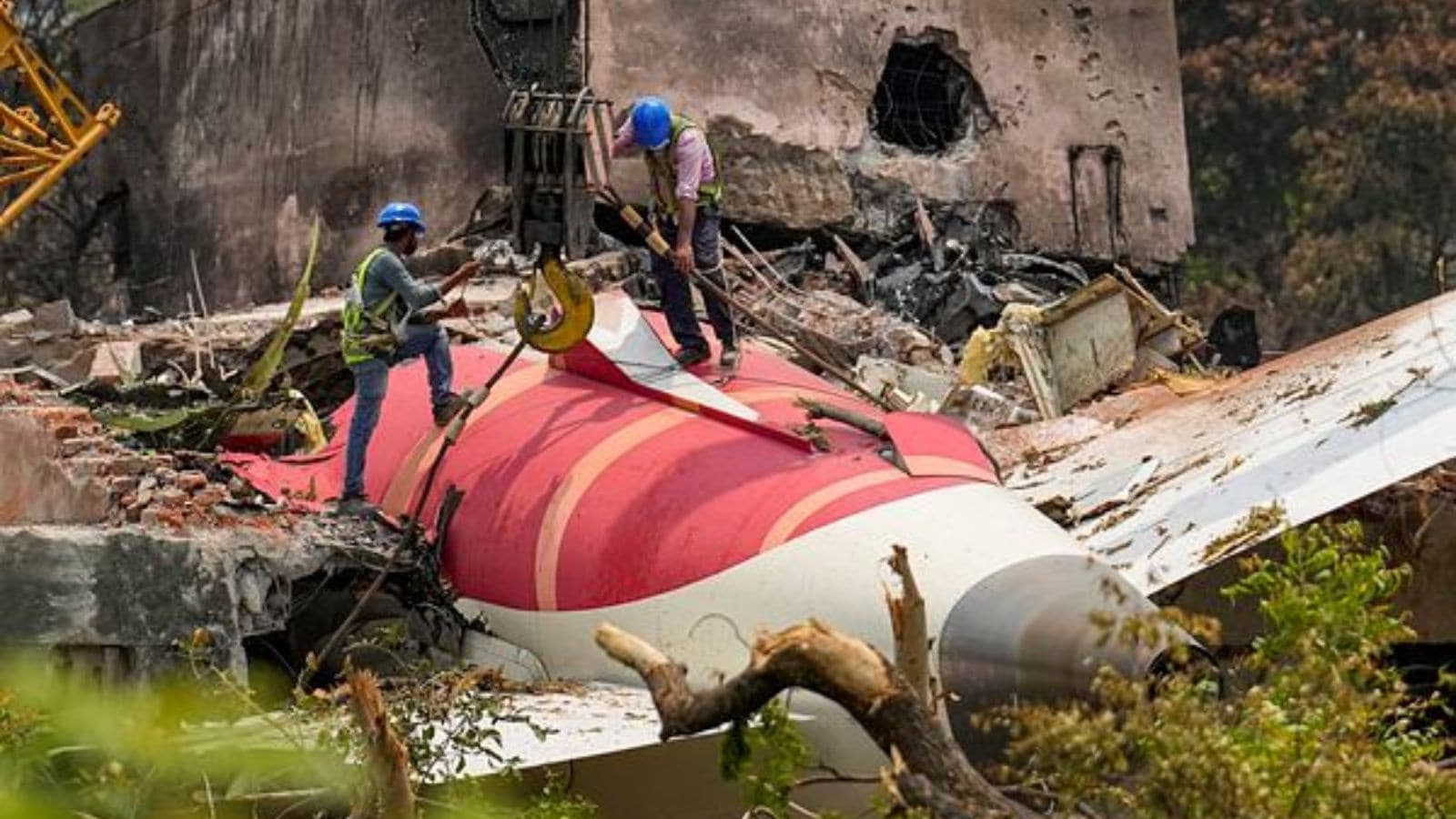
The airline continues to incur severe losses, its reputation requires repair, and as we mark the first anniversary of the horrific Ahmedabad crash of Air India Flight 171, where 241 people on board and 19 on the ground lost their lives, there are more questions than answers.
All this while, Air India continues to struggle with culture, cash flow, and credibility. The elephant in the room is that Air India moved from a situation of constrained capital to abundant capital. But too much capital can be a curse. Because too much capital can inadvertently amplify challenges, and at scale. And capital creates a false sense of security, which then has consequent impacts.
The numbers speak for themselves: A loss in excess of $2 billion; an estimated 22 per cent-plus cut in capacity; and a wide variation in net promoter scores highlight a consistently inconsistent product. For those looking beyond the numbers, the signals are many. But those calling them out are few and far between. The fact that the airline is not able to turn a profit in a duopoly market where it holds significant advantages is very telling.
What makes the Air India situation even more compelling is that the airline’s success is not only important for the airline and the Tata group but also for India’s broader ambitions. For one, strategic autonomy essentially includes air connectivity as a core pillar. To this end, the country has asserted itself by not revisiting air service bilateral agreements, a position that will be untenable without a strong global airline.
Second, Air India’s success will demonstrate that Public Sector Undertakings (PSUs) can be privatised and deliver a profit to the benefit of the exchequer and all citizens. Then there is the element of jobs across the skill spectrum, where a large successful airline can be a strong catalyst. Finally, a successful global airline provides the fillip towards building an aviation hub to challenge the hubs in the Middle East and Southeast Asia, thereby leveraging the Indian demographic dividend and the premiumisation wave.
Air India’s goals by March 2027 as a part of its transformation plan highlight targets for fleet growth, market share, brand identity, innovation, and being a preferred employer. But what needs to be put front and centre is the customer in every way possible. Yes, the Indian consumer is demanding, yes, aviation is an exacting business, and yes, the returns on capital for airlines are very hard to deliver. But these are facts to be worked with. Not challenges to be glossed over. And doing this requires hard decisions that align the airline with the market reality.
Going forward, the flight path for Air India is anything but smooth. Elements of its strategy, such as the ultra-long-haul flights, engineering challenges, and overall talent strategy, require a rethink. The airline has to deliver consistency, not excuses, and the consumer has to be front and centre. There are no easy answers. Buying and financing aircraft with the backing of the Tata group was the easy part; delivering a competitive cost structure, consistent product and service, and operational excellence is an order of magnitude more difficult.
There is an aviation adage that goes: “The three things that are of no use are the runway behind you, the altitude above you, and the fuel still in the truck.” For Air India, the focus has to be the here and now. The past, the vision, and the impending product upgrades are not items that will move the needle. Similarly, market share, compliance, and seniority cannot outrank safety, consistency and reliability. A consumer cannot be taken for granted, especially in the international segment, where there are many options. As such, the first goal for the airline is to enter consumers’ consideration sets.
The good news is that Air India finds itself in the right market at the right time and with a strong parent company with patient capital. But it has to be backed up with strategic intent and executive capital. One year after the crash, no Air India executive has held an official, in-person press conference to brief the public or answer questions about it.
The writer is managing partner at AT-TV, an aviation finance firm