

After BJP victory, the saffron that Bengal must remember
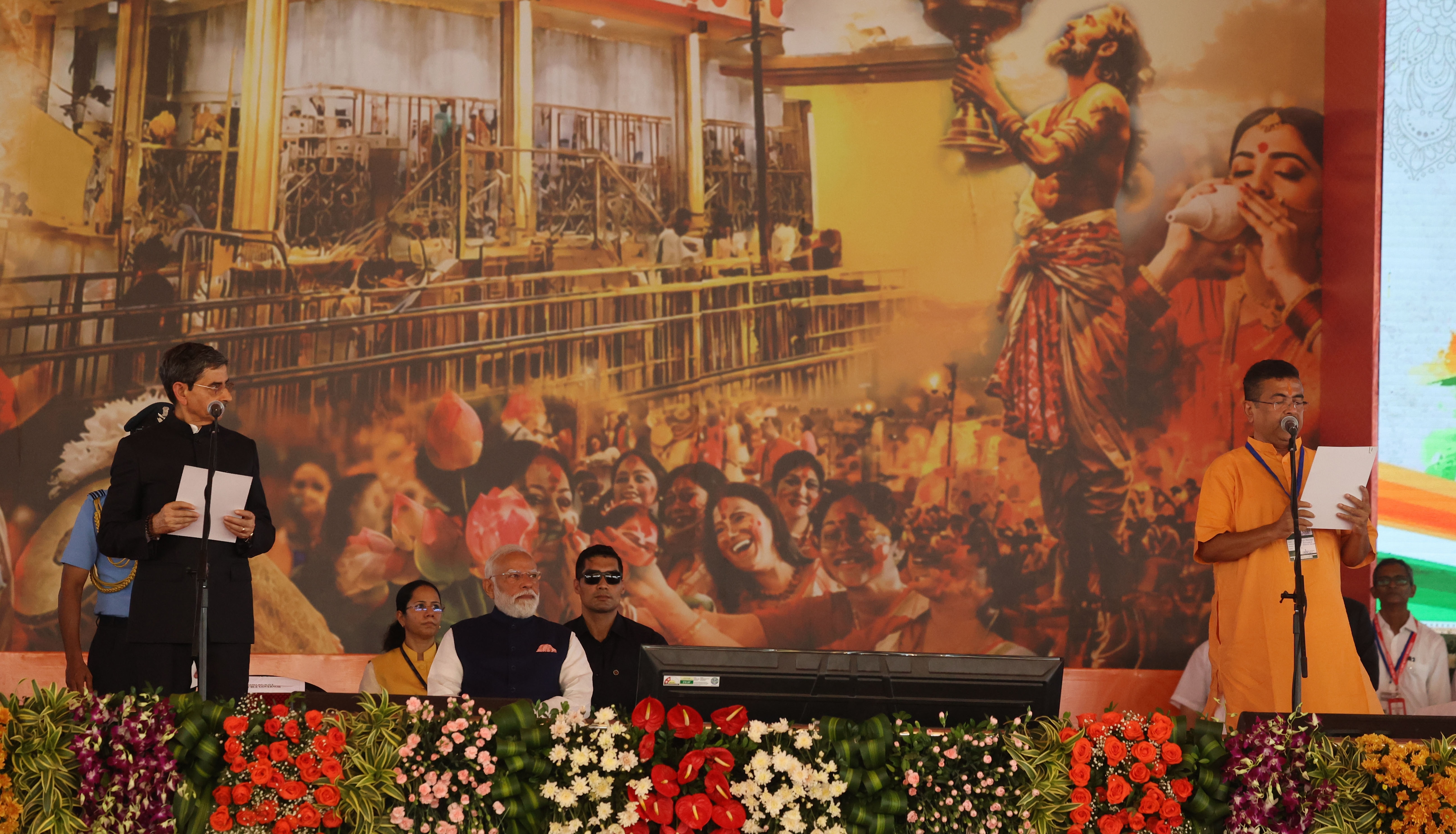
The new BJP government of Bengal has a historic opportunity. It can reduce saffron to electoral symbolism, or it can elevate saf fron into governance with character. The second path is harder, but nobler
For Bengal, saffron is not merely the colour of a flag, a party, or a political season. It is the colour of tapasya, sacrifice, learning, courage, surrender and service. With the formation of Bengal’s first BJP government, there is a need to welcome this moment with dignity, maturity, and hope. If Bengal has chosen a new path, that path must serve every Bengali — Hindu, Muslim, Christian, Buddhist, Sikh, believer, non-believer, rich, poor, rural, urban, tribal, refugee, worker, farmer, student, mother, teacher, and child. The true saffron spirit does not humiliate. It uplifts. It does not divide society into enemies. It awakens it to duty. For too long, the word “saffron” has been misunderstood in Bengal. To speak of Hindu identity was often called communal. But history tells another story.
Bengal was one of the great saffron centres of India. It was the land of Sri Chaitanya Mahaprabhu, Nader Nimai of Navadvipa, who carried the message of bhakti through naam-sankirtan. Bengal was the land of Sadhak Ramprasad Sen, whose songs to Maa Kali entered the heart of every Bengali home. Bengal was the land of Bama Khyapa of Tarapith, the wild lover of Maa Tara, who reminded society that spirituality is not always polished, polite, and comfortable. Bengal was the land of Sri Ramakrishna Paramahamsa, whose life at Dakshineswar became a living commentary on the harmony of religions. From Sri Ramakrishna came Swami Vivekananda, who carried Bengal’s saffron to the world. His saffron was not escapism. It was strength, service, and character. This is the saffron Bengal must remember.
Bengal also gave India Bankim Chandra Chattopadhyay, whose Vande Mataram transformed the motherland into a sacred presence. Rabindranath Tagore later gave this civilisational spirit a universal voice. He drew from the Upanishadic depth of India and carried it into literature, music, education, and global humanism. Tagore warned against narrowness, but he never denied the soul of Bharat. Netaji Subhas Chandra Bose’s saffron was sacrifice. In him, one sees the fire of Vivekananda transformed into political action. “Jai Hind” was a national mantra.
Sri Aurobindo, born in Calcutta, added another luminous dimension. Revolutionary, philosopher, poet, yogi — he moved from the struggle for national freedom to the deeper vision of human evolution. His Integral Yoga did not reject life. It sought to transform life. In him, Bengal’s political aspiration and spiritual destiny met at a higher plane. Swami Pranavananda, founder of Bharat Sevashram Sangha, brought saffron into disciplined service. He showed that spirituality must enter the field — relief work, education, pilgrimage service, social protection, character-building, and national reconstruction. His saffron was not only meditation; it was organised compassion.
The new BJP government of Bengal has a historic opportunity. It can reduce saffron to electoral symbolism, or it can elevate saffron into governance with character. The second path is harder, but nobler.
Samajdar is a clinical pharmacologist and diabetes and allergy-asthma therapeutics specialist in Kolkata. Joshi is a Mumbai-based endocrinologist