

At 50, Inlaks Foundation celebrates with artworks
Featuring 45 alumni, the exhibition looks at how artistic identities are shaped over time
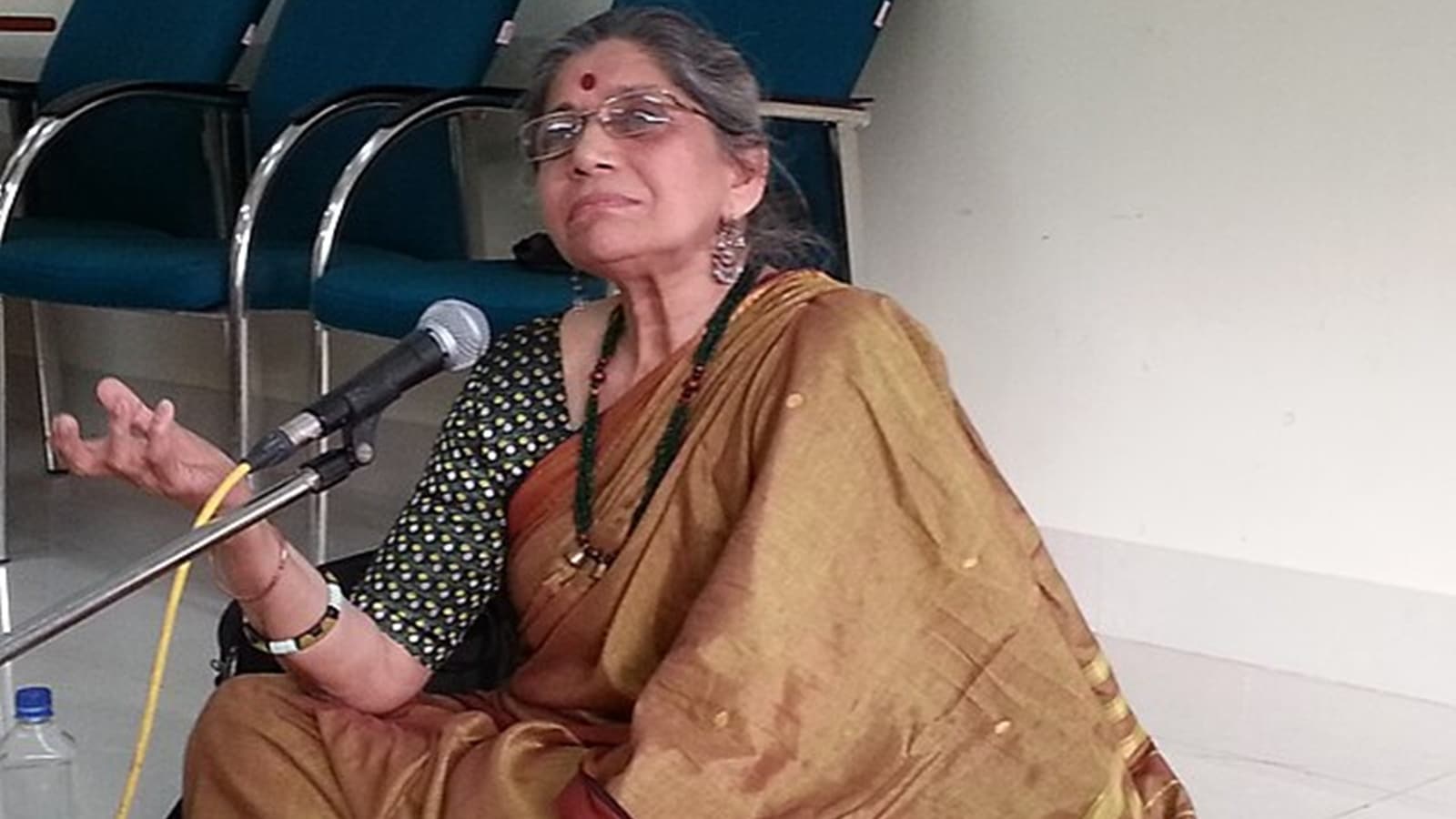
“For most of us, the scholarship was a life-changing opportunity through which one’s pictorial language changed. You were pushed to think about what art really meant to you,” says artist Manisha Parekh, who was awarded the Inlaks scholarship in 1991. Set up in 1976, The Inlaks Shivadasani Foundation has supported Indian artists across art, culture and education through scholarships, residencies and awards, thus playing an important role in shaping generations of artists.
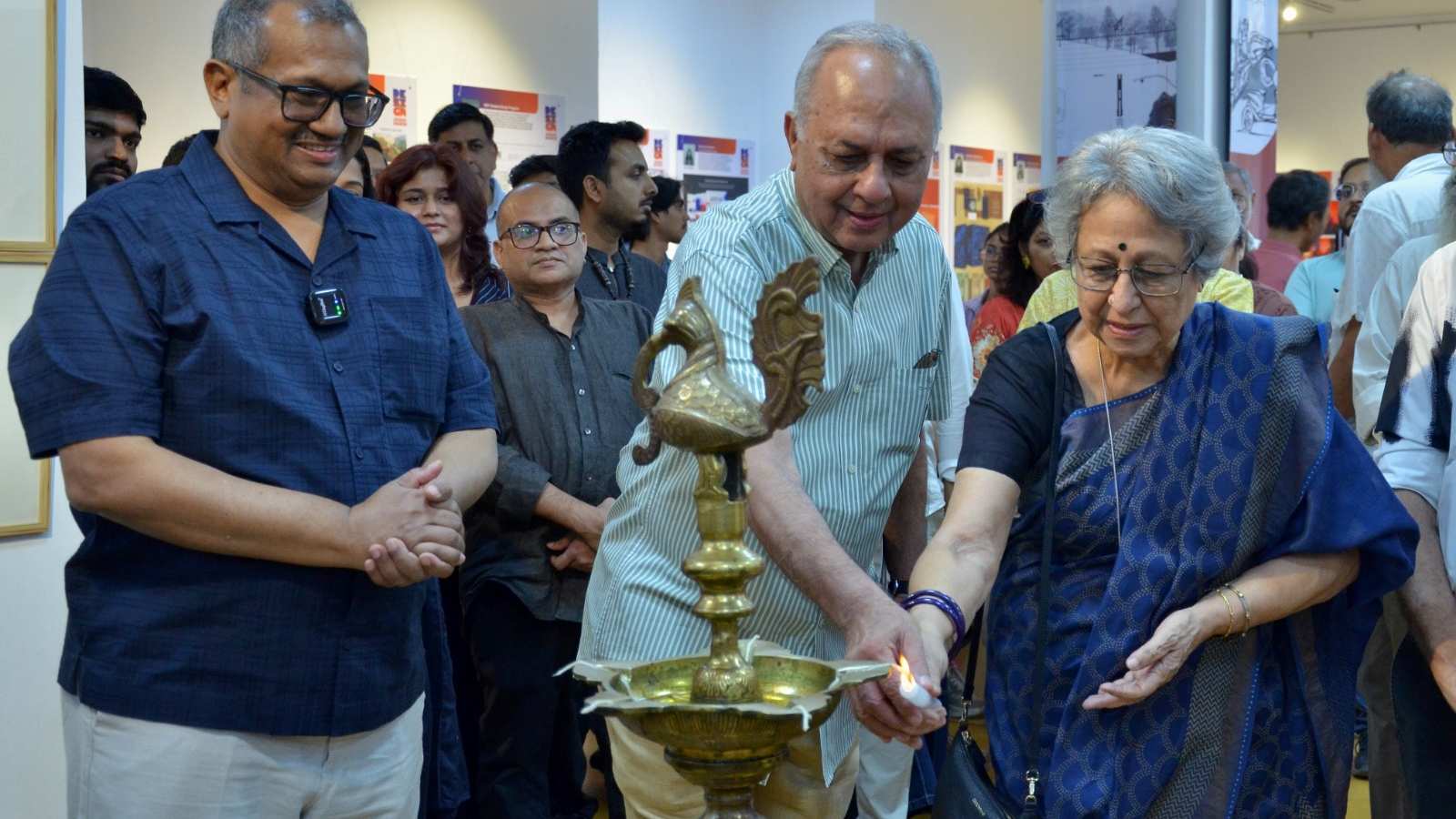
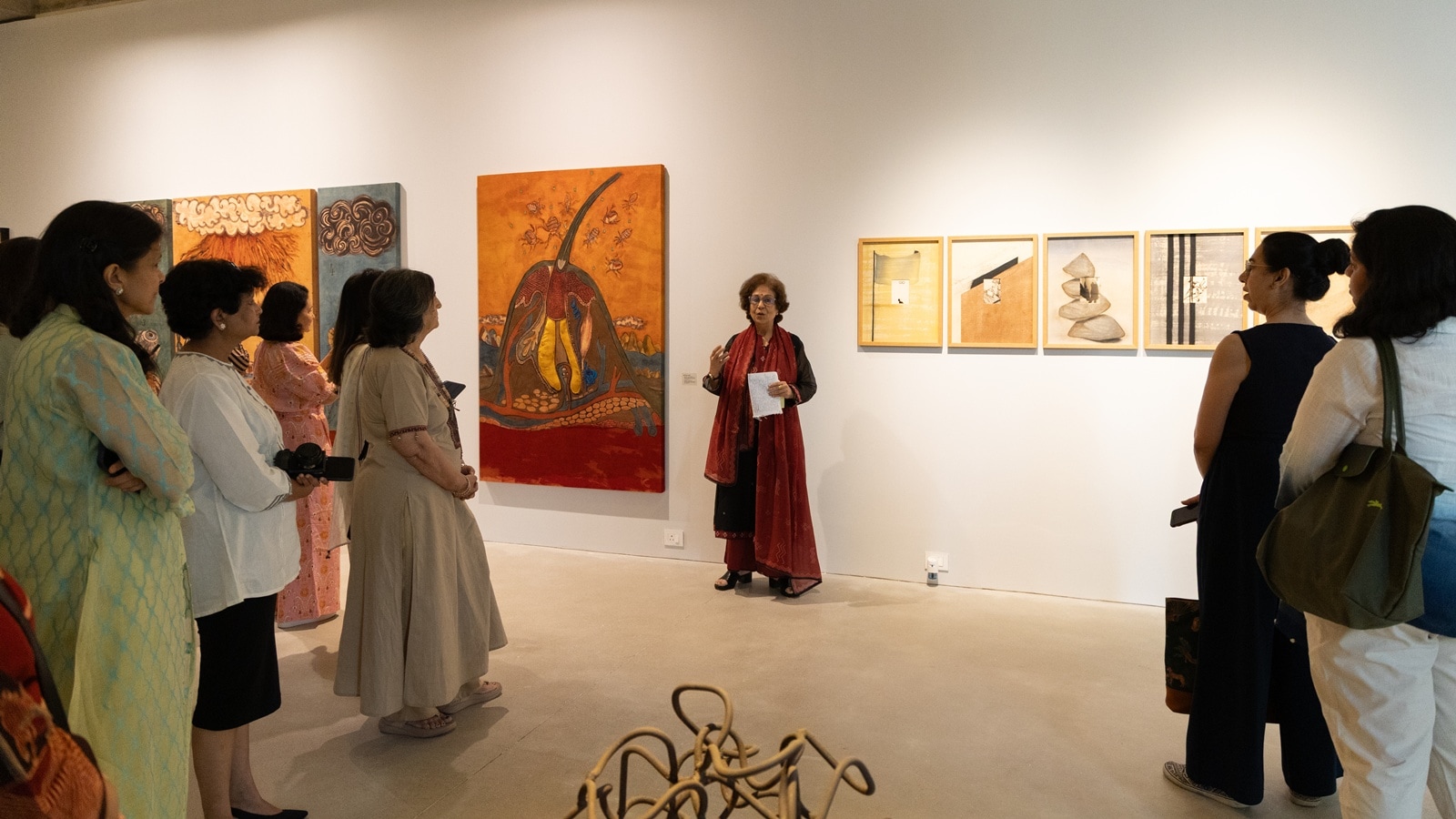
The 50th year of the foundation is being marked with an exhibition, “Intersections: Sites of Becoming“, at Arthshila, Okhla, in Delhi. On till April 30, it brings together 45 artists from the Foundation’s alumni, from Rekha Rodwittya, who received the scholarship in 1982, to Akartha Halder, the recipient of the Inlaks Fine Art Award 2025. The other artists showcased include Sheela Gowda, BV Suresh, Akkitham Vasudevan, NN Rimzon, Indrapramit Roy, Shaina Anand, Jagannath Panda, Temsüyanger Longkumer and Gigimon Scaria, who were among the first few to have received the Inlaks Scholarship to study art overseas.
Priya Pall, who is also the Artistic Director of the exhibition, spent the past year putting it together. She notes that the title was deliberate, “Intersections are places where things meet and change the course of an artist’s life. The foundation has always been a crossing point.” She notes that shortlisting the 45 artists was the most difficult task. She adds, “I was looking for works that reflected a pivotal point where the artist’s practice changed, or a work that deeply reflects their core identity.“
Parekh, who arrived from Baroda to the Royal College of Art, London, through the scholarship, recalls how little access artists in India had to global conversations when she first went abroad. Her work at the exhibition, titled Alchemy III, is a wall installation of cut copper and iron sheets, shaped through hammering. She adds how the technique used is similar to the ones used for kitchen cookware. “I call it Alchemy because the human touch and sweat changes the colour of the sheets,” she explains.
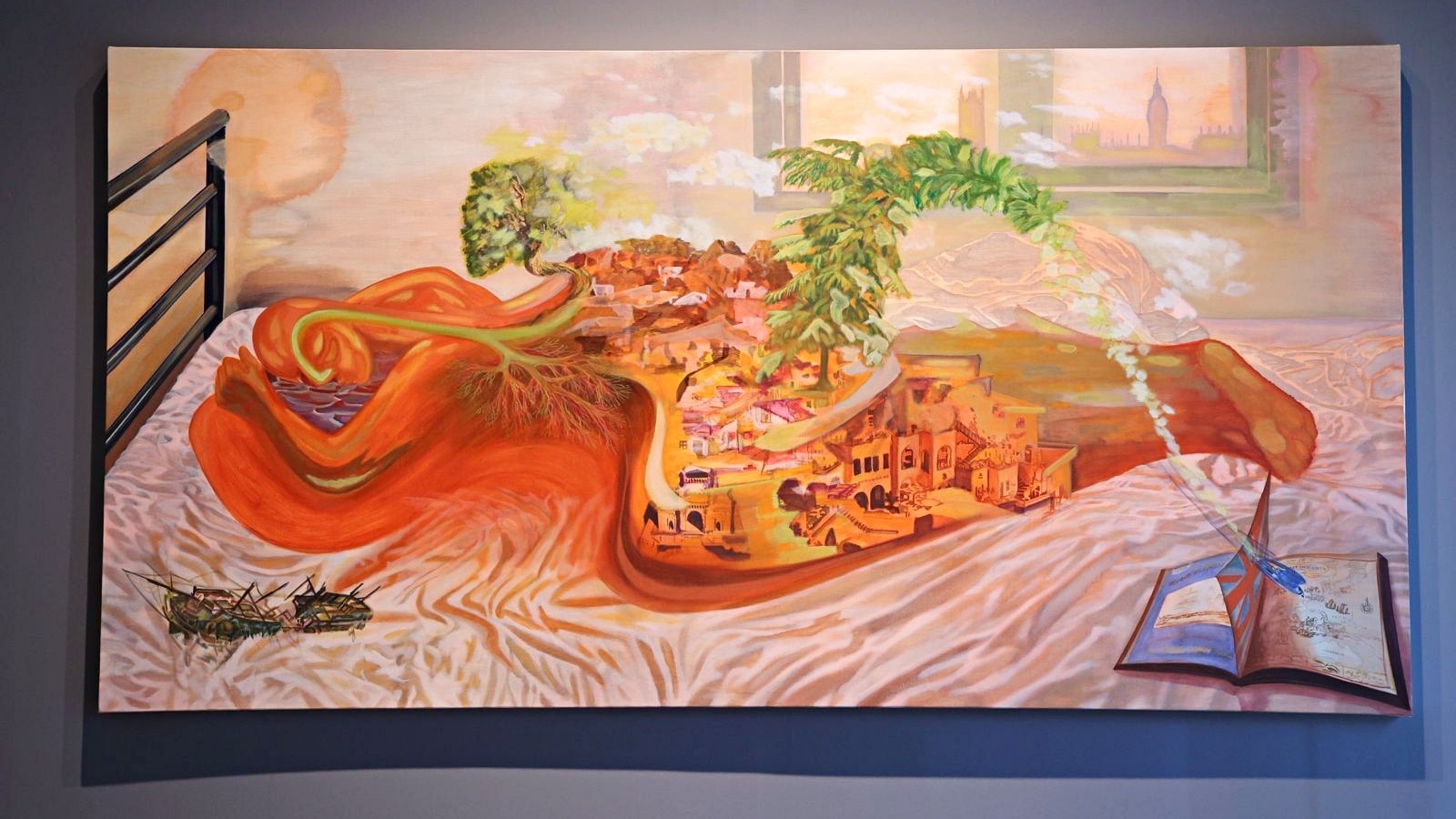
Questions of home and distance reappears in the works of Ritesh Khowal who was the recipient of the Inlaks Scholarship 2024. He says, “Home is approached not as a fixed place, but as a condition shaped by movement, memory and displacement. While living in London, India emerges less as lived geography than as an internal landscape, carried through recollection and inherited ways of seeing.” His work, an acrylic painting titled Dreaming my way back home, depicts a person lying down on a bed, who is dreaming of their home, the havelis in their hometown; the Big Ben visible through the open window shows how far away they are from home. He adds, “The work operates within a dreamlike register in which time feels suspended and perception links both the past and present as an interconnected tapestry.”
Khowal also reflects on how the scholarship helped him. He says, “The scholarship provided freedom to travel, explore and study through direct experience of things. Inlaks has elevated my experience of life, made possible new ways of looking at the world, which has initiated in me the joy of travelling.”
Shailesh BR, who received the Inlaks Fine Art Award in 2014, has an installation featuring a rudraksha mala, which is scaled up and suspended. One can roll the life-size mala with the help of the pedal, which enables its movements. Titled Rounds Per Minute, the work draws from the idea of how rituals have over the years become more mechanical than intentional. He adds, “People often perform these rituals without questioning why. I chose ceramic for the rudraksha pieces because it is a sensitive, fragile material; if you drop it, it breaks.”
There is a small detail that stays. Alongside the installation, there are a bunch of single beads which can be picked up, held and even taken away. Explaining the idea behind the same, Shailesh explains, “When I am not there to explain the work, people can interact with it by taking a piece as a gift or a question. They can keep it as a decorative item, but it is meant to make them think and question the mechanical nature of rituals.”
“For most of us, the scholarship was a life-changing opportunity through which one’s pictorial language changed. You were pushed to think about what art really meant to you,” says artist Manisha Parekh, who was awarded the Inlaks scholarship in 1991. Set up in 1976, The Inlaks Shivadasani Foundation has supported Indian artists across art, culture and education through scholarships, residencies and awards, thus playing an important role in shaping generations of artists.
The 50th year of the foundation is being marked with an exhibition, “Intersections: Sites of Becoming“, at Arthshila, Okhla, in Delhi. On till April 30, it brings together 45 artists from the Foundation’s alumni, from Rekha Rodwittya, who received the scholarship in 1982, to Akartha Halder, the recipient of the Inlaks Fine Art Award 2025. The other artists showcased include Sheela Gowda, BV Suresh, Akkitham Vasudevan, NN Rimzon, Indrapramit Roy, Shaina Anand, Jagannath Panda, Temsüyanger Longkumer and Gigimon Scaria, who were among the first few to have received the Inlaks Scholarship to study art overseas.
Priya Pall, who is also the Artistic Director of the exhibition, spent the past year putting it together. She notes that the title was deliberate, “Intersections are places where things meet and change the course of an artist’s life. The foundation has always been a crossing point.” She notes that shortlisting the 45 artists was the most difficult task. She adds, “I was looking for works that reflected a pivotal point where the artist’s practice changed, or a work that deeply reflects their core identity.“
Parekh, who arrived from Baroda to the Royal College of Art, London, through the scholarship, recalls how little access artists in India had to global conversations when she first went abroad. Her work at the exhibition, titled Alchemy III, is a wall installation of cut copper and iron sheets, shaped through hammering. She adds how the technique used is similar to the ones used for kitchen cookware. “I call it Alchemy because the human touch and sweat changes the colour of the sheets,” she explains.
Questions of home and distance reappears in the works of Ritesh Khowal who was the recipient of the Inlaks Scholarship 2024. He says, “Home is approached not as a fixed place, but as a condition shaped by movement, memory and displacement. While living in London, India emerges less as lived geography than as an internal landscape, carried through recollection and inherited ways of seeing.” His work, an acrylic painting titled Dreaming my way back home, depicts a person lying down on a bed, who is dreaming of their home, the havelis in their hometown; the Big Ben visible through the open window shows how far away they are from home. He adds, “The work operates within a dreamlike register in which time feels suspended and perception links both the past and present as an interconnected tapestry.”
Khowal also reflects on how the scholarship helped him. He says, “The scholarship provided freedom to travel, explore and study through direct experience of things. Inlaks has elevated my experience of life, made possible new ways of looking at the world, which has initiated in me the joy of travelling.”
Shailesh BR, who received the Inlaks Fine Art Award in 2014, has an installation featuring a rudraksha mala, which is scaled up and suspended. One can roll the life-size mala with the help of the pedal, which enables its movements. Titled Rounds Per Minute, the work draws from the idea of how rituals have over the years become more mechanical than intentional. He adds, “People often perform these rituals without questioning why. I chose ceramic for the rudraksha pieces because it is a sensitive, fragile material; if you drop it, it breaks.”
There is a small detail that stays. Alongside the installation, there are a bunch of single beads which can be picked up, held and even taken away. Explaining the idea behind the same, Shailesh explains, “When I am not there to explain the work, people can interact with it by taking a piece as a gift or a question. They can keep it as a decorative item, but it is meant to make them think and question the mechanical nature of rituals.”