

Released from 6-month NSA detention, Sonam Wangchuk opens door to compromise on Ladakh demands
Wangchuk, who had approached the court challenging his detention, said the government’s move has made his “job easy” as he had otherwise been prepared for a prolonged legal and public battle.
Climate activist and education reformer Sonam Wangchuk on Monday struck a notably conciliatory tone on Ladakh’s political demands, signalling openness to a “give and take” approach with the Centre and stressing the need for a “win-win” outcome, even as key regional bodies have maintained that their core demands remain non-negotiable.
Wangchuk was released recently after spending over six months in jail. He was detained on September 26 last year under the National Security Act following violent protests in Leh. The detention order under the NSA was withdrawn by the government, paving the way for his release.
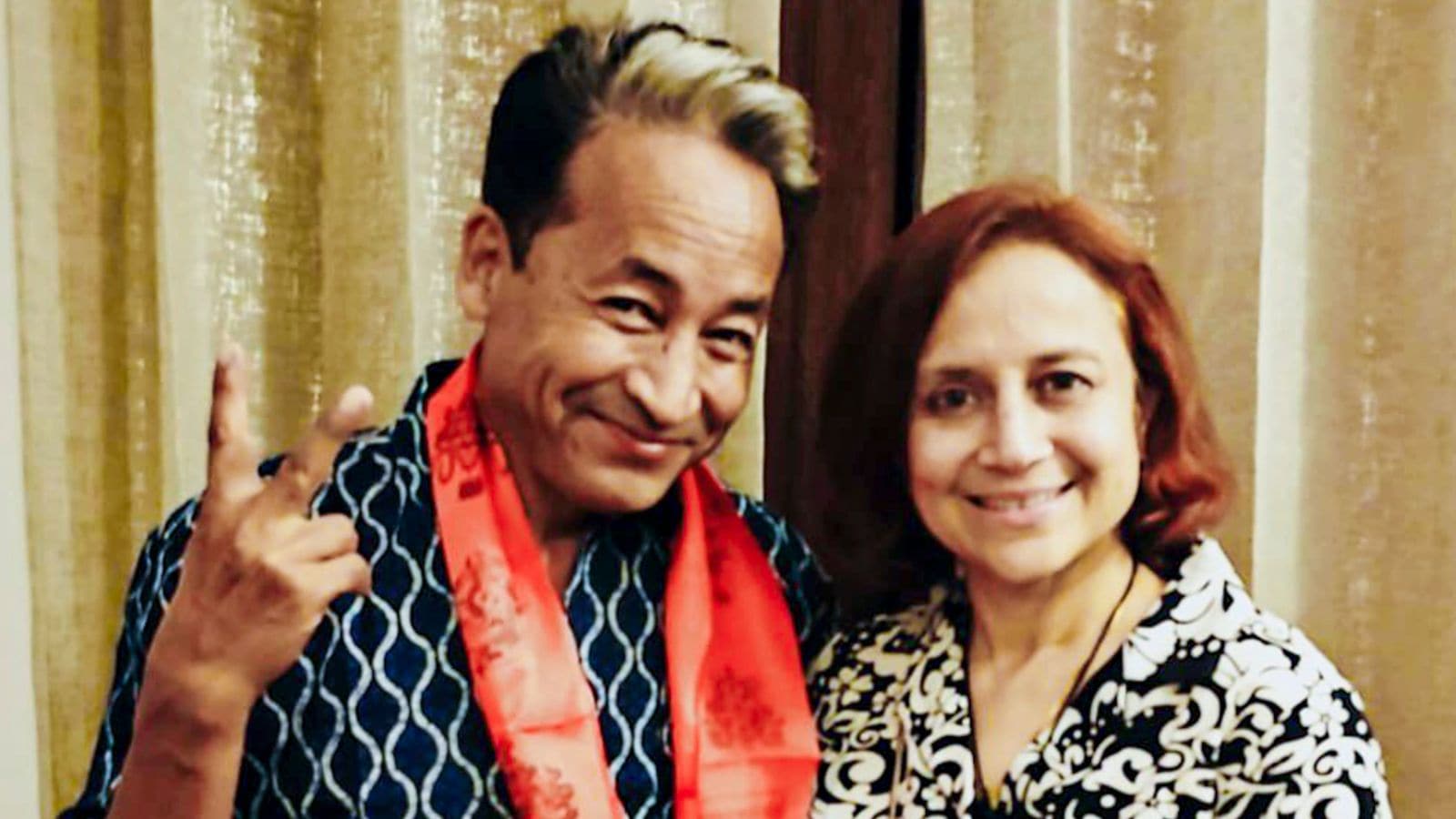
Addressing a press conference along with his wife Gitanjali Angmo in Delhi, Wangchuk said, “Our main issue is Sixth Schedule and statehood. If not on both, at least one. If the Centre wants something, we should get something. It should not be a lose-lose from one side.” His comments indicated flexibility in the stated position of the Apex Body Leh and the Kargil Democratic Alliance, which have consistently held that both Sixth Schedule status and full statehood are non-negotiable.
Welcoming what he described as a recent “extending of hand” by the government to build trust and initiate dialogue, Wangchuk said he was “greedy” for a resolution that benefits all sides. “We were sure of a victory in court. I am greedy. I was looking for a win-win. What use is Sonam winning if the cause does not win,” he said, adding that Ladakh “will also win” if talks move forward constructively and the government “comes out looking better”.
Framing the development as a shift towards engagement rather than confrontation, he said, “They have offered constructive, meaningful dialogue. We had to struggle for it — protests, walk from Ladakh to Delhi. In yesterday’s rally also people were demanding talks. Where will you find such people?” Drawing a contrast with violent conflicts elsewhere, he added, “Normally you see people leaving the table and picking up the gun. And then the government says let’s talk. I am happy to see that this revocation has been done to initiate constructive dialogue.”
Wangchuk also denied there was any deal with the government leading to his release. “Even if there was an offer I wouldn’t have taken it. My agitation was not for myself but for the people of Ladakh,” he said, adding that he would be willing to be part of any high-powered committee representing Ladakh in negotiations with the Centre, if required.
Wangchuk said the government’s move (to release him) has made his “job easy” as he had otherwise been prepared for a prolonged legal and public battle. “I was well prepared to spend one year and then come out and speak of all the horrors unleashed on me. I was not even allowed to make a call before being bundled into jail,” he said, while noting that jail staff were “kind” despite procedural difficulties in communicating with lawyers.
His wife, Geetanjali Angmo, who he said had to reach Delhi to move court, was “followed” during the process, he alleged.
Seeking to strike a forward-looking note, Wangchuk said he did not wish to dwell on past grievances. “It is nothing less than a thriller to recount what we went through. We can now happily forget that and look for a new beginning where trust is built,” he said, reiterating that “talks are a give-and-take process where both sides have to accommodate”.
He said he would return to Ladakh to consult stakeholders before the next steps. “I will go back to Ladakh and discuss things with Apex Body and KDA,” he said.
Expressing confidence in institutions, Wangchuk said his “faith in the judiciary has been strengthened”, while also urging the government to withdraw “meaningless cases” against Ladakh residents. “People even going to donate blood were arrested,” he claimed.
Geetanjali Angmo, meanwhile, underlined a longer-term vision for the region, saying Ladakh should aim at becoming a “role model” in self-reliance, environmental protection and grassroots empowerment, working “with the government”.
Wangchuk also reiterated his commitment to non-violent methods. “I have always been saying that I don’t want to do hunger strikes. I only do when I am forced to. I am a Gandhian and so cannot say I will never protest,” he said.
Referring to allegations made against him earlier, he added, “Initially there were allegations after allegations, but in court, it was all proved to have been misunderstood … I don’t want to keep any bitterness in my heart. I look ahead, not behind.”
At the same time, he flagged concerns over the socio-economic profile of inmates during his incarceration. “In jails 70 per cent people were poor. This was slightly unsettling. This needs to change,” he said, while also recalling humane conduct by prison staff and interactions with inmates.
“If I was a ‘deshdrohi’, I shouldn’t have been released. People are pained in Ladakh that they were branded anti-national,” he said.
Stay updated with the latest - Click here to follow us on Instagram
Climate activist and education reformer Sonam Wangchuk on Monday struck a notably conciliatory tone on Ladakh’s political demands, signalling openness to a “give and take” approach with the Centre and stressing the need for a “win-win” outcome, even as key regional bodies have maintained that their core demands remain non-negotiable.
Wangchuk was released recently after spending over six months in jail. He was detained on September 26 last year under the National Security Act following violent protests in Leh. The detention order under the NSA was withdrawn by the government, paving the way for his release.
Addressing a press conference along with his wife Gitanjali Angmo in Delhi, Wangchuk said, “Our main issue is Sixth Schedule and statehood. If not on both, at least one. If the Centre wants something, we should get something. It should not be a lose-lose from one side.” His comments indicated flexibility in the stated position of the Apex Body Leh and the Kargil Democratic Alliance, which have consistently held that both Sixth Schedule status and full statehood are non-negotiable.
Welcoming what he described as a recent “extending of hand” by the government to build trust and initiate dialogue, Wangchuk said he was “greedy” for a resolution that benefits all sides. “We were sure of a victory in court. I am greedy. I was looking for a win-win. What use is Sonam winning if the cause does not win,” he said, adding that Ladakh “will also win” if talks move forward constructively and the government “comes out looking better”.
Framing the development as a shift towards engagement rather than confrontation, he said, “They have offered constructive, meaningful dialogue. We had to struggle for it — protests, walk from Ladakh to Delhi. In yesterday’s rally also people were demanding talks. Where will you find such people?” Drawing a contrast with violent conflicts elsewhere, he added, “Normally you see people leaving the table and picking up the gun. And then the government says let’s talk. I am happy to see that this revocation has been done to initiate constructive dialogue.”
Wangchuk also denied there was any deal with the government leading to his release. “Even if there was an offer I wouldn’t have taken it. My agitation was not for myself but for the people of Ladakh,” he said, adding that he would be willing to be part of any high-powered committee representing Ladakh in negotiations with the Centre, if required.
Wangchuk said the government’s move (to release him) has made his “job easy” as he had otherwise been prepared for a prolonged legal and public battle. “I was well prepared to spend one year and then come out and speak of all the horrors unleashed on me. I was not even allowed to make a call before being bundled into jail,” he said, while noting that jail staff were “kind” despite procedural difficulties in communicating with lawyers.
His wife, Geetanjali Angmo, who he said had to reach Delhi to move court, was “followed” during the process, he alleged.
Seeking to strike a forward-looking note, Wangchuk said he did not wish to dwell on past grievances. “It is nothing less than a thriller to recount what we went through. We can now happily forget that and look for a new beginning where trust is built,” he said, reiterating that “talks are a give-and-take process where both sides have to accommodate”.
He said he would return to Ladakh to consult stakeholders before the next steps. “I will go back to Ladakh and discuss things with Apex Body and KDA,” he said.
Expressing confidence in institutions, Wangchuk said his “faith in the judiciary has been strengthened”, while also urging the government to withdraw “meaningless cases” against Ladakh residents. “People even going to donate blood were arrested,” he claimed.
Geetanjali Angmo, meanwhile, underlined a longer-term vision for the region, saying Ladakh should aim at becoming a “role model” in self-reliance, environmental protection and grassroots empowerment, working “with the government”.
Wangchuk also reiterated his commitment to non-violent methods. “I have always been saying that I don’t want to do hunger strikes. I only do when I am forced to. I am a Gandhian and so cannot say I will never protest,” he said.
Referring to allegations made against him earlier, he added, “Initially there were allegations after allegations, but in court, it was all proved to have been misunderstood … I don’t want to keep any bitterness in my heart. I look ahead, not behind.”
At the same time, he flagged concerns over the socio-economic profile of inmates during his incarceration. “In jails 70 per cent people were poor. This was slightly unsettling. This needs to change,” he said, while also recalling humane conduct by prison staff and interactions with inmates.
“If I was a ‘deshdrohi’, I shouldn’t have been released. People are pained in Ladakh that they were branded anti-national,” he said.