

Unprecedented security in place as first batch of Amarnath pilgrims arrive in Kashmir
Multi-layered security apparatus includes no-fly zones along the twin yatra routes, watch towers to keep vigil and real-time monitoring of vehicular movement
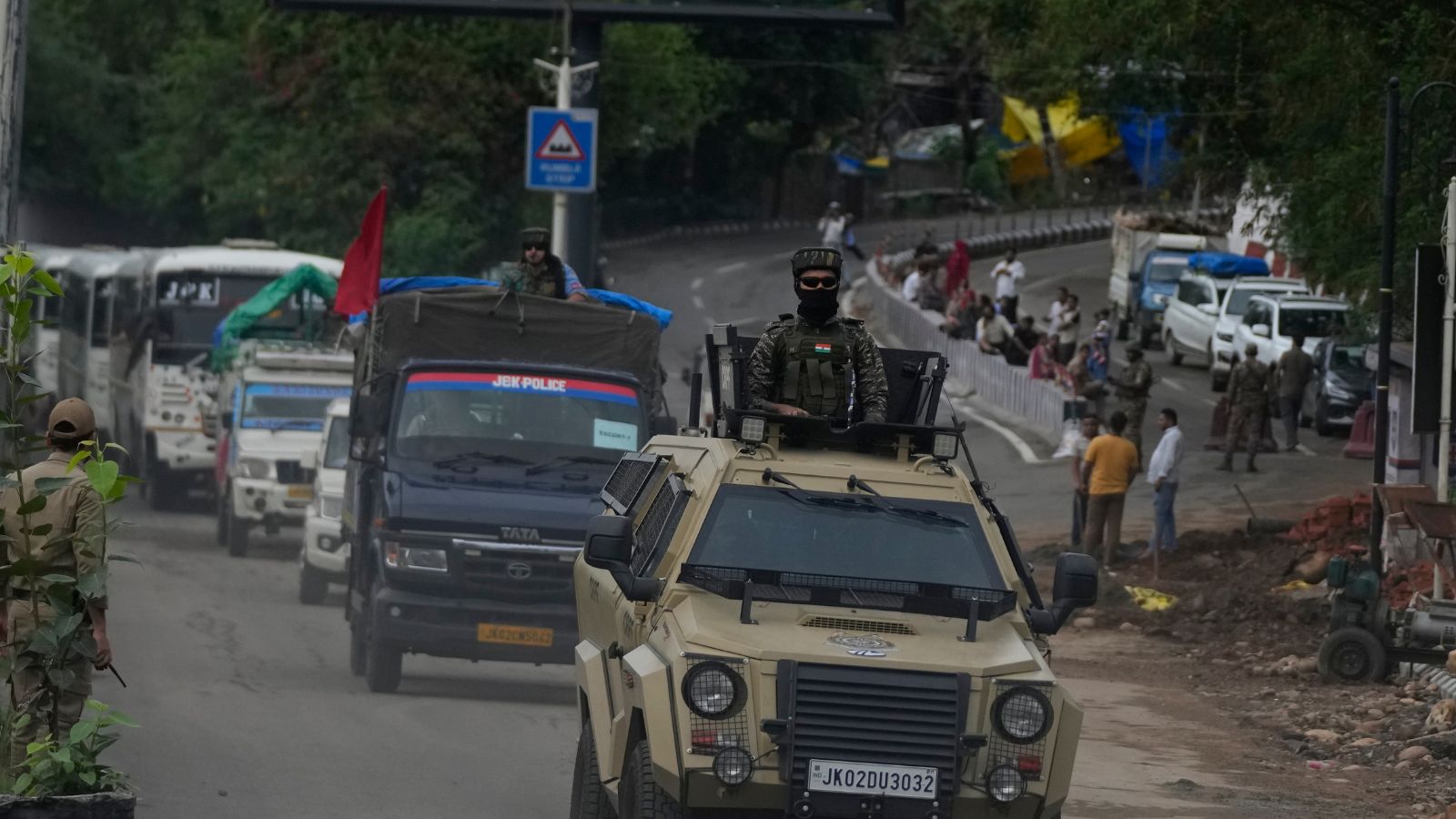
Amid unprecedented security arrangements, this year’s first batch of nearly 5,000 Amarnath pilgrims arrived in the Kashmir valley on Thursday.
The pilgrims were welcomed by senior security and civil officials at Qazigund in south Kashmir immediately after they crossed the Navyug tunnel, which connects the Kashmir Valley with the Jammu region.
Early on Thursday morning, Lt Governor Manoj Sinha had flagged off the first batch of pilgrims from Jammu. They reached in Qazigund by around noon.
The pilgrims were welcomed at Qazigund by Deputy Inspector General (DIG) of Police, South Kashmir; DIG Central Reserve Police Force (CRPF); Senior Superintendent of Police (SSP), Kulgam; and other senior civil and security officials.
#WATCH | Jammu, J&K: Visuals from Jammu Base Camp where Amarnath Yatra pilgrims of the first batch have started arriving. https://t.co/SIwOpBfarU pic.twitter.com/SjmGDPs3Ic
— ANI (@ANI) July 1, 2026
Officials said the first batch comprised 4,822 pilgrims, including 816 women, who will take the journey to the Himalayan cave shrine through the twin routes that go through Pahalgam and Baltal.
While 2,510 pilgrims will take the traditional Pahalgam-Chandanwari- Amarnath route, 2,312 pilgrims will take the shorter Sonamarg-Baltal-Amarnath route.
Twin routes
From Qazigund, the pilgrims moved towards the twin base camps of Nunwan in Pahalgam and Baltal. On Friday morning, they will commence the onward journey to the cave shrine.
The traditional Pahalgam route is an arduous trek that takes three days to reach the cave shrine on foot, palkis, or ponies. The Baltal route is a shorter 14-kilometre trek that allows pilgrims to return in a day.
For the second year, the Shri Amarnath Shrine Board (SASB) has decided not to run the helicopter service to the cave shrine after the government declared the two routes as “no-fly zones” as a security measure.
Massive security
This year, an unprecedented security apparatus has been put in place for the Amarnath yatra, which is the biggest annual security exercise in Jammu and Kashmir. The multi-layered security apparatus includes no-fly zones along the twin yatra routes, watch towers to keep vigil and real-time monitoring of vehicular movement.
The J&K Police issued tamper-proof QR code-based identity cards to service providers, including pony service operators, as part of improved security. The identity cards, when scanned, will provide complete information about a service provider.
Security agencies will be monitoring, in real time, the movement of pilgrim convoys through a network of CCTV cameras setup across the twin routes. The government has also issued RFID tags for vehicles, pilgrims and the service providers.
Officials said that electronic surveillance, coupled with multi-tier security deployment, was necessitated by last year’s terror attack on the tourists at Baisaran valley of Pahalgam, where 25 tourists and a local man were killed.
Amid unprecedented security arrangements, this year’s first batch of nearly 5,000 Amarnath pilgrims arrived in the Kashmir valley on Thursday.
The pilgrims were welcomed by senior security and civil officials at Qazigund in south Kashmir immediately after they crossed the Navyug tunnel, which connects the Kashmir Valley with the Jammu region.
Early on Thursday morning, Lt Governor Manoj Sinha had flagged off the first batch of pilgrims from Jammu. They reached in Qazigund by around noon.
The pilgrims were welcomed at Qazigund by Deputy Inspector General (DIG) of Police, South Kashmir; DIG Central Reserve Police Force (CRPF); Senior Superintendent of Police (SSP), Kulgam; and other senior civil and security officials.
#WATCH | Jammu, J&K: Visuals from Jammu Base Camp where Amarnath Yatra pilgrims of the first batch have started arriving. https://t.co/SIwOpBfarU pic.twitter.com/SjmGDPs3Ic
— ANI (@ANI) July 1, 2026
Officials said the first batch comprised 4,822 pilgrims, including 816 women, who will take the journey to the Himalayan cave shrine through the twin routes that go through Pahalgam and Baltal.
While 2,510 pilgrims will take the traditional Pahalgam-Chandanwari- Amarnath route, 2,312 pilgrims will take the shorter Sonamarg-Baltal-Amarnath route.
Twin routes
From Qazigund, the pilgrims moved towards the twin base camps of Nunwan in Pahalgam and Baltal. On Friday morning, they will commence the onward journey to the cave shrine.
The traditional Pahalgam route is an arduous trek that takes three days to reach the cave shrine on foot, palkis, or ponies. The Baltal route is a shorter 14-kilometre trek that allows pilgrims to return in a day.
For the second year, the Shri Amarnath Shrine Board (SASB) has decided not to run the helicopter service to the cave shrine after the government declared the two routes as “no-fly zones” as a security measure.
Massive security
This year, an unprecedented security apparatus has been put in place for the Amarnath yatra, which is the biggest annual security exercise in Jammu and Kashmir. The multi-layered security apparatus includes no-fly zones along the twin yatra routes, watch towers to keep vigil and real-time monitoring of vehicular movement.
The J&K Police issued tamper-proof QR code-based identity cards to service providers, including pony service operators, as part of improved security. The identity cards, when scanned, will provide complete information about a service provider.
Security agencies will be monitoring, in real time, the movement of pilgrim convoys through a network of CCTV cameras setup across the twin routes. The government has also issued RFID tags for vehicles, pilgrims and the service providers.
Officials said that electronic surveillance, coupled with multi-tier security deployment, was necessitated by last year’s terror attack on the tourists at Baisaran valley of Pahalgam, where 25 tourists and a local man were killed.