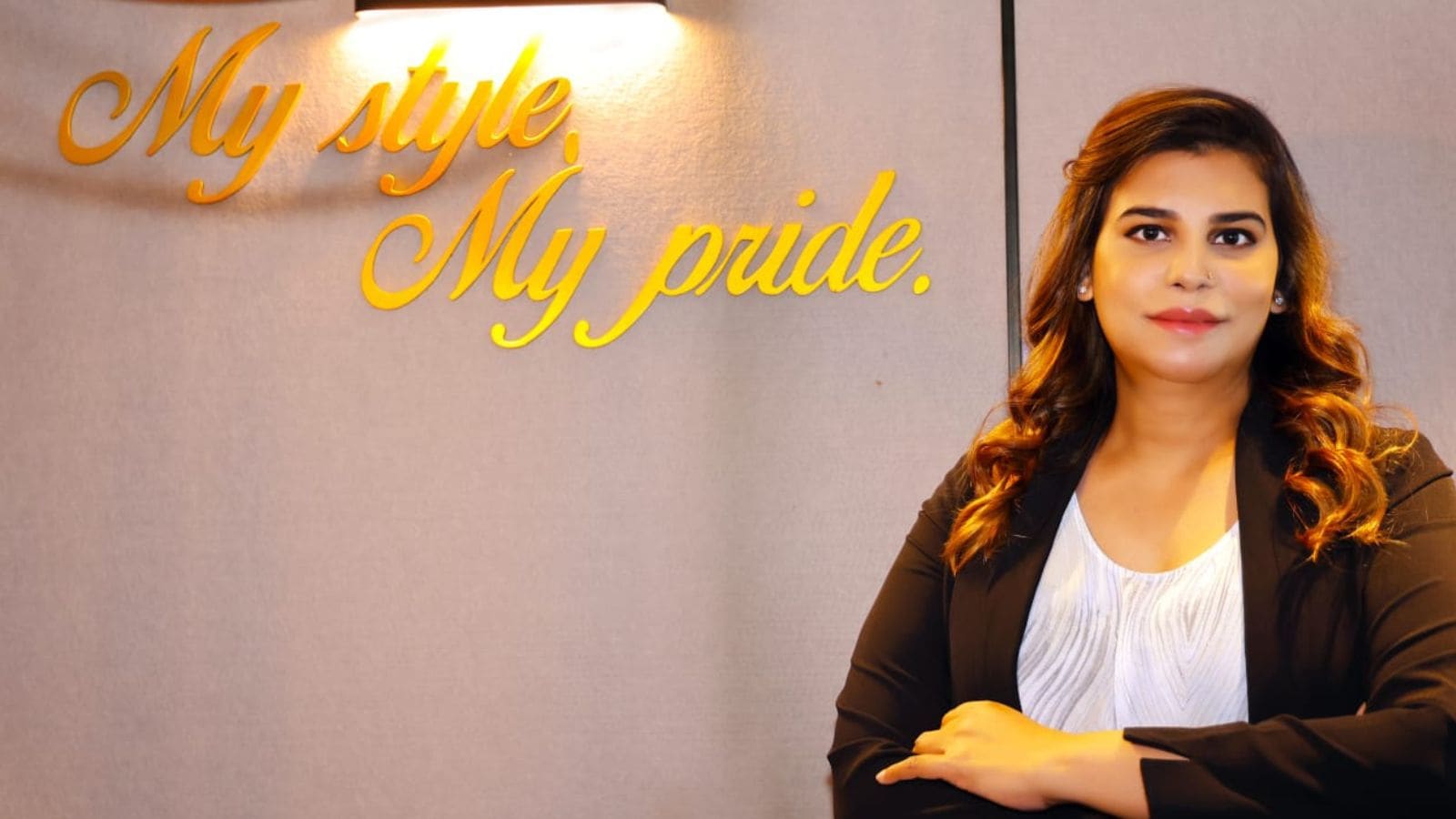


Trans woman activist and NALSA petitioner Zainab Patel: ‘Now, I am what the system chooses to recognise me as, not who I say I am’
The first major issue we have against the government and this Bill is that none of the trans persons in India were consulted before the amendments. So, if the government is bringing in amendments, on what basis were these amendments brought in, asks Zainab Patel.
Parliament passed the Transgender Persons (Protection of Rights) Amendment Bill 2026 on Wednesday. The Bill has faced near unanimous opposition from the transgender community for taking away the right to self-identify, thereby reverting to an understanding prevailing pre-NALSA judgment. The landmark Supreme Court order had recognised the ‘third gender’ and affirmed the trans community’s fundamental rights. The Indian Express spoke to Zainab Patel, 45, a leading trans woman activist and one of the petitioners in the ‘NALSA vs Union of India’ case. Working as a diversity and inclusion consultant, the activist with experience in public health spoke on the community’s opposition to the Bill. Edited excerpts:
What are the community’ core objections to this amendment?
The first major issue we have against the government and this Bill is that none of the trans persons in India were consulted before the amendments. So, if the government is bringing in amendments, on what basis were these amendments brought in?
At the very core of the framework earlier, which was in line with what the 2019 Act said, was ‘I am who I say I am’. The government in 2019 only had an affirming role in it. In 2026, if I have to put it roughly, it is ‘I am what the system recognises me as or who the system chooses to recognise me as’. This is the single biggest shift that drives most of the objections.
How does it vary from the 2019 Act?
The 2019 Act, which flows from the NALSA judgment, said that gender identity could be self-declared and the process was supposed to be de-medicalised. Now, identity recognition may require medical verification, both by a medical authority or board and feature verification if needed by a District Magistrate. So, here it is becoming a bureaucratic pathologisation process. For instance, this is becoming conditional, and could be open to both kinds of biases.
There is also going to be a reasonable delay, because I don’t believe at the district level, at the state level, across India, we have that amount of core competence where the CMO or his deputy will preside over a committee, and it is not sensitised enough. The 2019 Act provided for a 40-day period for approval (of identity certificates), but here the entire application is going to be based on the discretion of what the committee thinks and what the DM does. They are introducing medical gatekeeping, which was explicitly rejected earlier.
As someone who worked in the public health system, we know the system of an overburdened public health system, you are saddling them with another bureaucratic process. The second most important point is that it narrows who gets recognised.
You touched upon the changes in how the community will be defined, can you elaborate?
The second most important and objectionable point is that it narrows who gets recognised. So, earlier in the 2019 Act, in the rules, it says transgender persons, including trans men, trans women, non-binary identity.
When I was part of the National Council, there was trans-men representation. Now, it has totally dropped trans-masculine (from the definition) and they have conflated the idea of intersex with trans-people.
And now, they are saying it is only Hijra, Kinnar, Jogta or Aravani people (socio-cultural identities). Now, because the communities were not consulted, the government has not realised that the term Aravani is outdated. It was a term used in Tamil Nadu several years ago. They have terms like Thirunangai and Thirunambi now. Because this has been done in a hasty manner, it (definition) does not reflect the terminologies used across other states too … Shiva Shaktis in Andhra and Telangana, Sakhis in Uttar Pradesh. These names are not there, so does it mean that they all get obliterated in the process? Trans men and trans women have become invisible again.
What intent do you see behind these amendments?
The government has talked about bringing strong provisions to ensure targeted delivery of schemes so it reaches the right person. But let us look at the ground reality. When we went to the court in the NALSA matter, we were understood to be socially, economically, politically and educationally backward. Out of the 4.87 lakh transgender persons, based on the 2011 census, only 30,000 odd have got national transgender ID cards. So, where is the targeted delivery of benefits?
I just think that the government wants to ensure that trans people remain a very small minority, so that, you know, even if things are not reaching out to them effectively, they can still say that we have filtered out the undeserving and only kept the deserving.
What will be the community’s next step?
We are still hopeful the government will come to their senses but we are ready to go to court. We will also continue protesting this, because, like in the UGC matter, the Supreme Court may take urgent notice of the issue.
How would the daily lives of transgender persons get affected?
The biggest thing I feel is that it is pushing people towards anxiety, pushing people towards abuse, pushing people away from the care that they get, and for a community who is already suffering so much on a day-to-day basis, instead of offering some amount of soothing, it will agitate their conditions further. Now people are actually going to ask you, are you a real transgender or no? See, the implication of it is not only limited to the medical service provider or the trans person, it is also how the general community will review and perceive them tomorrow.
Stay updated with the latest - Click here to follow us on Instagram
Parliament passed the Transgender Persons (Protection of Rights) Amendment Bill 2026 on Wednesday. The Bill has faced near unanimous opposition from the transgender community for taking away the right to self-identify, thereby reverting to an understanding prevailing pre-NALSA judgment. The landmark Supreme Court order had recognised the ‘third gender’ and affirmed the trans community’s fundamental rights. The Indian Express spoke to Zainab Patel, 45, a leading trans woman activist and one of the petitioners in the ‘NALSA vs Union of India’ case. Working as a diversity and inclusion consultant, the activist with experience in public health spoke on the community’s opposition to the Bill. Edited excerpts:
What are the community’ core objections to this amendment?
The first major issue we have against the government and this Bill is that none of the trans persons in India were consulted before the amendments. So, if the government is bringing in amendments, on what basis were these amendments brought in?
At the very core of the framework earlier, which was in line with what the 2019 Act said, was ‘I am who I say I am’. The government in 2019 only had an affirming role in it. In 2026, if I have to put it roughly, it is ‘I am what the system recognises me as or who the system chooses to recognise me as’. This is the single biggest shift that drives most of the objections.
How does it vary from the 2019 Act?
The 2019 Act, which flows from the NALSA judgment, said that gender identity could be self-declared and the process was supposed to be de-medicalised. Now, identity recognition may require medical verification, both by a medical authority or board and feature verification if needed by a District Magistrate. So, here it is becoming a bureaucratic pathologisation process. For instance, this is becoming conditional, and could be open to both kinds of biases.
There is also going to be a reasonable delay, because I don’t believe at the district level, at the state level, across India, we have that amount of core competence where the CMO or his deputy will preside over a committee, and it is not sensitised enough. The 2019 Act provided for a 40-day period for approval (of identity certificates), but here the entire application is going to be based on the discretion of what the committee thinks and what the DM does. They are introducing medical gatekeeping, which was explicitly rejected earlier.
As someone who worked in the public health system, we know the system of an overburdened public health system, you are saddling them with another bureaucratic process. The second most important point is that it narrows who gets recognised.
You touched upon the changes in how the community will be defined, can you elaborate?
The second most important and objectionable point is that it narrows who gets recognised. So, earlier in the 2019 Act, in the rules, it says transgender persons, including trans men, trans women, non-binary identity.
When I was part of the National Council, there was trans-men representation. Now, it has totally dropped trans-masculine (from the definition) and they have conflated the idea of intersex with trans-people.
And now, they are saying it is only Hijra, Kinnar, Jogta or Aravani people (socio-cultural identities). Now, because the communities were not consulted, the government has not realised that the term Aravani is outdated. It was a term used in Tamil Nadu several years ago. They have terms like Thirunangai and Thirunambi now. Because this has been done in a hasty manner, it (definition) does not reflect the terminologies used across other states too … Shiva Shaktis in Andhra and Telangana, Sakhis in Uttar Pradesh. These names are not there, so does it mean that they all get obliterated in the process? Trans men and trans women have become invisible again.
What intent do you see behind these amendments?
The government has talked about bringing strong provisions to ensure targeted delivery of schemes so it reaches the right person. But let us look at the ground reality. When we went to the court in the NALSA matter, we were understood to be socially, economically, politically and educationally backward. Out of the 4.87 lakh transgender persons, based on the 2011 census, only 30,000 odd have got national transgender ID cards. So, where is the targeted delivery of benefits?
I just think that the government wants to ensure that trans people remain a very small minority, so that, you know, even if things are not reaching out to them effectively, they can still say that we have filtered out the undeserving and only kept the deserving.
What will be the community’s next step?
We are still hopeful the government will come to their senses but we are ready to go to court. We will also continue protesting this, because, like in the UGC matter, the Supreme Court may take urgent notice of the issue.
How would the daily lives of transgender persons get affected?
The biggest thing I feel is that it is pushing people towards anxiety, pushing people towards abuse, pushing people away from the care that they get, and for a community who is already suffering so much on a day-to-day basis, instead of offering some amount of soothing, it will agitate their conditions further. Now people are actually going to ask you, are you a real transgender or no? See, the implication of it is not only limited to the medical service provider or the trans person, it is also how the general community will review and perceive them tomorrow.