

Could it have too many tigers? Why Madhya Pradesh is facing this question
The size of a forest’s tiger population depends on the availability of prey animals. MP has seen fastest rise in tiger numbers in the country, even as shrinking natural corridors hampers dispersal
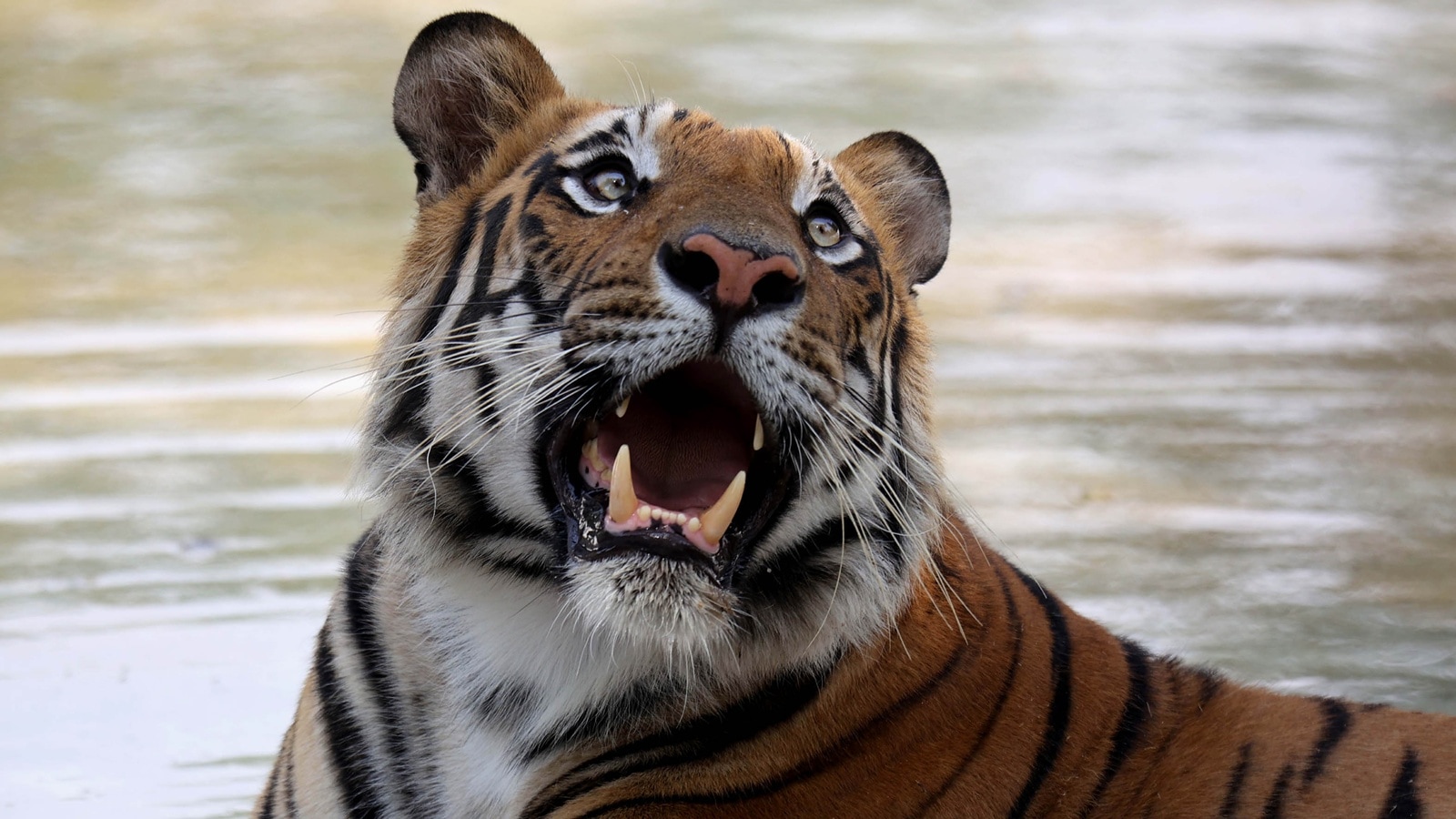
Partly thanks to its tiger recovery rate outpacing the national average over the last decade, Madhya Pradesh now faces a unique problem: Could it have too many tigers? With the numbers pushing the 1,000-mark, the state has approached the Dehradun-based Wildlife Institute of India (WII) to assess how many tigers its forests can hold.
Following a slew of reforms triggered by the Sariska wipeout in 2004, tiger numbers have been rising nationally. According to quadrennial estimation reports, India’s tiger numbers increased by 65% between 2014 and 2022, from 2,226 to 3,682. In the same period, Madhya Pradesh saw a 155% jump, from 308 to 785. The trend, say state officials, has held good since.
But more tigers also means more conflict. Across India, the number of people killed by tigers increased from 224 during 2014-2019 to 418 in the next six-year cycle of 2020-2025 – a rise of 87%.
Madhya Pradesh has fared better than conflict hotspots of Maharashtra (Tadoba) or Uttar Pradesh (Pilibhit). But retaliatory killings of tigers by electrocution to avenge loss of livestock, along with attacks on humans, are on the rise, prompting the uncomfortable question: how many tigers are too many for Madhya Pradesh.
With other factors, such as availability of water, absence of poaching etc, remaining unchanged, the size of a forest’s tiger population depends on the availability of prey animals, says Dr Rajesh Gopal, former chief of Project Tiger and the National Tiger Conservation Authority (NTCA).
In the simplest of calculations, it’s the total annually replenishable biomass of prey species divided by a tiger’s annual feed requirement. Prey animals differ in weight but a ballpark estimate shows that a prey base of around 350 ungulates (hoofed animals) is required to sustain a single tiger.
“Since X number of prey can sustain only Y number of tigers, surplus tigers will either die fighting one another; or, more likely, be pushed out to the buffer areas or disperse – ideally to other forest areas – especially in the case of males,” says wildlife biologist Milind Pariwakam. “When such tigers succeed, they re-colonise new areas. Or they die trying.”
Rapid development of road, rail and irrigation infrastructure, coupled with large-scale mining and deforestation, have broken much of central India’s forest connectivity. The result: the ‘surplus’ tigers cannot move safely between forests, leaving them exposed to people and situations of conflict.
But, restoring forest connectivity via natural dispersal is a long-term solution. That is why, say experts, knowing carrying capacity is much simpler than finding a solution for the surplus tiger population.
“Translocation or assisted dispersal where natural corridors are missing and forest connectivity is broken is being tried out in some states. But there are not many good forests with sufficient prey animals for supporting a good number of tigers,” points out wildlife biologist Dr Dharmendra Khandal.
WII Director Dr Gobind Sagar Bharwaj says habitat restoration is the way to go. “Attention is understandably on the tiger and other mega fauna. But we have to secure the primary resources for the food chain to hold. The health of our grasslands determines the prey base and ultimately tiger numbers,” he emphasizes.
Pariwakam points out that vast areas in Madhya Pradesh, Jharkhand and Orissa support very few tigers at the present and, if restored, can potentially absorb the surplus from the tiger-rich forests.
In the meantime, shifting surplus tigers to degraded forests with little or no wild prey is akin to shifting the problem of human-tiger conflict.
The bigger the tiger base in an area, the higher the numbers of dispersing tigers. That is why managers look beyond the arithmetic of carrying capacity, to negotiable desired numbers.
“Besides prey base, many other factors – cultural, economic, political – determine the size of a tiger population. Some use terms such as social carrying capacity. I call it the desired number of tigers at one place,” says Dr Bhardwaj.
That threshold, it appears, has been breached. Post-Sariska, improved protection from poachers, and active management, such as waterhole creation, medical intervention etc, have helped the tiger realise the full potential of prey-rich tiger reserves. Curiously, wild ungulates are increasingly not the mainstay of that prey base.
In recent years, domestic cattle have emerged as a major component of the tiger’s diet across India. In Madhya Pradesh, for example, researchers linked 47% of Bandhavgarh’s tigers to livestock kills last year.
In neighbouring Rajasthan, researchers sampled 737 kills in Sariska tiger reserve between 2016 and 2018. Of those, buffaloes contributed 44%, followed by cows (22%), Sambar deer (12%), goats (11%), Chital (4%) and Nilgai (2%). A more recent study in Ranthambhore found that domestic animals formed nearly 40% of the total biomass consumed by tigers.
While cattle have proliferated everywhere since the ban on cow slaughter came into effect, said a senior Madhya Pradesh forest official who would not be named, their presence inside tiger reserves has specific implications.
“Outside the reserve, cattle predation involves a much greater risk for tigers (from humans). Inside, tigers are better protected from retaliation for feeding on cattle. Moreover, cattle are often the only option for tigers outside the reserve. Inside, they also have wild prey to feed on. So, abundance of cattle outside tiger reserves fuels conflict. Inside tiger reserves, it fuels tiger numbers,” he says.
In the long term, experts agree, policymakers must look beyond the tiger to absorb the fruits of the success in tiger conservation more widely and evenly. That will take meticulous efforts at restoring forest connectivity, improving degraded forests and building wild prey bases.
In the short term, Dr Gopal underlines, managing conflict is the key. “Dispersing tigers have always walked out of reserves. We need sound ground work to minimise unwanted tiger-human interface. There is no alternative to building trust and sharing the profits of tiger conservation with local communities,” he says.
Dr Bhardwaj agrees. “Some damage is inevitable but we need to empower the forest divisions flanking tiger reserves with funds etc to maintain a certain standard of monitoring. At the NTCA, we recently launched such an initiative for mitigating conflict involving tigers outside tiger reserves.”
On the dangers of too many cattle pushing up tiger populations, Dr Khandal says: “We cannot interfere with traditional grazing or pasture land where communities have the right to take their livestock. But it is possible to limit the number of cattle inside the reserve where it has become a new tradition for many to simply abandon their old and dry animals to cut costs.”
Stay updated with the latest - Click here to follow us on Instagram
Partly thanks to its tiger recovery rate outpacing the national average over the last decade, Madhya Pradesh now faces a unique problem: Could it have too many tigers? With the numbers pushing the 1,000-mark, the state has approached the Dehradun-based Wildlife Institute of India (WII) to assess how many tigers its forests can hold.
Following a slew of reforms triggered by the Sariska wipeout in 2004, tiger numbers have been rising nationally. According to quadrennial estimation reports, India’s tiger numbers increased by 65% between 2014 and 2022, from 2,226 to 3,682. In the same period, Madhya Pradesh saw a 155% jump, from 308 to 785. The trend, say state officials, has held good since.
But more tigers also means more conflict. Across India, the number of people killed by tigers increased from 224 during 2014-2019 to 418 in the next six-year cycle of 2020-2025 – a rise of 87%.
Madhya Pradesh has fared better than conflict hotspots of Maharashtra (Tadoba) or Uttar Pradesh (Pilibhit). But retaliatory killings of tigers by electrocution to avenge loss of livestock, along with attacks on humans, are on the rise, prompting the uncomfortable question: how many tigers are too many for Madhya Pradesh.
With other factors, such as availability of water, absence of poaching etc, remaining unchanged, the size of a forest’s tiger population depends on the availability of prey animals, says Dr Rajesh Gopal, former chief of Project Tiger and the National Tiger Conservation Authority (NTCA).
In the simplest of calculations, it’s the total annually replenishable biomass of prey species divided by a tiger’s annual feed requirement. Prey animals differ in weight but a ballpark estimate shows that a prey base of around 350 ungulates (hoofed animals) is required to sustain a single tiger.
“Since X number of prey can sustain only Y number of tigers, surplus tigers will either die fighting one another; or, more likely, be pushed out to the buffer areas or disperse – ideally to other forest areas – especially in the case of males,” says wildlife biologist Milind Pariwakam. “When such tigers succeed, they re-colonise new areas. Or they die trying.”
Rapid development of road, rail and irrigation infrastructure, coupled with large-scale mining and deforestation, have broken much of central India’s forest connectivity. The result: the ‘surplus’ tigers cannot move safely between forests, leaving them exposed to people and situations of conflict.
But, restoring forest connectivity via natural dispersal is a long-term solution. That is why, say experts, knowing carrying capacity is much simpler than finding a solution for the surplus tiger population.
“Translocation or assisted dispersal where natural corridors are missing and forest connectivity is broken is being tried out in some states. But there are not many good forests with sufficient prey animals for supporting a good number of tigers,” points out wildlife biologist Dr Dharmendra Khandal.
WII Director Dr Gobind Sagar Bharwaj says habitat restoration is the way to go. “Attention is understandably on the tiger and other mega fauna. But we have to secure the primary resources for the food chain to hold. The health of our grasslands determines the prey base and ultimately tiger numbers,” he emphasizes.
Pariwakam points out that vast areas in Madhya Pradesh, Jharkhand and Orissa support very few tigers at the present and, if restored, can potentially absorb the surplus from the tiger-rich forests.
In the meantime, shifting surplus tigers to degraded forests with little or no wild prey is akin to shifting the problem of human-tiger conflict.
The bigger the tiger base in an area, the higher the numbers of dispersing tigers. That is why managers look beyond the arithmetic of carrying capacity, to negotiable desired numbers.
“Besides prey base, many other factors – cultural, economic, political – determine the size of a tiger population. Some use terms such as social carrying capacity. I call it the desired number of tigers at one place,” says Dr Bhardwaj.
That threshold, it appears, has been breached. Post-Sariska, improved protection from poachers, and active management, such as waterhole creation, medical intervention etc, have helped the tiger realise the full potential of prey-rich tiger reserves. Curiously, wild ungulates are increasingly not the mainstay of that prey base.
In recent years, domestic cattle have emerged as a major component of the tiger’s diet across India. In Madhya Pradesh, for example, researchers linked 47% of Bandhavgarh’s tigers to livestock kills last year.
In neighbouring Rajasthan, researchers sampled 737 kills in Sariska tiger reserve between 2016 and 2018. Of those, buffaloes contributed 44%, followed by cows (22%), Sambar deer (12%), goats (11%), Chital (4%) and Nilgai (2%). A more recent study in Ranthambhore found that domestic animals formed nearly 40% of the total biomass consumed by tigers.
While cattle have proliferated everywhere since the ban on cow slaughter came into effect, said a senior Madhya Pradesh forest official who would not be named, their presence inside tiger reserves has specific implications.
“Outside the reserve, cattle predation involves a much greater risk for tigers (from humans). Inside, tigers are better protected from retaliation for feeding on cattle. Moreover, cattle are often the only option for tigers outside the reserve. Inside, they also have wild prey to feed on. So, abundance of cattle outside tiger reserves fuels conflict. Inside tiger reserves, it fuels tiger numbers,” he says.
In the long term, experts agree, policymakers must look beyond the tiger to absorb the fruits of the success in tiger conservation more widely and evenly. That will take meticulous efforts at restoring forest connectivity, improving degraded forests and building wild prey bases.
In the short term, Dr Gopal underlines, managing conflict is the key. “Dispersing tigers have always walked out of reserves. We need sound ground work to minimise unwanted tiger-human interface. There is no alternative to building trust and sharing the profits of tiger conservation with local communities,” he says.
Dr Bhardwaj agrees. “Some damage is inevitable but we need to empower the forest divisions flanking tiger reserves with funds etc to maintain a certain standard of monitoring. At the NTCA, we recently launched such an initiative for mitigating conflict involving tigers outside tiger reserves.”
On the dangers of too many cattle pushing up tiger populations, Dr Khandal says: “We cannot interfere with traditional grazing or pasture land where communities have the right to take their livestock. But it is possible to limit the number of cattle inside the reserve where it has become a new tradition for many to simply abandon their old and dry animals to cut costs.”